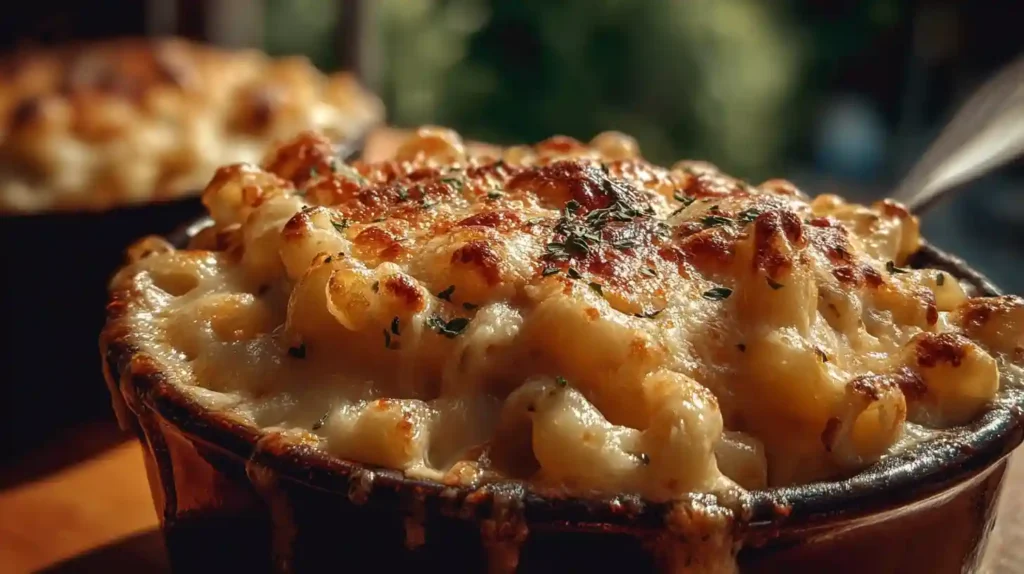
Three winters ago, I stood in my kitchen on the coldest January night we’d had in years, completely torn between two cravings. Part of me desperately wanted a steaming bowl of French onion soup with its sweet, caramelized onions and melted cheese. The other part wanted nothing more than a big skillet of creamy, indulgent mac and cheese. Then it hit me: why choose? What if I could capture everything I loved about both in one dish? That night, after some trial and error (and a lot of taste testing), this French Onion Soup Mac and Cheese was born. It’s become my signature cold-weather dish, the one everyone requests when they need serious comfort food. The deep, sweet flavor of slowly caramelized onions mingles with three types of melted cheese, coating tender pasta before getting topped with golden, crispy breadcrumbs. One bite delivers everything you love about both classics, and honestly, I haven’t looked back since.
Why This Recipe Works
The genius of this dish lies in how the flavors complement each other. Caramelizing onions slowly transforms their sharp bite into something deeply sweet and almost jammy, creating a base that tastes like the essence of French onion soup without any of the broth. The combination of Gruyère, sharp cheddar, and mozzarella isn’t random; Gruyère brings that nutty, slightly sweet flavor that’s essential to French onion soup, cheddar adds tang and richness, while mozzarella contributes the stretchy, gooey texture everyone craves in mac and cheese.
The secret is balancing richness with texture. The creamy cheese sauce coats every piece of pasta, but the breadcrumb topping baked until golden provides crucial contrast. Without it, the dish would be one-note. With it, you get that satisfying crunch that makes each bite interesting. Fresh thyme ties everything together, adding a subtle earthiness that keeps the richness from becoming overwhelming.
Understanding Your Ingredients
Start with twelve ounces of elbow macaroni, though shells or cavatappi work beautifully if you prefer something that catches more sauce. You’ll need three large yellow onions, sliced thin; don’t skimp on these because they’re the star. Two tablespoons of olive oil and three tablespoons of butter provide the fat for caramelizing the onions and building the sauce. Two cloves of minced garlic and a teaspoon of fresh thyme (or half a teaspoon dried) add aromatic depth.
For the sauce base, you need three tablespoons of flour to create a roux that thickens everything. Two cups of vegetable broth echo the soup element, while two cups of whole milk and half a cup of heavy cream make the sauce luxuriously rich. The cheese trio is crucial: two cups of shredded Gruyère, one cup of sharp cheddar, and one cup of mozzarella. Season with a teaspoon of salt and half a teaspoon of black pepper. The topping requires one cup of breadcrumbs mixed with half a cup of grated Parmesan.
Caramelizing the Onions
This step takes patience but makes all the difference. Heat your olive oil and one tablespoon of butter in a large skillet over medium heat. Add your thinly sliced onions and stir to coat them in the fat. At first, they’ll seem like an enormous pile, but they’ll cook down dramatically. Stir them every few minutes, making sure they don’t stick to the bottom of the pan.
After about ten minutes, they’ll start softening and becoming translucent. After fifteen to twenty minutes, they’ll turn golden. Keep going. True caramelization takes twenty-five to thirty minutes, and you’ll know you’re there when the onions are a deep amber color, sweet-smelling, and reduced to maybe a third of their original volume. If they start sticking or browning too quickly, lower your heat and add a splash of water to deglaze the pan. Once they’re deeply caramelized, stir in the garlic and thyme, cooking for another minute until fragrant.
Building the Cheese Sauce
Add the remaining two tablespoons of butter to your caramelized onions and let it melt. Sprinkle the flour over everything and stir constantly for about two minutes. This cooks the raw flour taste out and creates a roux that will thicken your sauce. It should look like a thick paste coating all the onions.
Slowly pour in the vegetable broth while whisking constantly. The mixture will seize up at first, but keep whisking and it’ll smooth out. Once the broth is fully incorporated, add the milk in a steady stream, still whisking. Finally, whisk in the heavy cream. Bring everything to a gentle simmer and let it cook for about five minutes, stirring occasionally, until the sauce thickens enough to coat the back of a spoon.
Remove the pan from heat and stir in all your cheese, working in batches if needed. The residual heat will melt it beautifully. Stir until you have a smooth, glossy sauce with no cheese clumps remaining. Season with salt and black pepper, tasting as you go because the cheese already adds saltiness.
Assembling and Baking
While your onions caramelize, cook your pasta in well-salted boiling water until it’s just al dente, usually a minute or two less than the package directions. You want it slightly underdone because it’ll finish cooking in the oven. Drain it well but don’t rinse; the starch helps the sauce cling better.
Preheat your oven to 375°F and butter a large baking dish or keep everything in an oven-safe skillet if you have one. Add the cooked pasta to your cheese sauce and fold everything together gently but thoroughly. Every piece of pasta should be coated in that rich, oniony sauce. Transfer everything to your prepared baking dish if you’re not using an oven-safe skillet.
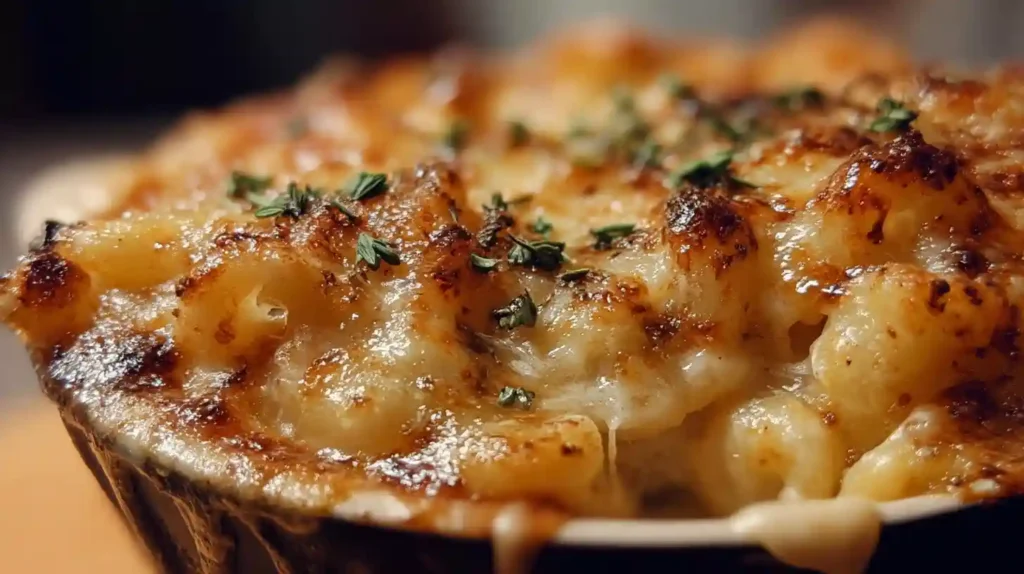
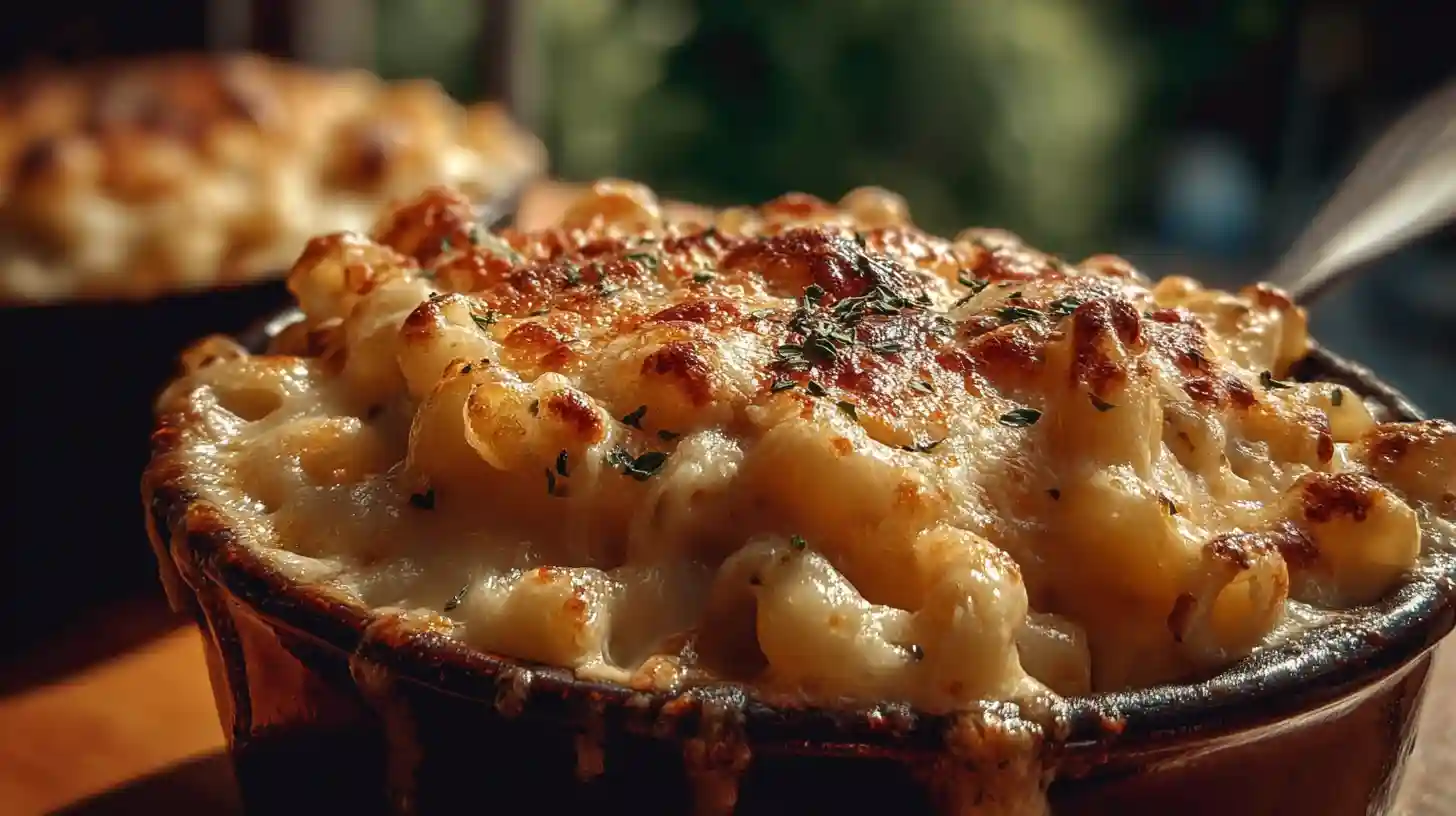
In a small bowl, mix your breadcrumbs with the grated Parmesan. Sprinkle this mixture evenly over the top of the mac and cheese. Don’t pack it down; you want it to stay loose so air can circulate and create maximum crispiness. Bake for twenty to twenty-five minutes until the sauce is bubbling around the edges and the topping is golden brown. If you want extra color on top, run it under the broiler for the last minute or two, watching carefully so it doesn’t burn.
Smart Substitutions
- Swap Gruyère for Swiss or fontina if you can’t find it, though the flavor won’t be quite as authentic.
- Use any short pasta shape you prefer; penne, shells, or rigatoni all work great.
- Replace heavy cream with half-and-half for a slightly lighter version.
- Try mushroom broth instead of vegetable for deeper umami flavor.
- Panko breadcrumbs create an even crispier topping than regular breadcrumbs.
Troubleshooting Common Issues
If your onions are browning too quickly or burning, your heat is too high. Lower it to medium-low and add a splash of water or broth to scrape up any stuck bits. If your cheese sauce seems grainy, you likely added the cheese while the liquid was too hot. Always remove from heat before stirring in cheese to prevent it from seizing.
Dry or clumpy mac and cheese usually means you overcooked the pasta or baked it too long. Remember, the pasta continues cooking in the oven, so start with it slightly underdone. If your topping isn’t getting crispy, your oven temperature might be too low, or you might have packed the breadcrumbs down too tightly. A soggy topping after baking often means too much moisture in the dish; let your pasta drain very well before mixing with the sauce.
Make-Ahead Strategy
This dish is perfect for making ahead. You can caramelize the onions up to three days in advance and refrigerate them. You can even assemble the entire dish, minus the breadcrumb topping, up to a day ahead. Cover it tightly and refrigerate, then add the breadcrumb topping right before baking. You may need to add five to ten minutes to the baking time if you’re starting from cold.
For longer storage, you can freeze the assembled, unbaked dish for up to three months. Wrap it very well in plastic wrap and then aluminum foil. Thaw it overnight in the refrigerator before baking. The texture will be almost as good as fresh, though the sauce might separate slightly; just stir it gently before adding the topping. Leftover baked mac and cheese keeps for three to four days in the fridge and reheats beautifully in the oven at 350°F.
Creative Variations
Once you’ve mastered the basic version, there are countless ways to customize it. Stir in sautéed mushrooms along with the onions for extra umami and a meatier texture. Add crispy bacon or pancetta crumbled on top before baking for a smoky element. A splash of white wine added to the onions as they caramelize brings acidity that brightens the whole dish.
For a truffle version, drizzle truffle oil over the top just before serving and use a mix of Gruyère and fontina. If you want to sneak in vegetables, wilted spinach or roasted cauliflower fold beautifully into the cheese sauce. Spice lovers can add red pepper flakes to the sauce or sprinkle cayenne in with the breadcrumbs. A three-onion variation using yellow onions, red onions, and shallots creates incredible depth, though it takes longer to caramelize everything properly.
Serving Suggestions
This makes an impressive main course for a cozy dinner party or family meal. I like serving it straight from a cast-iron skillet placed on a wooden board in the center of the table, letting everyone help themselves. A simple green salad with a bright vinaigrette cuts through the richness perfectly. Roasted Brussels sprouts or green beans also make excellent sides.
For beverages, a crisp white wine like Sauvignon Blanc or a light red like Pinot Noir pairs beautifully. If you’re not drinking wine, sparkling water with lemon provides refreshing contrast. This also works as a luxurious side dish for roasted chicken, grilled steak, or holiday prime rib. I’ve even served it in individual ramekins for a fancier presentation at dinner parties.
Storage and Reheating
Store leftovers in an airtight container in the refrigerator for up to four days. To reheat, I prefer using the oven at 350°F until heated through, about fifteen to twenty minutes. Add a splash of milk or cream before reheating if it seems dry. Cover with foil for most of the reheating time, then remove the foil for the last five minutes to re-crisp the topping.
You can microwave individual portions in a pinch, though the topping won’t stay crispy. For frozen leftovers, thaw overnight in the fridge before reheating. The texture holds up surprisingly well, especially compared to most pasta dishes. The onions actually seem to meld even more with the cheese sauce after a day or two, making leftovers arguably better than the fresh version.
Frequently Asked Questions
Can I use different types of cheese?
Yes, though the flavor will change. Gruyère is traditional for French onion soup, but Swiss, fontina, or Comté work. For the cheddar, any good melting cheese like Colby or Monterey Jack substitutes fine. Just avoid pre-shredded cheese if possible; it contains anti-caking agents that prevent smooth melting.
How do I know when my onions are properly caramelized?
They should be a deep golden brown, almost mahogany in color, and reduced to about a third of their original volume. They’ll taste sweet with no harsh onion bite remaining. This genuinely takes twenty-five to thirty minutes; there’s no rushing it.
Can this be made vegetarian?
It already is vegetarian as written, using vegetable broth. Just make sure your cheeses don’t contain animal rennet if that’s a concern. Many Parmesan cheeses use animal rennet, but vegetarian alternatives exist.
Why is my cheese sauce grainy?
You added the cheese while the liquid was too hot, or you used pre-shredded cheese. Always remove the pan from heat before stirring in cheese, and shred your own from a block for smoothest results. The anti-caking agents in pre-shredded cheese cause graininess.
Can I make this gluten-free?
Absolutely. Use gluten-free pasta and substitute the flour with a gluten-free all-purpose blend or cornstarch. Use gluten-free breadcrumbs or crushed gluten-free crackers for the topping. The rest of the recipe works exactly the same.
How do I prevent the pasta from getting mushy?
Cook it to just al dente, a minute or two less than package directions. It continues cooking in the oven, so starting with it slightly underdone prevents mushiness. Also, don’t overbake the assembled dish; once the top is golden and the sauce is bubbling, it’s done.
Can I double this recipe?
Yes, though you’ll need to work in batches or use a very large skillet to caramelize that many onions. You’ll also need a larger baking dish or two standard ones. The baking time should be roughly the same since it’s about heating through and browning the top, not cooking the ingredients.

French Onion Soup Mac and Cheese
Ingredients
Equipment
Method
- Preheat oven to 375°F (190°C). Butter a large baking dish or have an oven-safe skillet ready.
- Heat olive oil and 1 tablespoon butter in a large skillet over medium heat. Add sliced onions and cook, stirring often, for 25-30 minutes until deeply caramelized and golden brown. Stir in garlic and thyme, cooking 1 minute more.
- Add remaining 2 tablespoons butter to the caramelized onions. Once melted, stir in flour and cook for 2 minutes, stirring constantly to form a roux.
- Slowly whisk in vegetable broth until smooth, then add milk and cream. Bring to a gentle simmer and cook for 5 minutes until thickened. Remove from heat and stir in Gruyère, cheddar, and mozzarella until melted. Season with salt and pepper.
- Cook pasta in salted boiling water until just al dente (1-2 minutes less than package directions). Drain well. Add pasta to cheese sauce and fold gently to coat. Transfer to prepared baking dish if not using oven-safe skillet.
- Mix breadcrumbs with Parmesan and sprinkle evenly over the top. Bake for 20-25 minutes until bubbling and golden brown. Let rest 5 minutes before serving.