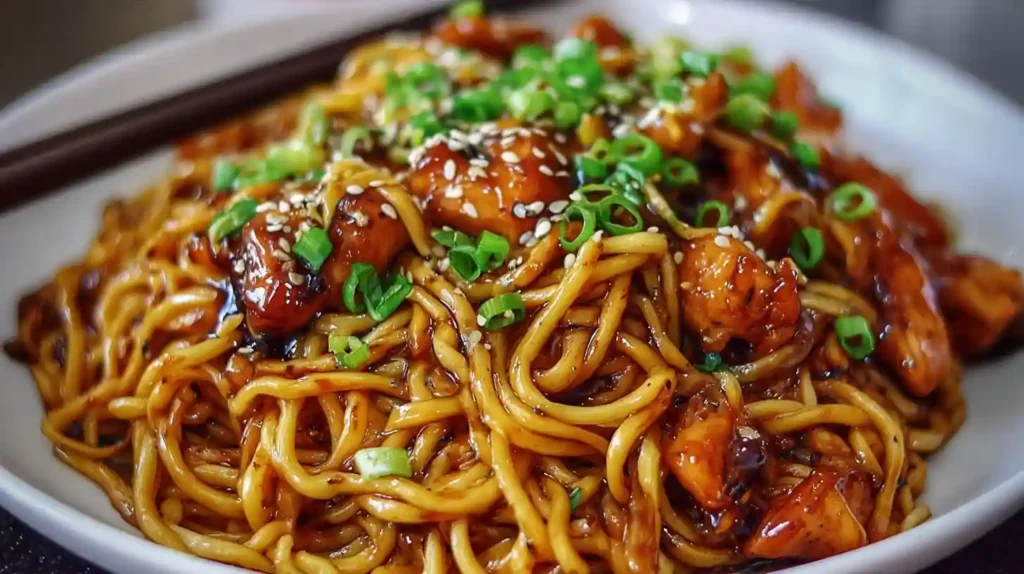
The first time I made these sticky garlic chicken noodles, I was skeptical that something so simple could rival the takeout I’d been ordering for years. But after one bite of those glossy, garlic-coated noodles tangled up with tender chicken pieces, I never looked back. The sauce a perfect balance of sweet honey, savory soy, and punchy garlic clings to every strand of noodle and coats the chicken in this lacquered, irresistible glaze. What makes this dish truly special is how quickly it comes together. From start to finish, you’re looking at twenty minutes, maybe twenty-five if you’re moving slowly. The cornstarch coating on the chicken creates these slightly crispy edges that become beautifully sticky once the sauce hits them, and the whole thing feels like restaurant-quality food made in your own kitchen without any complicated techniques or hard-to-find ingredients.
Why This Recipe Works
The magic of sticky garlic chicken noodles lies in the cornstarch coating technique. When you toss the chicken pieces in cornstarch before cooking, it does two things: creates a light crispy exterior that browns beautifully, and thickens the sauce into that signature sticky, clingy consistency that coats everything perfectly. The sauce itself is brilliantly balanced – soy sauce brings deep umami saltiness, honey adds sweetness and helps create that glossy finish, while fresh garlic and ginger provide aromatic punch.
Cooking everything in a single skillet means the chicken develops flavor from browning, the sauce reduces and concentrates while coating the chicken, and then the noodles get tossed right into that same pan to absorb all those delicious flavors. Nothing gets lost, and cleanup is minimal. The high heat is crucial – it’s what creates those caramelized edges on the chicken and gives the sauce that slightly thickened, glossy quality without becoming gummy or heavy.
Choosing Your Chicken
Chicken breast is lean and cooks quickly, making it ideal if you’re watching calories or prefer white meat. Cut it into uniform bite-sized pieces so everything cooks evenly. The key is not making the pieces too small – they should be substantial enough to get a nice sear without drying out. Chicken thighs are my personal preference because they’re more forgiving and stay juicy even if you accidentally overcook them slightly. The extra fat means more flavor, and that richness complements the sweet-savory sauce beautifully.
Whichever cut you choose, make sure the chicken is completely dry before tossing it in cornstarch. Pat the pieces with paper towels to remove surface moisture. This ensures the cornstarch adheres properly and creates that crispy coating rather than forming a gummy paste. If you’re using frozen chicken, thaw it completely and drain off all excess liquid before proceeding.
The Perfect Noodle Choice
Asian egg noodles are traditional and my top pick for this dish. Their slightly chewy texture holds up beautifully to the sticky sauce, and they have a subtle richness that complements the chicken. Look for fresh egg noodles in the refrigerated section of Asian markets, or use dried ones from the international aisle. Rice noodles work wonderfully if you’re avoiding eggs or want a gluten-free option. Flat rice noodles provide great surface area for the sauce to cling to.
In a pinch, regular spaghetti or linguine makes a perfectly acceptable substitute. Cook them just shy of al dente according to package directions, because they’ll finish cooking when you toss them with the hot sauce and chicken. Ramen noodles – the good kind, not the instant packet type – are another excellent choice. Udon noodles create a heartier, more substantial dish with their thick, chewy texture. Whatever noodle you choose, cook them while the chicken is browning so everything is ready at the same time.
Building the Sauce
The sauce is deceptively simple but requires good quality ingredients to shine. Use regular soy sauce, not low-sodium, because the saltiness is crucial to balance the honey’s sweetness. If you only have low-sodium, you’ll need to add extra salt at the end. The honey should be liquid and easy to whisk; if it’s crystallized, warm it briefly in the microwave until it flows smoothly. Fresh garlic is non-negotiable – jarred minced garlic doesn’t provide that same punchy, aromatic quality.
Grate fresh ginger on a microplane or finely mince it with a knife. The ginger adds brightness and a subtle heat that cuts through the richness. Red chili flakes are optional but recommended if you like a gentle warmth. They don’t make the dish spicy, just add complexity. Mix everything together before you start cooking so the sauce is ready to go when you need it. The honey will dissolve into the soy sauce, creating this beautiful amber liquid that smells incredible.
Cooking Technique
Heat is your friend in this recipe. You want a large skillet or wok over medium-high to high heat, hot enough that when you add the chicken, it sizzles immediately. If the pan isn’t hot enough, the chicken will steam in its own juices rather than developing that golden-brown crust. Add enough oil to coat the bottom of the pan – vegetable oil, canola oil, or peanut oil all work well because of their high smoke points.
Don’t crowd the pan with chicken. If necessary, work in two batches. Crowding lowers the pan temperature and leads to soggy, steamed chicken instead of crispy, golden pieces. Let the chicken sit undisturbed for two to three minutes on the first side before flipping. You should see nice browning on the bottom. Once the chicken is cooked through and golden on all sides, pour in the sauce. It will bubble vigorously and start to thicken almost immediately thanks to the cornstarch coating on the chicken.
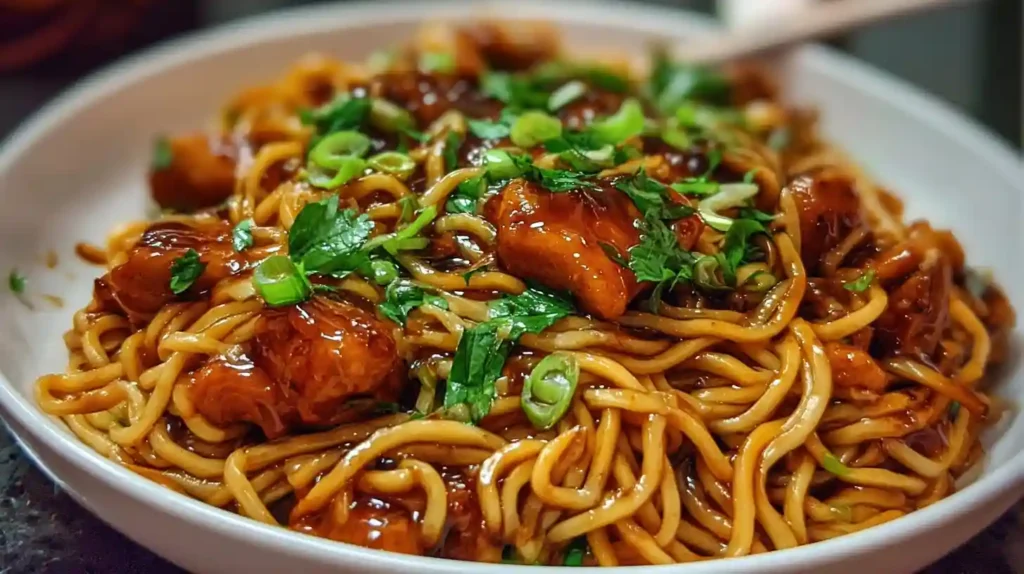
Stir constantly for a minute or two as the sauce reduces and becomes glossy. You’ll know it’s ready when it coats the back of a spoon and clings to the chicken pieces. If it seems too thick, add a splash of water. If it’s too thin, let it simmer another minute. Then add your cooked, drained noodles and toss everything together using tongs or two wooden spoons. The noodles should be completely coated and glistening.
Garnishes and Add-ins
Green onions are essential for a fresh, sharp contrast to the rich, sweet sauce. Slice them thin on a diagonal and scatter them over the finished dish. The white parts have a sharper onion flavor, while the green parts are milder and prettier. Sesame seeds add a subtle nutty flavor and visual appeal – use white sesame seeds, or toasted ones for extra depth. A few drops of sesame oil drizzled on top right before serving amplifies that nutty quality.
For vegetables, bell peppers add sweetness and crunch. Slice them thin and add them to the pan with the chicken. Broccoli florets work beautifully – blanch them first for two minutes in boiling water so they’re tender-crisp, then toss them in at the end. Snap peas or snow peas need just a minute of cooking to stay crisp. Baby bok choy cut in half lengthwise makes the dish more substantial. Shredded carrots or julienned ones add color and a slight sweetness that complements the sauce.
Adjusting the Flavor
If you prefer less sweetness, cut the honey in half or substitute with a tablespoon of brown sugar for a more molasses-like depth. For more heat, add sriracha or sambal oelek to the sauce – start with a teaspoon and adjust from there. A splash of rice vinegar brightens everything up with acidity that balances the sweet and salty components. Add it at the very end, off heat, so the brightness doesn’t cook off.
For a nutty dimension, whisk a tablespoon of peanut butter or almond butter into the sauce. It adds creaminess and depth without making the dish heavy. A teaspoon of hoisin sauce increases the umami factor and adds complexity. Fish sauce – just a small splash – brings intense savory depth, though it’s not necessary if you’re avoiding it. Taste as you go and adjust the balance to your preference.
Making It Ahead and Storage
This dish is absolutely best fresh, but you can prep components ahead to speed up cooking time. Cut and cornstarch-coat the chicken, then store it covered in the refrigerator for up to four hours before cooking. Mix the sauce and keep it at room temperature if cooking within an hour, or refrigerate it if making further ahead. Cook the noodles, drain them, and toss with a tiny bit of oil to prevent sticking, then refrigerate until ready to use.
Leftovers keep in an airtight container in the refrigerator for three days. The noodles will absorb sauce as they sit, so the dish becomes less saucy and more glazed. Reheat gently in a skillet over medium-low heat, adding a tablespoon or two of water to loosen everything up and recreate that glossy finish. Microwaving works in a pinch but won’t give you the same texture – the noodles can become gummy and the chicken loses its slight crispness.
Dietary Modifications
For a gluten-free version, swap regular soy sauce for tamari or coconut aminos. Make sure your noodles are certified gluten-free – rice noodles are naturally GF. Check that your cornstarch hasn’t been processed in a facility with gluten contamination if you’re extremely sensitive. To make it vegetarian, use extra-firm tofu cut into cubes and pressed to remove excess moisture. Coat it in cornstarch just like the chicken and cook the same way. It develops a beautiful crispy exterior and soaks up the sauce wonderfully.
Shrimp makes an excellent substitute for chicken – it cooks even faster and pairs beautifully with the garlic-honey sauce. Peel and devein the shrimp, pat them dry, and toss with cornstarch. They’ll only need two to three minutes of cooking, so adjust your timing accordingly. For a lower-carb version, use zucchini noodles or shirataki noodles, though the texture will be quite different from traditional wheat or rice noodles.
Serving Suggestions
Serve sticky garlic chicken noodles in wide, shallow bowls so everyone can see the beautiful glossy coating on the noodles and chicken. Chopsticks are traditional and make eating more fun, but a fork works just fine too. A side of steamed edamame with sea salt adds protein and a fresh element. Simple cucumber salad dressed with rice vinegar and sesame oil provides cooling crunch that contrasts the rich main dish.
If you want to make it a fuller meal, add a bowl of miso soup on the side or some crispy spring rolls as an appetizer. Iced green tea or cold beer pairs wonderfully with the sweet-savory flavors. For kids who might find it too garlicky, serve their portion with the sauce on the side so they can control how much coating they want.
Frequently Asked Questions
Can I use pre-cooked rotisserie chicken?
Yes, but skip the cornstarch coating and browning steps. Shred or cube the rotisserie chicken and add it directly to the sauce in the pan once it’s bubbling. Heat through for just a minute or two so it doesn’t dry out, then toss with noodles as directed.
Why is my sauce too watery?
The cornstarch coating on the chicken should thicken the sauce naturally. If it’s still too thin, make a slurry with one teaspoon cornstarch mixed with two teaspoons cold water. Stir it into the bubbling sauce and cook for thirty seconds until it thickens.
Can I double this recipe?
Absolutely, but you’ll need to cook the chicken in batches to avoid overcrowding. Double all ingredients and use your largest skillet or wok. Everything else about the method stays the same.
What if I don’t have honey?
Use maple syrup or brown sugar instead. Maple syrup will add a slightly different flavor profile but works beautifully. Brown sugar gives more molasses depth. Use the same amount as the honey called for.
My chicken is browning too fast
Lower the heat to medium. The honey in the sauce can burn quickly if the heat is too high. You want a nice golden brown color, not blackened edges. If the pan gets too hot, remove it from heat for thirty seconds to cool down.
Can this be made spicy?
Yes, increase the red chili flakes or add sriracha or sambal oelek to the sauce. For serious heat, add sliced fresh Thai chilies to the pan when cooking the chicken. Remove them before serving if you want the flavor without too many hot bites.
Why do my noodles clump together?
Toss the cooked, drained noodles with a small amount of oil right after draining to prevent sticking. If they’re already clumped, rinse them briefly under hot water to separate, shake off excess water, then proceed with the recipe.
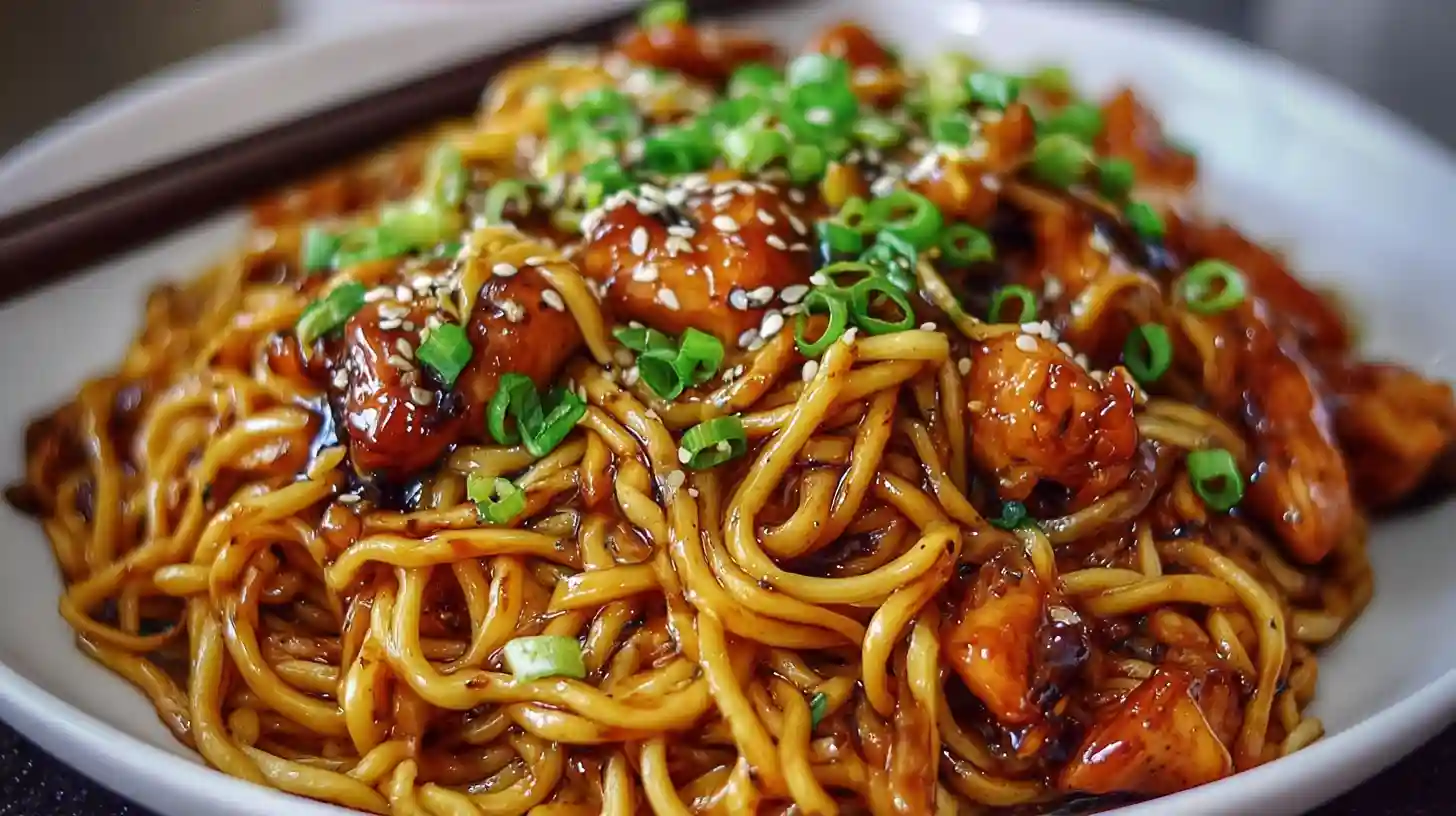

Sticky Garlic Chicken Noodles
Ingredients
Equipment
Method
- Cook noodles according to package directions. Drain, toss with sesame oil, and set aside. In a small bowl, whisk together soy sauce, honey, minced garlic, grated ginger, and red chili flakes. Set sauce aside.
- Pat chicken pieces completely dry with paper towels. Place cornstarch in a bowl and toss chicken pieces until evenly coated on all sides.
- Heat vegetable oil in a large skillet or wok over medium-high heat until shimmering. Add chicken in a single layer (work in batches if necessary to avoid crowding). Cook undisturbed for 2-3 minutes until golden brown on bottom.
- Flip chicken pieces and continue cooking another 3-4 minutes until golden on all sides and cooked through. Chicken should reach 165°F internal temperature.
- Pour sauce over chicken. It will bubble vigorously. Stir constantly for 1-2 minutes as sauce thickens and becomes glossy, coating all chicken pieces.
- Add cooked noodles to skillet. Using tongs or two wooden spoons, toss everything together until noodles are completely coated in sauce and heated through, about 1 minute.
- Remove from heat. Transfer to serving bowls and garnish with sliced green onions and sesame seeds. Serve immediately while hot.