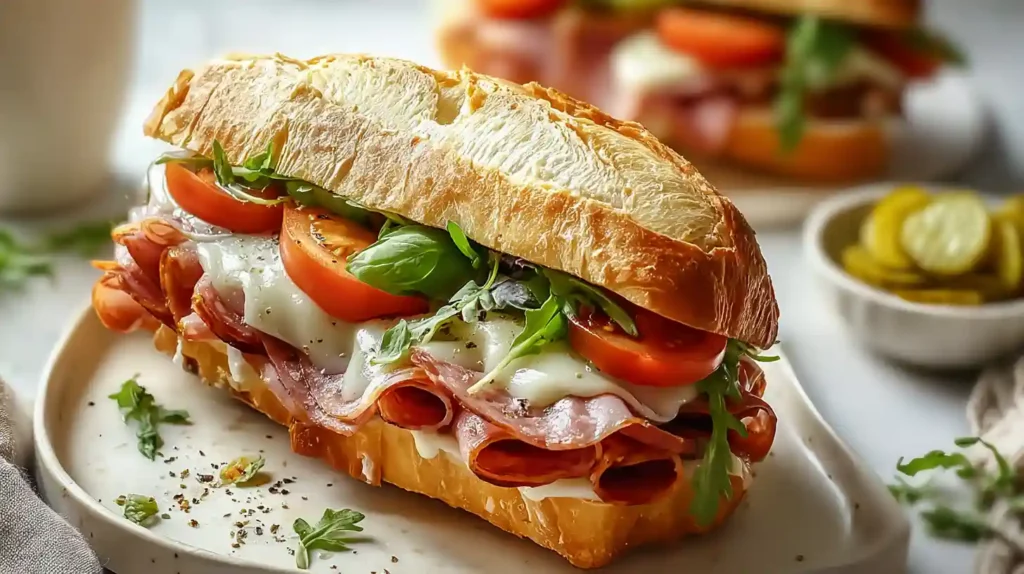
If you’ve ever walked into an Italian deli and wished you could bring that incredible smell home with you, this recipe is your answer. These baked Italian grinder sandwiches capture everything I love about classic Italian subs – the savory layers of cured meats, the sharp tang of provolone, the sweet roasted peppers, the briny olives – but with one game-changing difference: they’re baked until the cheese melts into gooey perfection and the bread gets gloriously crispy on the outside while staying soft inside. The first time I made these for a family gathering, I watched them disappear in minutes, and I’ve been making them on repeat ever since. What makes these sandwiches so special is the garlic herb butter that gets brushed onto the rolls before baking. It soaks into the bread and creates this incredible crust that’s fragrant, flavorful, and absolutely addictive. These aren’t your average cold sandwiches – they’re warm, comforting, and deeply satisfying in a way that makes everyone reach for seconds.
Why These Sandwiches Work
The brilliance of baked grinder sandwiches lies in how the heat transforms familiar ingredients into something extraordinary. When you bake these sandwiches, the meats warm through and release their oils, the cheeses melt together into one cohesive layer, and everything melds beautifully. The garlic herb butter creates a barrier that prevents the bread from getting soggy while adding intense flavor to every bite.
Using deli-sliced meats and cheeses makes assembly incredibly quick while keeping the texture perfect – thin slices layer better and create that classic Italian sub experience. The combination of three different cured meats provides complexity, with each bringing its own flavor profile. Salami adds that distinctive fermented tang, ham brings sweetness and mild saltiness, and pepperoni contributes spice and a touch of smoke. Two types of cheese work together too – mozzarella melts beautifully and stretches, while provolone adds sharp, aged flavor. Finishing with Parmesan brings a salty, nutty note that ties everything together. Baking at a moderate temperature ensures the bread toasts without burning and the cheese melts completely without becoming greasy.
Choosing Your Ingredients
The bread forms the foundation of these sandwiches, so choose wisely. Italian sub rolls or hoagie rolls work best because they have the right structure – crusty exterior, soft interior, and enough substance to hold all the fillings without falling apart. Look for rolls that are fresh but not too soft; day-old bread actually works wonderfully because it absorbs the butter better and holds up to the fillings. The rolls should be about eight to ten inches long, which makes perfect individual portions. Avoid rolls that are too dense or too airy – you want something right in the middle.
For the butter mixture, use real unsalted butter rather than margarine or spreads. Real butter melts into the bread beautifully and creates that golden, crispy crust. Unsalted allows you to control the salt level since the meats and cheeses are already quite salty. The seasonings in the butter are what make these sandwiches special. Garlic powder and onion powder provide savory depth, dried oregano and basil bring that classic Italian herb flavor, and red pepper flakes add just enough heat to make things interesting without overwhelming.
When selecting deli meats, quality matters. Visit the deli counter rather than buying pre-packaged if possible – freshly sliced meats have better texture and flavor. Ask for everything sliced thin but not shaved; you want slices that layer well but still have some substance. For salami, choose Genoa or hard salami rather than soft varieties. The ham should be regular deli ham, not honey ham, which would add unwanted sweetness. Italian dry salami or soppressata makes an excellent upgrade if you want more authentic flavor.
Cheese Selection
The cheese combination in these sandwiches is crucial to their success. Mozzarella provides that stretchy, melty quality everyone loves. Use low-moisture mozzarella from the deli counter rather than fresh mozzarella, which releases too much water. Fresh mozzarella belongs on caprese salads, not hot sandwiches. Low-moisture mozzarella melts smoothly without making the bread soggy and has a mild, creamy flavor that doesn’t compete with the other ingredients.
Provolone adds sharp, tangy flavor that balances the richness of the other cheeses and meats. Regular provolone works perfectly, but aged provolone delivers even more flavor if you can find it. The provolone should also be sliced thin at the deli counter – pre-sliced package cheese doesn’t melt as well. Parmesan cheese sprinkled on top creates a salty, umami-rich crust. Use freshly grated Parmesan rather than the powdered stuff in a can. The difference in flavor is dramatic, and fresh Parmesan melts better too.
Preparing the Garlic Herb Butter
Start by melting the butter completely so it’s liquid enough to brush onto the bread easily. You can melt it in the microwave in thirty-second bursts, stirring between each, or in a small saucepan on the stovetop over low heat. Watch carefully to prevent the butter from browning or burning – you want it just melted, not cooked. Once melted, remove it from the heat and let it cool slightly before adding the seasonings.
Add the garlic powder, onion powder, dried oregano, dried basil, red pepper flakes, salt, and black pepper directly to the melted butter. Stir everything together thoroughly until all the spices are evenly distributed throughout the butter. The mixture should look uniform with no clumps of spices. Let this sit for a few minutes while you prepare the rolls – this allows the dried herbs to hydrate slightly in the butter and bloom their flavors. The butter will smell absolutely incredible at this point.
If the butter starts to solidify before you’re ready to use it, gently rewarm it until it’s liquid again. You need it fluid enough to brush onto the bread easily. Don’t skip the brushing step or just drizzle the butter on – actually brushing it ensures even coverage and helps it soak into the bread properly.
Assembling the Sandwiches
Preheat your oven to 375°F before you start assembling. Slice each roll in half lengthwise, but don’t cut all the way through – leave them hinged at the bottom like a book. This technique keeps the sandwich together better and makes them easier to eat. Use a sharp serrated knife and a gentle sawing motion to avoid crushing the bread. Place the rolls on a large baking sheet with the cut sides facing up. Make sure they’re not touching so air can circulate and the edges get crispy.
Brush the garlic herb butter generously onto both cut surfaces of each roll. Use a pastry brush or silicone brush and really work the butter into the bread, especially at the edges. Don’t be stingy – this butter is what makes these sandwiches incredible. You want the bread glistening with butter. Let the buttered rolls sit for a minute so the butter can soak in slightly before adding the fillings.
Now comes the fun part – layering the meats and cheeses. Start with the salami on the bottom half of each roll. Fold each slice in half or in quarters rather than laying them flat – this creates height and prevents the meat from compacting into one dense layer. Distribute the salami evenly along the entire length of the roll. Follow with the ham, again folding or ruffling the slices for better texture and volume. Then add the pepperoni, arranging it so it covers the ham layer completely.
Add the first cheese layer – the mozzarella. Drape the slices over the meats, overlapping them slightly to ensure complete coverage. You don’t want any gaps where the bread shows through. Top the mozzarella with provolone slices, using the same overlapping technique. Sprinkle the grated Parmesan evenly over the top of the provolone. The Parmesan will melt into the other cheeses and create a delicious crust on top.
Adding the Toppings
The toppings add color, flavor, and texture that make these sandwiches complete. Start with roasted red peppers, which bring sweetness and a slightly smoky flavor. Use jarred roasted red peppers that have been drained well and patted dry with paper towels – excess moisture will make the sandwiches soggy. Slice them into strips and distribute them evenly over the cheese. The vibrant red color looks beautiful against the melted cheese.
Add sliced black olives next. Use canned olives that have been drained thoroughly. If you’re using whole olives, slice them yourself into rings about a quarter-inch thick. The olives add briny, salty flavor that contrasts beautifully with the rich meats and cheeses. Distribute them evenly so every bite gets some olive flavor. Banana peppers come next, adding tangy heat and crunch. Use jarred banana pepper rings and drain them well. If you prefer things spicy, use pepperoncini instead, or add more banana peppers to your taste.
Finally, tear fresh basil leaves and scatter them over the top of everything. The fresh basil adds aromatic freshness that cuts through all the richness. Don’t chop the basil with a knife – tearing it by hand prevents bruising and preserves more flavor. You want to see flecks of green throughout the sandwich. The basil will wilt slightly in the oven but will add incredible flavor.
Baking to Perfection
Transfer the baking sheet to your preheated 375°F oven. The sandwiches need about ten to twelve minutes, but ovens vary, so watch them carefully. You’re looking for the cheese to melt completely and bubble around the edges, and the bread to turn golden brown and crispy. The Parmesan should look lightly toasted on top. If your oven runs hot, check at the eight-minute mark. If it runs cool, you might need up to fifteen minutes.
You can tell the sandwiches are done when you see the cheese bubbling and the edges of the bread are golden. The smell will be absolutely intoxicating at this point. If the bread is browning too quickly but the cheese hasn’t fully melted, tent the sandwiches loosely with aluminum foil and continue baking. This protects the bread while allowing the cheese to finish melting. Don’t overbake or the bread will become too hard and the cheese might separate and become greasy.
Once done, remove the baking sheet from the oven and let the sandwiches rest for two to three minutes before cutting. This brief resting period lets the cheese set slightly so it doesn’t all slide out when you cut. The sandwiches will be extremely hot, so resist the urge to dive in immediately. Use this time to prepare any sides or clean up your workspace.
Cutting and Serving
Use a sharp serrated knife to cut the sandwiches. If they’re still hinged at the bottom, cut through that hinge first to separate the halves completely. Then cut each sandwich into individual portions – you can do halves, thirds, or even smaller pieces for a party. Wipe the knife clean between cuts so melted cheese doesn’t build up on the blade and tear the bread.
Serve these sandwiches warm while the cheese is still melty and the bread is crispy. They’re incredible on their own but pair beautifully with classic Italian sides. A simple green salad with Italian vinaigrette provides refreshing contrast to the rich sandwiches. Pasta salad with Italian dressing, cherry tomatoes, and mozzarella balls makes a great side. Marinara sauce for dipping is almost mandatory – serve it warm in small bowls so everyone can dip their sandwiches.
For a complete Italian feast, serve antipasto skewers alongside – thread cherry tomatoes, mozzarella balls, olives, and salami onto toothpicks. Potato chips or kettle chips add welcome crunch. A big jar of pickled vegetables like giardiniera complements the sandwiches perfectly with their tangy bite. For drinks, Italian sodas, lemonade, or iced tea work wonderfully. These sandwiches are also fantastic with beer or red wine if you’re serving adults.
Variations to Try
The beauty of these sandwiches is how easily you can customize them. For a spicier version, add sliced jalapeños or increase the red pepper flakes in the butter. Use hot capicola instead of regular ham, or add hot Italian sausage that’s been cooked and crumbled. For supreme heat lovers, drizzle hot honey over the top before baking – the combination of sweet and spicy is addictive.
Make vegetarian grinders by replacing the meats with grilled vegetables. Use layers of grilled eggplant, zucchini, bell peppers, and mushrooms. Add sun-dried tomatoes for extra flavor. The cheese and toppings stay the same. For a lighter version, use turkey and chicken instead of the traditional cured meats. The flavor will be milder but still delicious, and you’ll save calories and sodium.
Create a meatball grinder variation by replacing the deli meats with sliced meatballs and adding extra marinara sauce before the cheese. This transforms them into meatball subs. For a Philly-inspired version, use roast beef instead of Italian meats, add sautéed peppers and onions, and use only provolone cheese. Make it breakfast-style by using bacon, sausage, scrambled eggs, and cheddar cheese with the seasoned butter.
Make-Ahead and Storage
These sandwiches are perfect for make-ahead preparation, which makes them ideal for parties and gatherings. Assemble the sandwiches completely as directed, including all meats, cheeses, and toppings, but don’t bake them. Wrap each sandwich tightly in aluminum foil or plastic wrap and refrigerate for up to twenty-four hours. When ready to serve, remove the wrapping, place them on a baking sheet, and bake as directed. They might need an extra two to three minutes since they’ll be cold from the refrigerator.
You can also prepare the garlic herb butter several days in advance. Make a larger batch, store it in an airtight container in the refrigerator, and reheat gently when ready to use. The flavors actually improve as the herbs sit in the butter. Some people like to freeze the prepared butter in ice cube trays for easy portioning.
Leftover baked sandwiches can be stored in the refrigerator for up to three days. Wrap them individually in foil and refrigerate. To reheat, wrap in foil and warm in a 350°F oven for about ten minutes, or until heated through. The microwave works too but won’t restore the crispiness – the oven is worth the extra time. You can also eat them cold like traditional subs, though they won’t have that amazing crispy bread.
Scaling for a Crowd
These sandwiches are fantastic for feeding groups because they’re easy to multiply and transport. For a party, calculate one sandwich per two to three people if serving other food, or one per person if the sandwiches are the main attraction. You can bake them in batches if your oven won’t fit multiple baking sheets at once, or use multiple ovens if available.
Consider using one long loaf of Italian bread instead of individual rolls when feeding a large crowd. Build the sandwich as one giant grinder on a whole loaf, bake it, then slice it into portions. This method is faster for assembly and looks impressive. A two-foot loaf serves eight to ten people easily. Some people prefer making these in a large sheet pan with dinner rolls – arrange the rolls close together, build the sandwiches, and bake. The rolls touch during baking, creating soft sides with crispy tops.
For potlucks or tailgates, bake the sandwiches at home, wrap them tightly in foil while still warm, and transport in an insulated container. They’ll stay warm for a couple hours this way. If you need to reheat on-site, wrapped sandwiches can go on a grill set to low heat or in a portable oven.
Common Mistakes to Avoid
Don’t skip draining the jarred vegetables thoroughly. Roasted red peppers, olives, and banana peppers all pack a lot of liquid in their jars. If you don’t drain and pat them dry, that liquid will make your sandwiches soggy. Take the extra minute to do this properly. Avoid using too many wet ingredients – if you want to add tomatoes, use sun-dried rather than fresh, which release water as they bake.
Don’t overcrowd the baking sheet. The sandwiches need space around them for air circulation so the sides and bottom get crispy. If they’re touching, they’ll steam instead of toast. Use multiple baking sheets if necessary. Be careful not to overbake – once the cheese starts browning too much, it becomes greasy and can separate. You want melted and bubbly, not browned.
Avoid cutting all the way through the rolls when slicing them open. Keeping them hinged makes assembly easier and helps them hold together while eating. Don’t use cold butter for the mixture – it needs to be fully melted to brush on properly and soak into the bread. Room temperature or slightly cooled butter won’t absorb the same way.
Don’t lay the meat slices flat – fold or ruffle them to create height and better texture. Flat meat compacts and becomes dense. Finally, resist cutting into the sandwiches immediately after baking. Giving them a few minutes to rest keeps the cheese from sliding out and makes them much easier to handle.
Frequently Asked Questions
Can I use different types of bread?
Absolutely. While Italian sub rolls or hoagie rolls work best, you can use French bread, ciabatta rolls, or even a baguette. Just make sure whatever bread you choose has a sturdy structure that won’t fall apart under the weight of the fillings and can stand up to the butter and baking.
How do I prevent soggy sandwiches?
The garlic herb butter creates a barrier that helps prevent sogginess. Additionally, make sure to drain all jarred ingredients very well and pat them dry with paper towels. Don’t add wet ingredients like fresh tomatoes or too much sauce. If you’re making these ahead, wait to add the wettest ingredients until just before baking.
Can I freeze these sandwiches?
You can freeze assembled but unbaked sandwiches for up to one month. Wrap them very well in plastic wrap and then aluminum foil. Bake from frozen, adding about five extra minutes to the baking time. The texture of the vegetables may change slightly after freezing, but the sandwiches will still taste great.
What if I don’t like one of the meats?
Feel free to customize the meat selection to your preferences. You can use all of one type of meat, mix different varieties, or substitute with turkey, roast beef, or chicken. The key is using enough meat to create substantial layers. About one and a half pounds total works well for six sandwiches.
Can I make these without the spicy ingredients?
Yes, simply omit the red pepper flakes from the butter mixture and skip the banana peppers. The sandwiches will still be delicious with all the other flavors. You can also control the heat level by adjusting the amount of red pepper flakes or choosing mild versus hot banana peppers.
Do I need to toast the rolls first?
No, the rolls toast during baking with the garlic butter. Pre-toasting them would make them too hard. The butter-baking method creates the perfect texture – crispy outside, soft inside. If you prefer extra-crispy bread, you can broil the assembled sandwiches for the last minute of baking, watching carefully.
What’s the best way to cut these for a party?
For parties, cut each sandwich into thirds or quarters rather than halves. This creates perfect finger-food portions that are easier to eat while standing and mingling. Use a very sharp serrated knife and wipe it clean between cuts for the neatest results. You can also use toothpicks to hold smaller portions together.
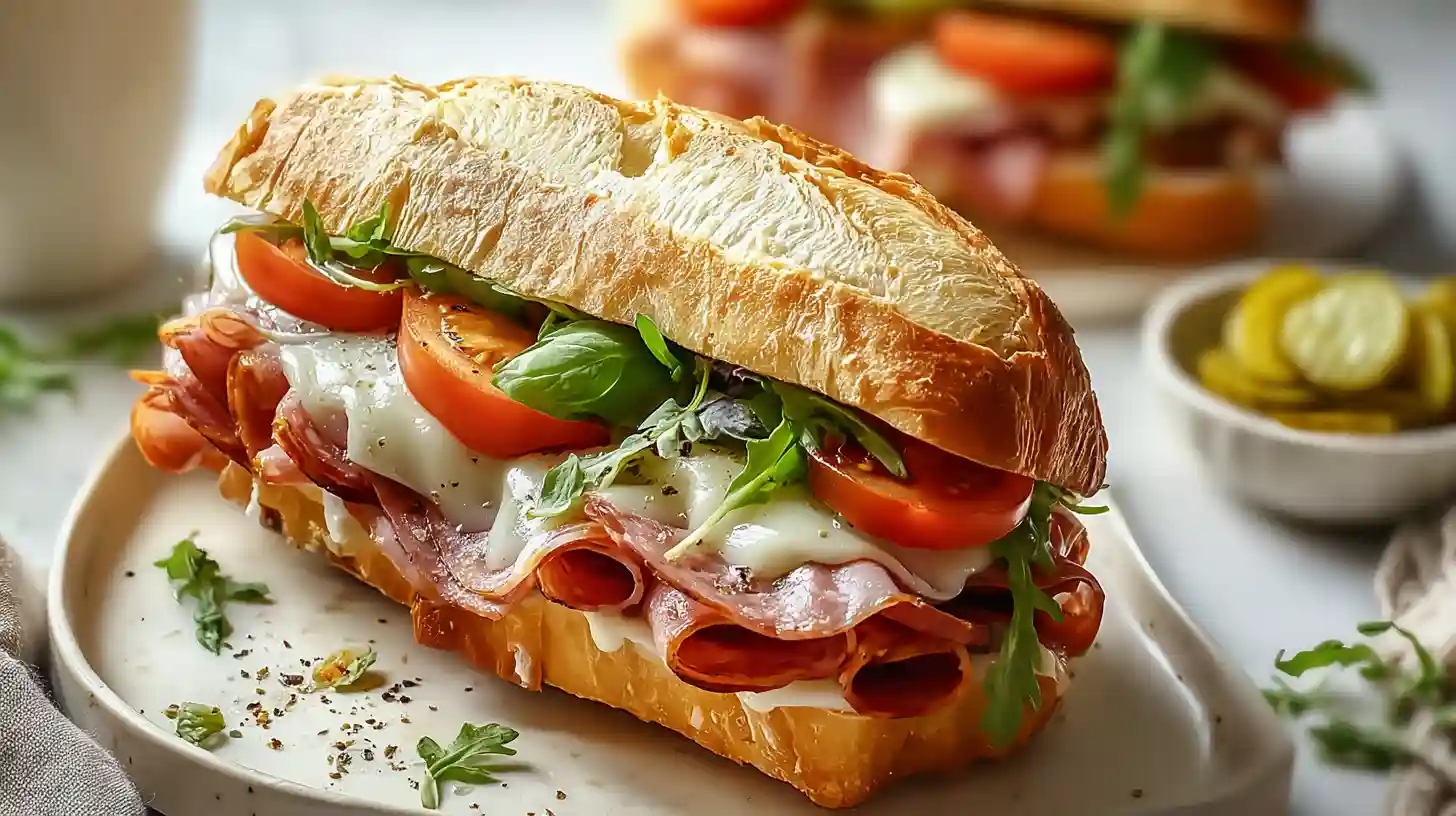

Baked Italian Grinder Sandwiches
Ingredients
Equipment
Method
- Preheat oven to 375°F (190°C). Line a large baking sheet with parchment paper or lightly grease it.
- Slice Italian sub rolls in half lengthwise, keeping them hinged at the bottom without cutting all the way through. Place cut-side up on the prepared baking sheet.
- In a small bowl, combine melted butter, garlic powder, onion powder, dried oregano, dried basil, red pepper flakes, salt, and black pepper. Stir until well mixed.
- Brush the seasoned butter generously onto both cut sides of each roll, making sure to cover all surfaces evenly.
- Layer the salami on the bottom half of each roll, folding or ruffling the slices rather than laying them flat. Follow with layers of ham and pepperoni, using the same folding technique.
- Add the mozzarella cheese slices over the meats, overlapping slightly to cover completely. Top with provolone cheese slices using the same technique.
- Sprinkle grated Parmesan cheese evenly over the provolone. Add the drained roasted red peppers, black olives, and banana peppers, distributing them evenly across all sandwiches.
- Tear fresh basil leaves and scatter them over the toppings.
- Bake for 10-12 minutes, until cheese is melted and bubbly and the bread edges are golden brown and crispy. Watch carefully to prevent over-browning.
- Remove from oven and let rest for 2-3 minutes. Cut each sandwich in half or into smaller portions using a sharp serrated knife. Serve warm.