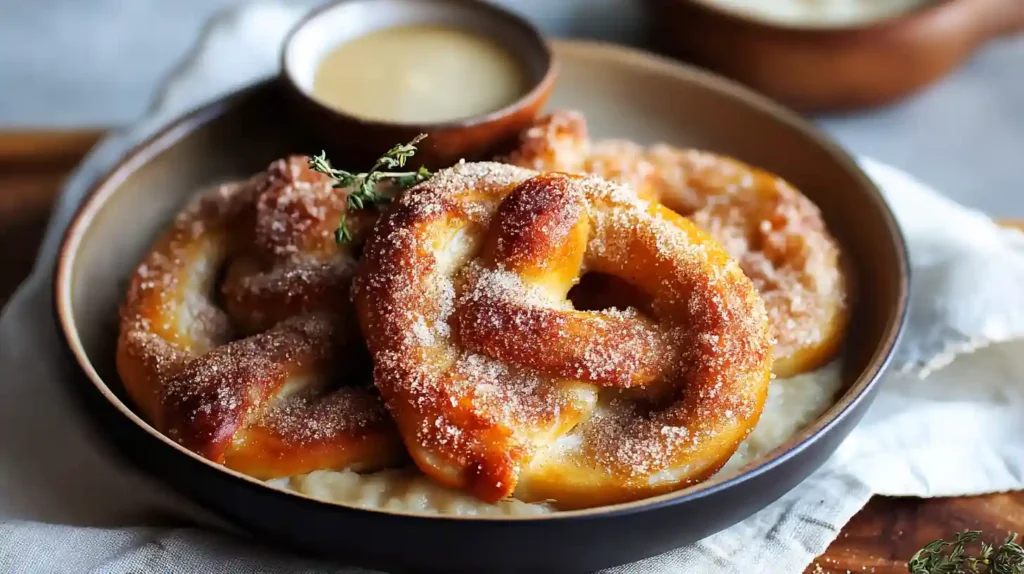
I used to think soft pretzels were one of those things you could only get right if you worked in a mall food court or a German bakery. The ones I had tried making at home always came out wrong. Too dense. Too dry. Or they looked okay but tasted like cardboard dusted with cinnamon. Then one rainy Saturday, I found myself craving that warm, pillowy pretzel experience so badly that I refused to give up. I watched my grandmother’s technique more carefully this time. She had learned it from a German neighbor decades ago, and she insisted the secret was not in fancy equipment or special flour. It was in understanding how the dough should feel, how long to let it rise, and most importantly, why you boil pretzels before baking them. That day, I finally made Cinnamon Sugar Soft Pretzels that actually worked. The outside had that signature chewiness with just enough crunch from the cinnamon sugar. The inside was so soft it practically melted. My whole family stood around the cooling rack grabbing them while they were still warm, and I knew I had finally cracked the code. These pretzels taste exactly like the ones from those pretzel stands, except better because they come out of your own oven and you control how much cinnamon sugar goes on top.
What Makes Soft Pretzels Different
Soft pretzels are not just twisted bread dough[file:30]. They have a very specific texture that comes from a unique process. The dough itself is simple, made with flour, yeast, water, a little sugar, and butter. But what sets pretzels apart is the boiling step. Before baking, you dip each shaped pretzel into boiling water that has been mixed with baking soda. This alkaline bath is what creates that distinctive chewy crust and deep brown color. It also gives pretzels their slightly tangy, almost malty flavor.
The boiling step gelatinizes the outside of the dough, which prevents it from rising too much in the oven and creates that signature texture[file:30]. Traditional German pretzels use food-grade lye for an even stronger effect, but baking soda works perfectly for home bakers and is completely safe. Once you understand this technique, you can make pretzels that taste as good as any you would buy. The cinnamon sugar version is particularly irresistible because you get that salty-sweet contrast, with warm cinnamon cutting through the richness of the buttery dough.
Gathering Your Ingredients
For the pretzel dough, you need two and one-quarter teaspoons of active dry yeast, which is one standard packet[file:30]. You will dissolve this in one cup of warm water, about 110 degrees Fahrenheit. Too hot and it kills the yeast. Too cold and it will not activate. Add one tablespoon of granulated sugar to feed the yeast and help it foam up. For the dough itself, use three and a half cups of all-purpose flour and one teaspoon of salt. The salt is important for flavor, so do not skip it. You will also need two tablespoons of melted unsalted butter to add richness and tenderness to the dough.
For the boiling bath, you need ten cups of water and one-quarter cup of baking soda[file:30]. The baking soda is not optional. It is what creates the pretzel crust. For finishing the pretzels, you need one large egg, beaten, to brush on before baking. This gives them that beautiful shiny, golden finish. The cinnamon sugar topping requires half a cup of granulated sugar mixed with two teaspoons of ground cinnamon. You can adjust the cinnamon to your taste, adding more if you want a stronger spice flavor or less if you prefer it mild.
Making the Dough
Start by activating the yeast[file:30]. Pour the warm water into a small bowl and sprinkle the yeast over the surface. Stir in the tablespoon of sugar until it dissolves. Let this mixture sit for five to ten minutes. You will know it is ready when it becomes foamy and smells slightly yeasty. If nothing happens after ten minutes, your water was probably too hot or your yeast was old. Start over with fresh yeast and properly warmed water.
While the yeast activates, combine the flour and salt in a large mixing bowl[file:30]. Make a well in the center. Once the yeast mixture is foamy, pour it into the well along with the melted butter. Using a wooden spoon or your hands, mix everything together until a shaggy dough forms. Turn the dough out onto a lightly floured surface and knead it for five to seven minutes. You want it smooth and elastic. It should spring back when you poke it. If the dough feels too sticky, add a little more flour, one tablespoon at a time. If it feels too dry and crumbly, add a teaspoon of water.
Place the kneaded dough in a clean bowl that you have lightly oiled[file:30]. Turn the dough to coat it with oil, then cover the bowl with a damp kitchen towel. Set it in a warm, draft-free place to rise. This takes one to one and a half hours. The dough should double in size. If your kitchen is cold, place the bowl near a warm oven or in a turned-off oven with the light on. Once it has risen, punch the dough down with your fist to release the air bubbles. This step is important because it redistributes the yeast and creates a better texture.
Shaping the Pretzels
Divide the risen dough into eight equal portions[file:30]. A kitchen scale helps here, but you can also eyeball it. Each piece should be roughly the same size so the pretzels bake evenly. Take one portion and roll it between your hands and the work surface into a long rope, about eighteen inches long. The rope should be slightly thicker in the middle and taper toward the ends. This makes shaping easier and creates that classic pretzel look.
To form the pretzel shape, lay the rope in a U-shape with the curve facing away from you[file:30]. Cross the two ends over each other about two inches from the tips, then cross them again to create a twist. Fold the twisted ends down toward the curve of the U and press them gently onto the dough to seal. The pretzel should look like a classic twist. Do not worry if your first few look wonky. You will get better with practice. Repeat this process with the remaining seven pieces of dough. Let the shaped pretzels rest on your work surface while you prepare the boiling water.
Boiling and Baking
Preheat your oven to 375 degrees Fahrenheit[file:30]. Line two baking sheets with parchment paper. Bring ten cups of water to a rolling boil in a large pot. Once boiling, carefully add the baking soda. It will fizz up vigorously, so add it slowly and stir to dissolve. The water will turn slightly cloudy. This is normal.
Using a slotted spoon or spider strainer, gently lower one pretzel at a time into the boiling water[file:30]. Boil each pretzel for about thirty seconds. It will puff up slightly and float to the surface. Do not boil longer than thirty seconds or the crust will be too thick. Remove the pretzel with the slotted spoon, letting excess water drain off, and place it on the prepared baking sheet. Repeat with the remaining pretzels. Work quickly but carefully. The boiled pretzels will be slippery.
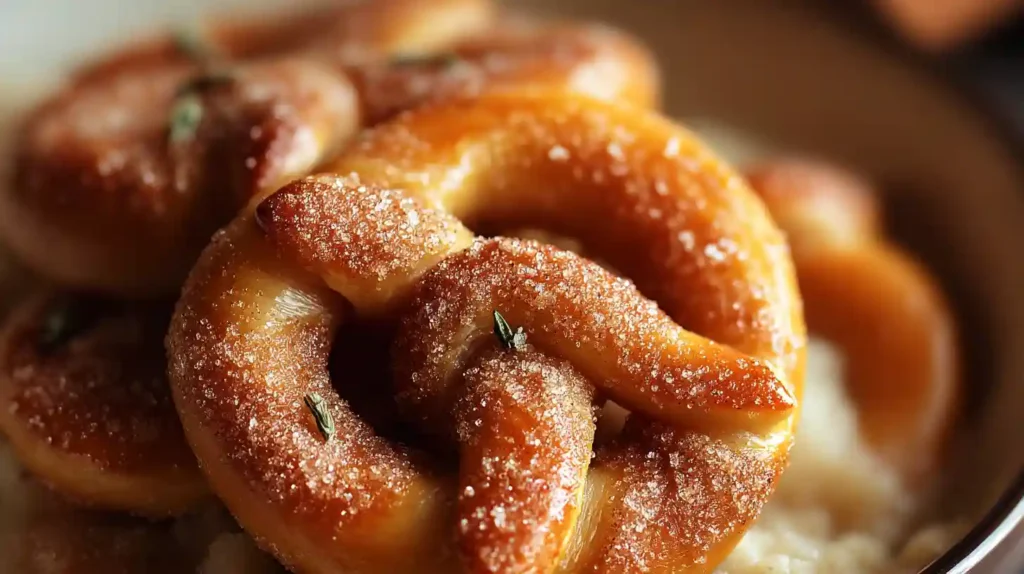
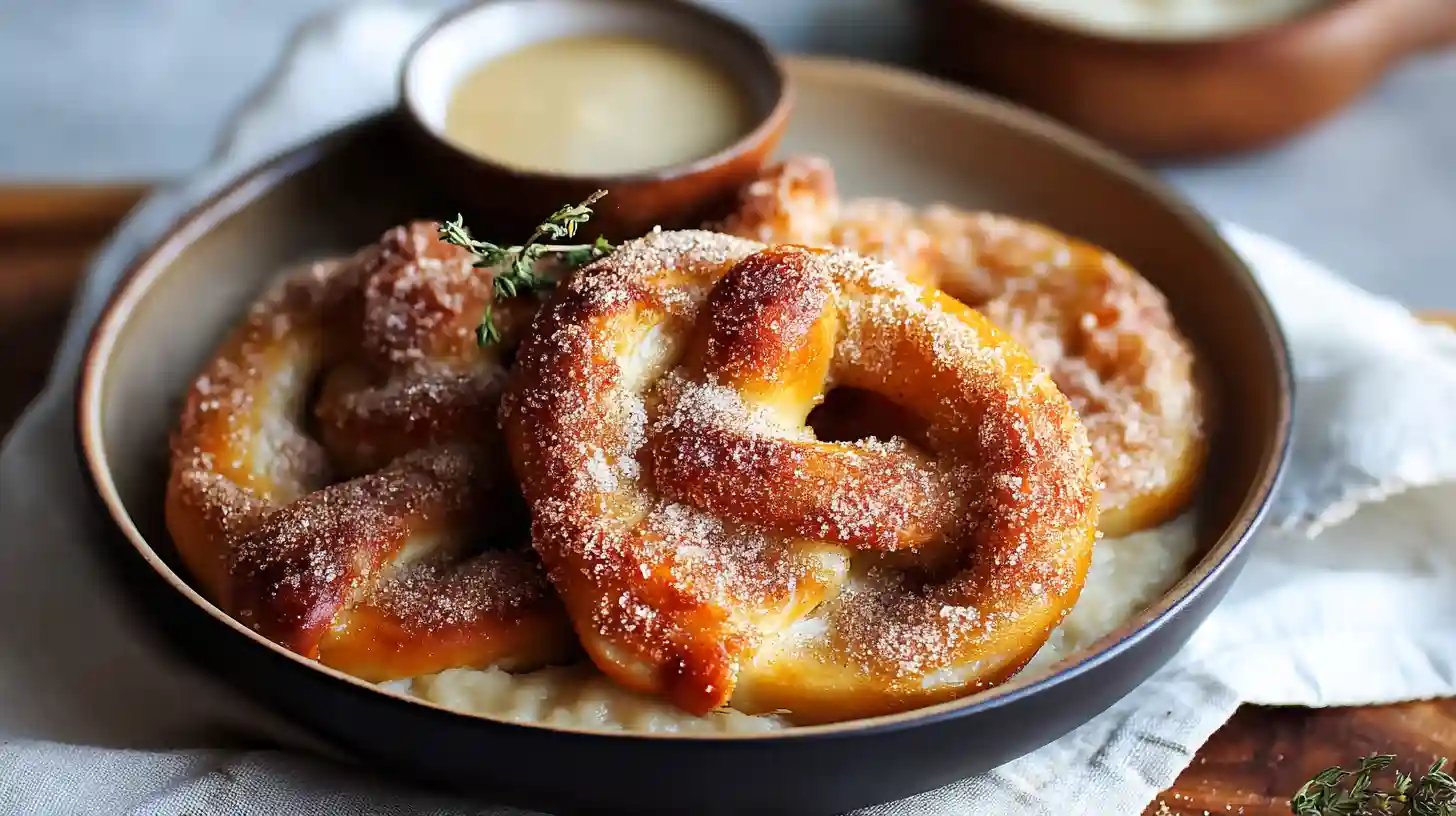
Once all the pretzels are boiled and arranged on the baking sheets, brush the top of each one with the beaten egg[file:30]. This egg wash creates that gorgeous shiny, golden-brown finish. In a small bowl, mix together the granulated sugar and cinnamon. While the pretzels are still wet from the egg wash, generously sprinkle the cinnamon sugar over the top of each pretzel. Do not be shy. The sugar should coat the surface well.
Bake the pretzels for twelve to fifteen minutes, or until they turn deep golden brown[file:30]. The exact time depends on your oven and how dark you like them. Keep an eye on them after ten minutes. When they come out, they will be puffed and fragrant. Let them cool on the baking sheets for just a minute or two, then transfer to a wire rack. They are best eaten warm, when the outside is still slightly crispy and the inside is soft and pillowy.
Tips for Perfect Pretzels
- Use a kitchen thermometer to check your water temperature for the yeast. Between 105 and 115 degrees Fahrenheit is ideal[file:30].
- Knead the dough until it passes the windowpane test. Stretch a small piece of dough. If it forms a thin, translucent membrane without tearing, it is ready.
- Do not skip the boiling step. It is what makes these pretzels taste authentic[file:30].
- Brush the egg wash on right before adding the cinnamon sugar so the sugar sticks properly[file:30].
- If you prefer a saltier version, you can sprinkle coarse pretzel salt on half the batch before baking and cinnamon sugar on the other half.
Common Mistakes to Avoid
The biggest mistake people make with soft pretzels is not letting the dough rise long enough[file:30]. If you rush this step, the pretzels will be dense and heavy instead of light and airy. The dough should truly double in size. Another common error is using water that is too hot for the yeast. Water above 120 degrees Fahrenheit will kill the yeast cells, and your dough will not rise at all. If you are unsure, it is better to err on the side of cooler water.
Many people also make the mistake of boiling the pretzels for too long[file:30]. Thirty seconds is all you need. Any longer and the crust becomes too thick and chewy in an unpleasant way. The opposite problem happens if you skip the boiling step entirely. Without it, you just get twisted bread, not pretzels. The baking soda bath is essential for that distinctive pretzel taste and texture. Finally, do not underbake them. Pretzels should be a deep golden brown, not pale. Pale pretzels lack flavor and the crust will not have the right texture.
Variations to Try
Once you master the basic recipe, there are endless ways to customize your pretzels[file:30]. For a classic savory version, skip the cinnamon sugar and sprinkle the pretzels with coarse salt before baking. You can also brush them with melted garlic butter right after they come out of the oven. For chocolate lovers, drizzle cooled pretzels with melted chocolate or dip half of each pretzel in chocolate and let it set.
Stuffed pretzels are another fun variation[file:30]. After rolling each piece of dough into a rope, flatten it slightly and place a piece of cheese or some cooked sausage in the center. Seal the dough around the filling, then shape into a pretzel and proceed with boiling and baking. Cheddar cheese and jalapenos make a great combination. You can also make pretzel bites by cutting the dough ropes into one-inch pieces, boiling them, and baking them as mini pretzels. These are perfect for parties, especially served with cheese sauce or mustard for dipping.
Storing and Reheating
Soft pretzels are best eaten the day you make them, preferably within a few hours of baking[file:30]. If you have leftovers, store them in an airtight container at room temperature for up to two days. They will lose some of their crispness, but they still taste good. To refresh them, wrap each pretzel in a damp paper towel and microwave for fifteen to twenty seconds. This steams them slightly and brings back some of the softness.
You can also freeze baked pretzels[file:30]. Let them cool completely, then wrap each one individually in plastic wrap and place them all in a freezer bag. They will keep for up to three months. To reheat, unwrap and bake in a 350-degree oven for about ten minutes, until warmed through. You can also freeze the shaped pretzels before boiling them. Place them on a baking sheet and freeze until solid, then transfer to a freezer bag. When you want fresh pretzels, boil them straight from frozen, adding an extra ten to fifteen seconds to the boiling time.
Why This Recipe Works
This recipe works because it respects the science behind pretzel making while keeping the process simple enough for home bakers[file:30]. The yeast gets properly activated, which ensures a good rise. The kneading develops the gluten structure needed for that chewy texture. The baking soda bath creates the alkaline environment that gives pretzels their characteristic crust and flavor. The egg wash provides shine and helps the toppings stick. Every step has a purpose.
The ratio of flour to liquid is carefully balanced to create dough that is easy to work with but still produces soft pretzels[file:30]. Too much flour makes them tough. Too much liquid makes them impossible to shape. The butter adds richness without making the dough greasy. The cinnamon sugar topping is generous enough to taste in every bite but not so much that it overwhelms the pretzel itself. This recipe has been tested and tweaked until every element works together perfectly. Make it once and you will understand why homemade pretzels are so much better than store-bought.
Frequently Asked Questions
Can I use instant yeast instead of active dry yeast?
Yes, you can substitute instant yeast for active dry yeast using the same amount[file:30]. Instant yeast does not need to be activated in water first. You can mix it directly into the flour. However, I still recommend dissolving it in the warm water with the sugar because this helps ensure it is evenly distributed throughout the dough.
Why do I need to boil the pretzels before baking?
Boiling the pretzels in a baking soda solution creates the distinctive chewy crust and deep brown color that makes pretzels different from regular bread[file:30]. The alkaline bath gelatinizes the outside of the dough, which gives pretzels their signature texture and slightly tangy flavor. Without this step, you just have twisted bread.
Can I make the dough ahead of time?
Yes, you can make the dough the night before[file:30]. After kneading, place it in an oiled bowl, cover tightly, and refrigerate overnight. The next day, let it come to room temperature for about an hour, then proceed with shaping, boiling, and baking. The cold rise actually develops more flavor.
How do I know when the dough has risen enough?
The dough should double in size, which takes one to one and a half hours in a warm environment[file:30]. To test if it is ready, gently press two fingers into the dough. If the indentations remain and do not spring back, the dough has risen enough. If it springs back quickly, it needs more time.
Can I make these without the cinnamon sugar?
Absolutely[file:30]. For classic salted pretzels, brush with egg wash and sprinkle with coarse pretzel salt or sea salt before baking. You can also brush them with melted butter and sprinkle with garlic powder and parmesan cheese for a savory version.
Why did my pretzels turn out tough?
If your pretzels are tough, you probably added too much flour or kneaded them for too long[file:30]. The dough should be soft and slightly tacky but not sticky. You also may have overbaked them. Pretzels should be golden brown but not dark brown. Check them at the twelve-minute mark.
How long do these pretzels stay fresh?
Homemade soft pretzels are best eaten within a few hours of baking[file:30]. They will stay good at room temperature for up to two days if stored in an airtight container. You can refresh them by wrapping in a damp paper towel and microwaving for fifteen to twenty seconds. For longer storage, freeze them and reheat in the oven.

Cinnamon Sugar Soft Pretzels
Ingredients
Equipment
Method
- Activate Yeast: Pour warm water (110°F) into a small bowl. Sprinkle yeast over the water and stir in 1 tablespoon sugar. Let sit for 5 to 10 minutes until foamy.
- Mix Dough: In a large bowl, combine flour and salt. Pour in the foamy yeast mixture and melted butter. Stir until a shaggy dough forms.
- Knead: Turn dough onto a lightly floured surface. Knead for 5 to 7 minutes until smooth and elastic.
- First Rise: Place dough in a lightly oiled bowl, turning to coat. Cover with a damp towel and let rise in a warm place for 1 to 1 1/2 hours, until doubled in size.
- Shape Pretzels: Punch down dough and divide into 8 equal portions. Roll each portion into an 18-inch rope. Form into pretzel shape by creating a U-shape, twisting the ends, and folding them over the center. Press to seal.
- Preheat Oven: Set oven to 375°F (190°C). Line two baking sheets with parchment paper.
- Prepare Boiling Bath: Bring 10 cups of water to a boil in a large pot. Carefully add baking soda and stir to dissolve.
- Boil Pretzels: Using a slotted spoon, lower each pretzel into the boiling water one at a time. Boil for 30 seconds, then remove and place on prepared baking sheets.
- Apply Egg Wash: Brush the top of each boiled pretzel with beaten egg.
- Add Cinnamon Sugar: In a small bowl, mix together 1/2 cup sugar and 2 teaspoons cinnamon. Generously sprinkle over the wet pretzels.
- Bake: Bake for 12 to 15 minutes, until deep golden brown. Transfer to a wire rack and cool slightly before serving.