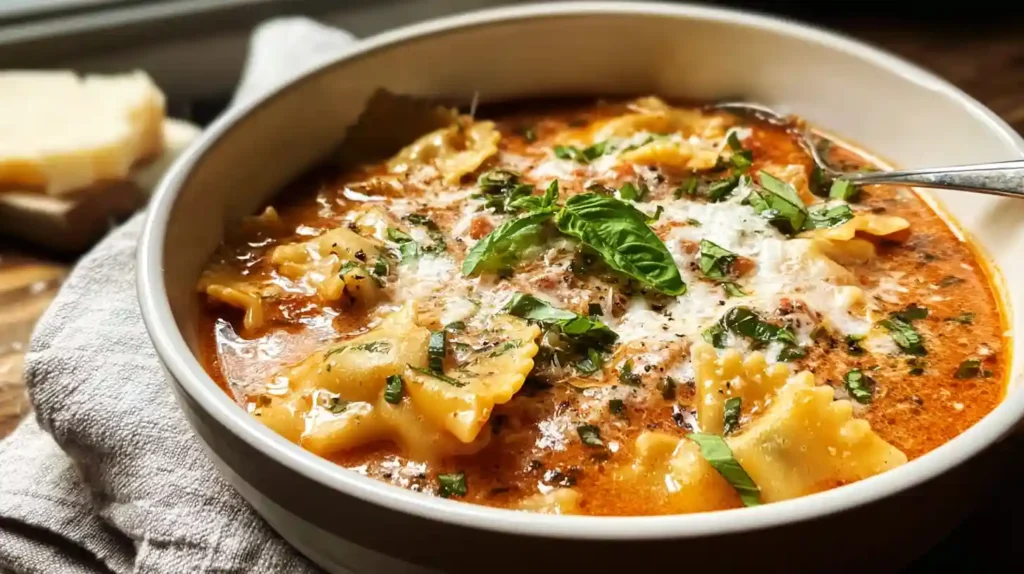
There’s something magical about taking all the flavors of classic lasagna and transforming them into a soup that’s just as satisfying but infinitely easier to make. The first time I made this creamy lasagna soup, I couldn’t believe how much it tasted like the real thing – that same rich tomato flavor, the tender noodles soaking up all the savory broth, and that incredible creamy cheese throughout every spoonful. What makes this recipe so brilliant is that you get all those layered lasagna flavors without spending hours in the kitchen or dirtying a million dishes. Everything cooks in one pot, the broken lasagna noodles get perfectly tender right in the soup, and stirring in ricotta, mozzarella, and parmesan at the end creates this luscious, creamy texture that makes each bowl feel like a warm hug. It’s become my absolute favorite way to satisfy a lasagna craving on busy weeknights when I want maximum comfort with minimal effort.
Why This Recipe Works
The genius of this lasagna soup lies in how it captures the essence of traditional lasagna while simplifying the process completely. Breaking the lasagna noodles into pieces allows them to cook directly in the broth, where they absorb all those rich tomato and meat flavors while releasing their starches to naturally thicken the soup. This creates a heartier, more substantial texture than regular soup without any thickening agents.
The combination of marinara sauce, crushed tomatoes, and chicken broth builds a deeply flavorful base that’s both rich and balanced. Browning the ground meat and sautéing the aromatics first develops those essential savory notes. The real magic happens at the end when you stir in three types of cheese – ricotta brings that signature lasagna creaminess, mozzarella adds stretch and mild flavor, and parmesan delivers sharp, salty depth. Adding them off the heat prevents the cheese from becoming grainy while creating that gorgeous, velvety consistency. It’s all the satisfaction of lasagna with a fraction of the work.
Ingredient Breakdown
One pound of lean ground beef provides the meaty foundation, though ground turkey or Italian sausage work beautifully too. Lean beef keeps the soup from becoming greasy while still delivering rich flavor. One small yellow onion, finely diced, and three cloves of minced garlic create the aromatic base that makes your kitchen smell incredible. These aromatics are essential – they build layers of flavor that make the difference between good soup and amazing soup.
One tablespoon of olive oil gets everything started, one teaspoon of Italian seasoning brings together oregano, basil, and thyme flavors, and half a teaspoon of crushed red pepper flakes adds optional warmth. Salt and black pepper season the base properly. A twenty-four-ounce jar of marinara sauce delivers concentrated tomato flavor – use your favorite brand or homemade if you have it. Four cups of low-sodium chicken broth forms the liquid base, and one fifteen-ounce can of crushed tomatoes deepens the tomato presence and adds body.
Eight lasagna noodles, broken into bite-sized pieces, transform this into lasagna soup rather than just tomato soup with pasta. Half a cup each of heavy cream and ricotta cheese create that signature lasagna creaminess. One cup of shredded mozzarella provides that gooey, melty quality everyone loves, and a quarter cup of grated parmesan adds sharp, nutty finish. Fresh basil or parsley for garnish brings brightness and visual appeal.
Choosing Your Meat
Lean ground beef at eighty-five to ninety percent lean works perfectly here. It has enough fat to stay juicy and flavorful without making the soup greasy. Any excess fat drains easily after browning. Ground beef delivers that classic, hearty lasagna flavor most people expect and love. The meat breaks into small pieces that distribute evenly throughout the soup, ensuring every spoonful has protein.
Ground turkey offers a leaner option that works beautifully if you prefer lighter meals or want to reduce calories. It has a milder flavor that lets the tomatoes and cheese shine. For more flavor punch, try half pound each of ground beef and Italian sausage – the sausage adds fennel and spice notes that taste incredible. Hot Italian sausage brings heat if you like things spicy. Remove casings and break the sausage into crumbles as it cooks. For vegetarian lasagna soup, skip the meat entirely and add extra vegetables like mushrooms, zucchini, and bell peppers, or use plant-based ground meat alternatives.
Pasta Options and Preparation
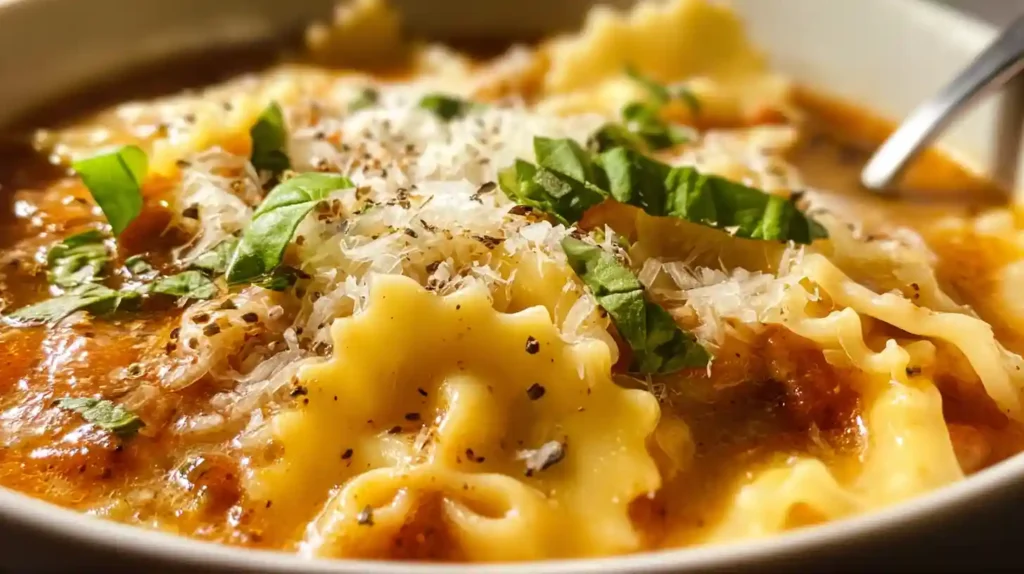
Traditional lasagna noodles broken into pieces are ideal because their wide, flat shape mimics actual lasagna while providing surface area that soaks up flavor beautifully. Break each noodle into three or four pieces – you want bite-sized chunks, not tiny fragments. The irregular edges that result from breaking add rustic character and create different textures in each bite. You can use regular lasagna noodles or no-boil lasagna noodles; both work fine since they’re cooking in liquid.
If you don’t have lasagna noodles, pappardelle or wide egg noodles make excellent substitutes with similar width and texture. Broken fettuccine works in a pinch. Regular pasta shapes like rotini, penne, or shells create a different experience but still taste delicious. Whatever pasta you choose, add it directly to the simmering soup and cook until just tender. The starches released during cooking help thicken the broth naturally. Don’t overcook – the noodles continue softening as the soup sits, so aim for just tender with a slight bite remaining.
Building the Flavor Base
Heat olive oil in a large soup pot or Dutch oven over medium-high heat. Add the ground beef and cook, breaking it apart with a wooden spoon or spatula as it browns. You want good caramelization here – those browned bits are pure flavor. Take your time letting the meat develop color, about five to seven minutes. Once browned, drain off all but about one tablespoon of fat. That remaining fat carries flavor and helps sauté the vegetables.
Add the diced onion to the pot with the meat. Cook, stirring occasionally, for three to four minutes until the onion softens and becomes translucent. The onion should smell sweet and look slightly golden at the edges. Add the minced garlic and cook for thirty seconds to one minute, stirring constantly. Garlic burns easily, so watch it carefully. You’ll know it’s ready when your kitchen smells absolutely amazing and the garlic becomes fragrant. This aromatic foundation is crucial – it builds complexity that simple meat and tomato sauce alone can’t achieve.
Creating the Tomato Base
Sprinkle the Italian seasoning, crushed red pepper flakes if using, salt, and black pepper over the meat and onions. Stir everything together so the spices coat the meat evenly and toast slightly in the heat, which intensifies their flavors. Cook for about one minute, stirring constantly. This technique, called blooming the spices, makes a noticeable difference in the final depth of flavor.
Pour in the marinara sauce, chicken broth, and crushed tomatoes. Use a wooden spoon to scrape the bottom of the pot thoroughly, loosening any browned bits stuck there. These fond particles add tremendous savory depth to your soup. Stir everything together until well combined. The mixture should be a rich, deep red color. Bring it to a boil over medium-high heat, then reduce the heat to medium-low and let it simmer gently, uncovered, for fifteen to twenty minutes.
This simmering time allows all the flavors to meld and develop. The tomatoes mellow, the spices infuse throughout, and the liquid reduces slightly to concentrate the flavors. Stir occasionally to prevent anything from sticking to the bottom. Taste and adjust the seasoning if needed – you might want more salt, pepper, or Italian seasoning depending on your marinara sauce and personal preference.
Cooking the Noodles
Add the broken lasagna noodles directly into the simmering soup. Make sure they’re submerged in the liquid – use a spoon to push them down if needed. The noodles will soften and separate as they cook. Stir occasionally, every two to three minutes, to prevent the noodles from sticking together or to the bottom of the pot. They need about ten to twelve minutes to become tender.
Test a piece after ten minutes – it should be tender but still have a slight bite. Remember, the noodles continue cooking even after you remove the pot from heat, and they’ll keep absorbing liquid as the soup sits. If your soup becomes too thick as the noodles cook, add extra chicken broth a half cup at a time until you reach your desired consistency. The soup should be hearty and thick enough to coat a spoon, but still clearly soupy rather than stew-like.
Adding the Creamy Finish
Once the noodles are tender, reduce the heat to low or turn it off completely. This step is crucial – adding cheese to boiling liquid can cause it to become grainy or stringy rather than smooth and creamy. Stir in the heavy cream first, which helps temper the temperature and creates a base for the cheese to melt smoothly. Mix it in thoroughly.
Add the ricotta cheese by dolloping spoonfuls around the pot, then stirring gently to incorporate it throughout the soup. The ricotta will create little pockets of creamy richness. Sprinkle in the mozzarella and parmesan cheeses and stir gently but thoroughly. The residual heat will melt the cheeses perfectly. Keep stirring until all the cheese has melted and the soup looks uniformly creamy with no cheese clumps remaining.
Taste the soup one final time and adjust the seasoning. You might want a pinch more salt to balance the cream and cheese, or extra black pepper for warmth. The soup should be rich, creamy, and deeply flavorful with a beautiful balance of tomato, meat, cheese, and herbs. If it seems too thick at this point, thin it with a splash of chicken broth or cream.
Serving Suggestions
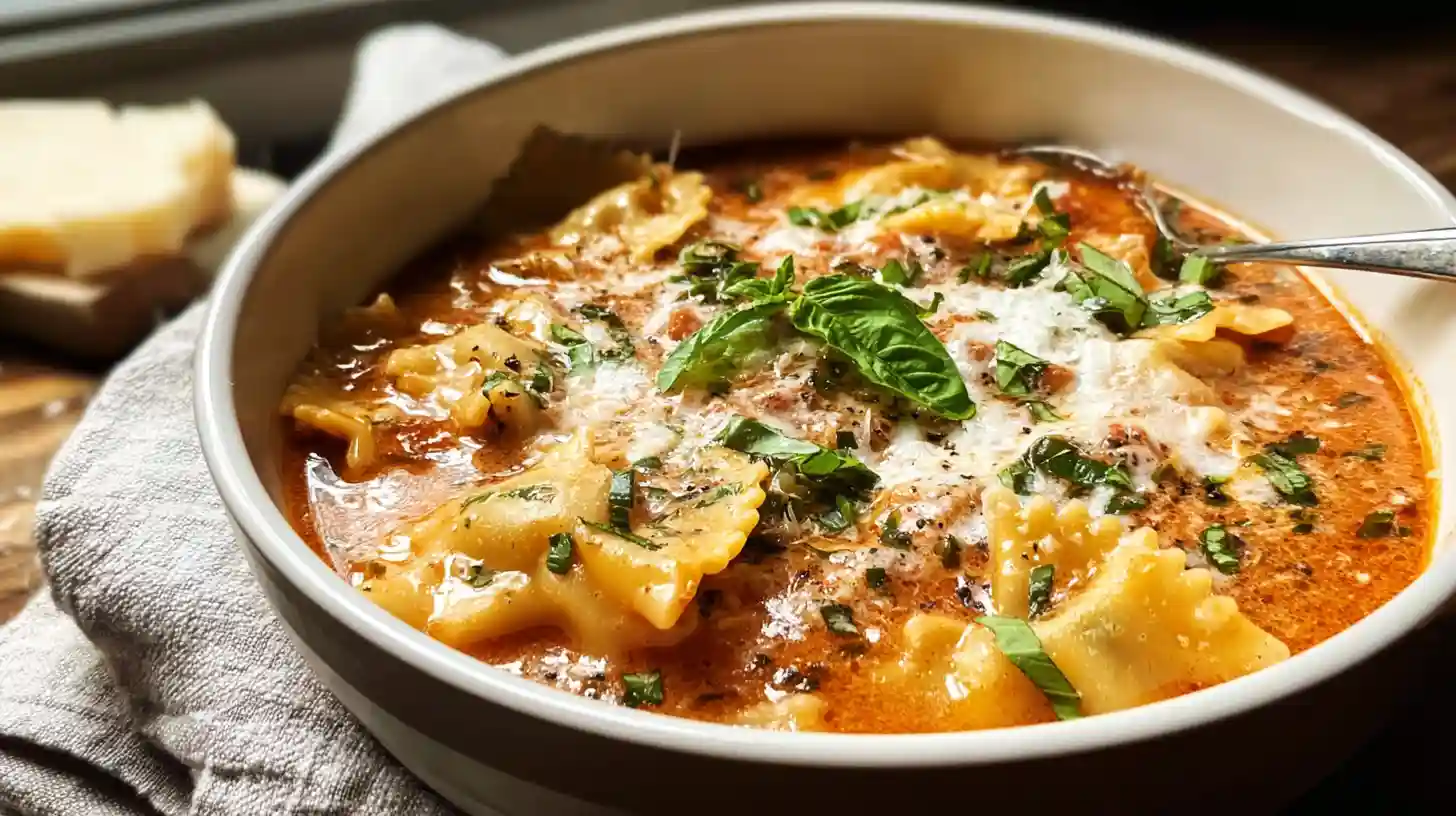
Ladle the hot soup into bowls and garnish each with chopped fresh basil or parsley and an extra sprinkle of parmesan cheese. The fresh herbs add a bright note that cuts through the richness beautifully. Serve immediately while the cheese is melted and creamy. Crusty Italian bread or garlic bread on the side is basically mandatory – you’ll want something to soak up every last drop of that incredible broth.
A simple green salad with Italian vinaigrette provides refreshing contrast to the rich soup. Caesar salad works wonderfully too. For a complete Italian feast, serve breadsticks or focaccia alongside. If you want to make this meal even more special, top each bowl with a small dollop of ricotta, a drizzle of good olive oil, and some red pepper flakes. For kids who might find the soup too tomatoey, serve extra parmesan on the side – most kids love adding their own cheese. This soup makes fantastic leftovers for lunch the next day, though you might need to thin it with a bit of broth when reheating since the noodles continue absorbing liquid.
Variations to Try
Transform this into spinach lasagna soup by stirring in three to four cups of fresh spinach or one package of frozen spinach (thawed and squeezed dry) after adding the cheese. The spinach wilts quickly and adds nutrition and color. For mushroom lasagna soup, sauté eight ounces of sliced mushrooms with the onions. White lasagna soup uses Alfredo sauce instead of marinara, creates a cream-based broth with white wine and extra garlic, and skips the crushed tomatoes entirely.
Make it spicier by using hot Italian sausage, adding extra red pepper flakes, or stirring in diced jalapeños. A vegetarian version loads up on vegetables – add diced zucchini, bell peppers, mushrooms, and spinach while reducing or eliminating the meat. For extra richness, add a parmesan rind to the soup while it simmers (remove before serving). Some people love adding a splash of red wine with the broth for depth. Fresh herbs make a difference too – try adding fresh oregano and thyme instead of dried Italian seasoning, or stir in fresh basil at the end.
Storage and Reheating
Store leftover lasagna soup in an airtight container in the refrigerator for up to four days. The soup thickens considerably as it sits because the noodles continue absorbing liquid. This is completely normal. When reheating, add chicken broth or water a half cup at a time until you reach your desired consistency. Reheat gently over medium-low heat, stirring frequently to prevent sticking. You can also reheat individual portions in the microwave, adding a splash of broth first and stirring halfway through.
Freezing works but with some caveats. The noodles and dairy can change texture when frozen and thawed – the noodles may become softer and the cream can separate slightly. If you plan to freeze this soup, consider freezing it before adding the noodles and dairy. Make the tomato-meat base, cool it completely, then freeze for up to three months. When ready to eat, thaw overnight in the refrigerator, reheat, then add the noodles and cook until tender before stirring in the cream and cheeses. This method gives you fresh-tasting soup with better texture.
Common Mistakes to Avoid
Don’t skip draining the excess fat after browning the meat. Too much grease makes the soup oily and unpleasant. Avoid adding the cheese while the soup is still boiling – high heat causes cheese to become grainy and stringy instead of smooth and creamy. Always reduce or turn off the heat first. Don’t overcook the noodles. They continue softening as the soup sits, so slightly underdone is better than mushy.
Be careful not to skip simmering the tomato base before adding noodles. That fifteen to twenty minutes allows flavors to develop and meld properly. Raw marinara straight to noodles tastes flat and one-dimensional. Don’t use pre-shredded cheese from a bag if you can help it. Those anti-caking agents prevent smooth melting. Freshly shredded cheese melts much better and tastes significantly better too.
Avoid making the soup too thick from the start. It’s easier to thicken soup than to thin it, and the noodles will absorb liquid as they cook. Start with the full amount of broth and add more if needed. Don’t rush the garlic – burning it makes the entire soup taste bitter. Cook it just until fragrant, about thirty seconds to one minute max.
Make-Ahead Tips
You can make the tomato-meat base up to two days ahead. Brown the meat, sauté the aromatics, add the tomatoes and broth, simmer, then cool and refrigerate. When ready to serve, bring the base back to a simmer, add the noodles, and proceed with the recipe. This actually improves the flavor since the base has more time for the flavors to meld.
For true meal prep, portion the cooled base into containers and refrigerate or freeze. You can also brown the meat ahead and refrigerate it separately. Chop your onions and garlic in advance and store them in the refrigerator. The fresh herbs for garnish can be washed, dried, and chopped a day ahead. Keep them in a damp paper towel in a sealed container.
What you don’t want to do is cook the noodles ahead of time. They’ll become mushy and absorb too much liquid. Always add the noodles and cheese fresh when you’re ready to serve. If you’re taking this soup to a potluck or serving it for a party, transport the base and add the noodles and cheese on-site just before serving. Keep the base warm in a slow cooker on low, then stir in the cooked noodles and cheese right before your guests arrive.
Nutrition and Dietary Modifications
To lighten this soup, use ground turkey instead of beef and substitute half-and-half for the heavy cream. You can also use part-skim ricotta and reduced-fat mozzarella without sacrificing too much richness. The soup will still be creamy and satisfying with fewer calories and less fat. Using low-sodium chicken broth helps control the sodium content, especially since the cheese adds plenty of saltiness.
For a gluten-free version, use gluten-free pasta instead of lasagna noodles. Break gluten-free lasagna sheets into pieces or use gluten-free penne or other short pasta shapes. Make sure your marinara sauce and chicken broth are certified gluten-free. For dairy-free lasagna soup, this becomes trickier since the dairy is central to the dish, but you can try using coconut milk or cashew cream in place of heavy cream, and dairy-free cheese alternatives, though the texture and flavor will differ significantly.
Frequently Asked Questions
Can I use no-boil lasagna noodles?
Yes, no-boil lasagna noodles work perfectly in this soup. They’re designed to absorb liquid and soften, which is exactly what happens in the soup. Break them into pieces and cook as directed. They might take a minute or two less than regular noodles.
Why is my soup too thick?
The noodles absorb a lot of liquid as they cook and especially as the soup sits. Simply add more chicken broth or water a half cup at a time until you reach your desired consistency. This is completely normal and easy to fix.
Can I make this in a slow cooker?
Yes, brown the meat and sauté the aromatics in a skillet first, then transfer to the slow cooker with the tomatoes and broth. Cook on low for six to eight hours or high for three to four hours. Add the broken noodles for the last thirty minutes on high. Stir in the cream and cheeses at the very end after turning off the heat.
What if my cheese gets stringy or grainy?
This happens when cheese is added to liquid that’s too hot. Always reduce or turn off the heat before adding cheese. If it happens, try whisking vigorously or blending a portion of the soup to break up the cheese and emulsify it into the liquid.
Can I skip the heavy cream?
Yes, though the soup won’t be quite as rich and creamy. Use half-and-half or whole milk instead, or skip it entirely and just use the ricotta and mozzarella. The ricotta alone creates nice creaminess. You could also add extra ricotta to compensate.
How do I prevent the noodles from getting mushy?
Cook them just until tender with a slight bite remaining. They’ll continue softening in the hot soup. If making ahead, cook the noodles separately and add them to individual bowls when serving rather than storing them in the soup.
Can I double this recipe?
Absolutely. Use a very large pot or Dutch oven and double all the ingredients. The cooking times remain the same, though you might need a few extra minutes to bring the larger volume to a boil. This recipe doubles beautifully for feeding a crowd.

Creamy Lasagna Soup
Ingredients
Equipment
Method
- Heat olive oil in a large soup pot or Dutch oven over medium-high heat. Add ground beef and cook, breaking it apart with a wooden spoon, until browned, about 5-7 minutes. Drain all but 1 tablespoon of fat.
- Add diced onion to the pot and cook for 3-4 minutes until softened and translucent. Add minced garlic and cook for 30 seconds until fragrant, stirring constantly.
- Sprinkle in Italian seasoning, crushed red pepper flakes if using, salt, and black pepper. Stir to coat the meat and onions, cooking for 1 minute.
- Pour in marinara sauce, chicken broth, and crushed tomatoes. Scrape the bottom of the pot to loosen any browned bits. Stir well and bring to a boil.
- Reduce heat to medium-low and simmer uncovered for 15-20 minutes, stirring occasionally, to allow flavors to meld.
- Add broken lasagna noodles to the simmering soup, making sure they’re submerged. Cook for 10-12 minutes until tender, stirring occasionally to prevent sticking. Add extra broth if soup becomes too thick.
- Reduce heat to low or turn off completely. Stir in heavy cream, then add ricotta by spoonfuls, stirring to incorporate. Add mozzarella and parmesan, stirring until all cheese is melted and soup is creamy.
- Taste and adjust seasoning if needed. Ladle into bowls and garnish with chopped fresh basil or parsley and extra parmesan cheese. Serve immediately with crusty bread.