My grandmother kept a white ceramic bowl on her kitchen counter specifically for saving bread. Any leftover rolls, the heels from sandwich loaves, slightly stale baguette pieces—everything went into that bowl. She covered it with a clean dish towel and let the bread sit for a few days until she had accumulated enough to make her bread pudding. I never understood the appeal when I was young. Bread pudding seemed like poverty food, a Depression-era trick to use up scraps. Then I tasted it properly for the first time as a teenager, fresh from the oven with that vanilla sauce pooled around the edges, and everything changed. The custardy interior, the crisp top, the plump raisins, the warmth of nutmeg—it was comfort in a dish. This recipe uses her exact measurements and method. The vanilla sauce is not quite caramel, not quite custard, but something in between that tastes like melted vanilla ice cream. Make this once and you will understand why people have been making bread pudding for centuries.
Why This Bread Pudding Works
Bread pudding succeeds when the ratio of bread to custard is correct. Too much custard and you get soggy, structureless mush. Too little and the pudding is dry and crumbly. This recipe uses four cups of cubed bread to two cups of milk, which creates a pudding that holds its shape when you cut it but still has that soft, custardy texture inside. The bread absorbs the custard mixture during a ten-minute soak before baking, which gives every piece time to saturate fully. Day-old bread works better than fresh because stale bread has lost moisture and can absorb more custard without falling apart. Fresh bread can work if you dry it out slightly in a low oven first.
The eggs in the custard provide structure. As the pudding bakes, the eggs coagulate and bind everything together. Two eggs is exactly enough for this amount of bread and milk. More eggs would make the texture too firm and egg-forward. Fewer would not provide enough structure. The sugar is deliberately modest. A quarter cup sweetens the pudding without making it cloying, especially since the vanilla sauce adds additional sweetness. Nutmeg is essential. It provides warmth and complexity that plain vanilla cannot achieve alone. Use fresh-grated nutmeg if possible. The difference is noticeable.
Choosing Your Bread
The type of bread you use matters[file:35]. White bread, whether sandwich bread, French bread, or challah, is traditional and works beautifully. The neutral flavor lets the custard and spices shine. Whole wheat bread adds nuttiness but can make the pudding slightly heavier. Brioche or Hawaiian sweet bread creates an especially rich, tender pudding. Sourdough adds tang. My grandmother used whatever bread she had accumulated in her bowl, which meant the pudding changed slightly each time depending on what bread had been leftover that week. This variability was part of its charm.
Cut the bread into roughly one-inch cubes[file:35]. The size does not need to be precise, but uniformity helps everything bake evenly. Remove crusts if you prefer a more refined texture, but leaving them on adds pleasant textural variety and was how my grandmother always made it. She believed the crusts got especially crispy on top and provided contrast against the soft interior. Four cups of cubed bread is approximately six to eight slices of standard sandwich bread, depending on the loaf size. A slightly stale baguette cut into chunks also works perfectly.
The Raisin Question
This recipe calls for half a cup of raisins[file:35]. Raisins are traditional in bread pudding, providing bursts of concentrated sweetness and chewy texture that contrast beautifully with the soft custard. Regular dark raisins work fine. Golden raisins are slightly more delicate in flavor. Some people soak raisins in warm water or rum before adding them to plump them up and soften them. This is optional. Dry raisins will absorb moisture from the custard during baking and plump up naturally.
If you strongly dislike raisins, you can omit them entirely or substitute other dried fruit. Dried cranberries, chopped dried apricots, or dried cherries all work well. Chocolate chips are a modern addition that children particularly enjoy, though this strays from the traditional recipe. My grandmother would occasionally add chopped pecans or walnuts along with the raisins for additional texture. About a quarter cup of nuts mixed in with the raisins is the right proportion.

Making the Custard Base
The custard base is simple but requires attention. In a large bowl, whisk together two cups of milk, two slightly beaten eggs, one quarter cup of sugar, one tablespoon of vanilla extract, and one quarter teaspoon of ground nutmeg. Whisk until the sugar dissolves and everything is thoroughly combined. The mixture should look uniform with no streaks of egg white visible. Slightly beaten eggs means you beat them just until the yolks and whites are broken up and mixed, not until they are frothy.
Whole milk produces the richest pudding. Two percent milk works but creates a slightly less creamy result. Skim milk is too lean. Some recipes use a combination of milk and heavy cream for extra richness, but this traditional recipe relies on whole milk alone and produces excellent results. The vanilla extract provides the primary flavor. Use real vanilla extract, not imitation. The difference is substantial. One tablespoon might seem like a lot, but bread pudding needs strong vanilla flavor to carry through the mild bread and milk base.
Assembling and Baking
Combine the cubed bread and raisins in a large bowl. Pour the custard mixture over the top. Use a large spoon or your hands to gently press the bread down into the custard, ensuring every piece gets saturated. Some bread will float to the surface. Push it back down. Let the mixture sit for ten minutes. During this time, the bread absorbs the custard and swells slightly. After ten minutes, stir everything again to redistribute any custard that has settled to the bottom.
Grease a one-and-a-half-quart casserole dish with butter or nonstick spray. Transfer the bread mixture to the prepared dish, spreading it evenly and pressing down gently to compact it slightly. Do not pack it too tightly or air cannot circulate during baking. The mixture should fill the dish but not overflow. An eight-by-eight-inch square baking dish also works well for this quantity.
Bake at 350 degrees Fahrenheit for forty to fifty minutes. Start checking at forty minutes. The pudding is done when the center is set and no longer jiggly when you gently shake the dish. A knife inserted into the center should come out clean or with just a few moist crumbs. The top should be golden brown and slightly crisp. If the top browns too quickly before the center sets, tent loosely with aluminum foil for the remaining baking time. Let the pudding cool for at least fifteen minutes before serving. It will be very hot straight from the oven, and cooling slightly improves the texture and makes the custard less runny.
The Vanilla Sauce
The vanilla sauce is what elevates this bread pudding from good to extraordinary. In a small saucepan, combine one half cup of butter, one half cup of sugar, one half cup of heavy cream, and one tablespoon of vanilla extract. Cook over medium heat, stirring constantly, until the butter melts and the sugar dissolves completely. Bring the mixture to a gentle simmer and cook for two to three minutes, stirring frequently. The sauce will thicken slightly and turn a light caramel color. It should coat the back of a spoon. Remove from heat.
The sauce is rich, sweet, and intensely vanilla-flavored. It has the consistency of a thin caramel sauce or a pourable custard. Serve it warm, drizzled generously over individual portions of bread pudding. The warm sauce melts slightly into the pudding and pools around the edges on the plate. Make the sauce while the pudding bakes, or prepare it ahead and rewarm it gently before serving. It will thicken as it cools, so add a splash of cream or milk if needed to thin it back to pourable consistency. Store leftover sauce in the refrigerator and reheat before using.
Vanilla Sauce Variations
- Add one tablespoon of bourbon or rum for a boozy version.
- Stir in a pinch of cinnamon or nutmeg to complement the spices in the pudding.
- Use brown sugar instead of white sugar for a deeper caramel flavor.
- Add one teaspoon of maple syrup for complexity.
- Whisk in a tablespoon of cocoa powder for chocolate vanilla sauce.
Serving and Storing
Bread pudding is best served warm. Cut it into squares and place each portion on a plate or in a shallow bowl. Drizzle vanilla sauce generously over the top, allowing it to pool around the base. A dollop of whipped cream or a scoop of vanilla ice cream alongside the pudding is traditional but not necessary. The vanilla sauce alone provides plenty of richness. Some people dust the top with powdered sugar for presentation, though this adds extra sweetness.
Leftover bread pudding keeps well. Store it covered in the refrigerator for up to four days. Reheat individual portions in the microwave for thirty to sixty seconds, or warm the entire dish covered with foil in a 300-degree oven for fifteen to twenty minutes. The pudding firms up as it cools, so reheating softens it back to the proper texture. Leftover vanilla sauce should be stored separately in the refrigerator and rewarmed before serving. It will keep for up to a week.
Bread pudding can be made ahead. Assemble the pudding completely, cover it tightly with plastic wrap or foil, and refrigerate for up to twenty-four hours before baking. Bring it to room temperature for thirty minutes before baking, or add five to ten minutes to the baking time if baking straight from the refrigerator. Fully baked bread pudding also freezes well. Wrap individual portions tightly in plastic wrap and then foil, and freeze for up to three months. Thaw overnight in the refrigerator and reheat before serving.
Common Problems and Solutions
If your bread pudding turns out soggy, you used too much custard or did not bake it long enough[file:35]. Make sure you measure the bread and milk accurately. Four cups of bread cubes should absorb two cups of milk without becoming waterlogged. Bake until the center is completely set and a knife comes out clean. If the pudding seems wet after the recommended baking time, continue baking in five-minute increments until done. Overmixing the custard can also incorporate too much air, which creates a spongy texture rather than a dense custard. Mix just until combined.
If your bread pudding is dry and crumbly, you did not use enough custard or you overbaked it. Make sure every piece of bread gets thoroughly soaked during the initial ten-minute rest. Press down firmly to saturate stubborn floating pieces. Check the pudding at the early end of the baking time range. Overbaking drives out moisture and makes the eggs rubbery. The pudding should still jiggle slightly in the center when you remove it from the oven. Carryover heat will finish cooking it during the cooling period.
If the vanilla sauce breaks or looks grainy, you cooked it over too high heat or did not stir constantly[file:35]. The butter, sugar, and cream need gentle heat to combine smoothly. High heat can cause the fat to separate. Constant stirring prevents the sugar from crystallizing on the bottom of the pan. If the sauce does break, remove it from heat and whisk vigorously. Sometimes you can bring it back together. If not, strain out any grainy bits and proceed. It will still taste good even if the texture is not perfect.
Recipe Variations
Chocolate bread pudding is a popular variation. Add one quarter cup of cocoa powder to the custard mixture and stir in half a cup of chocolate chips along with or instead of the raisins. The result tastes like chocolate cake in pudding form. Bread pudding also adapts well to seasonal flavors. In fall, add a tablespoon of pumpkin pie spice and replace a quarter cup of the milk with pumpkin puree. In summer, fold in fresh berries instead of raisins and omit the nutmeg.
Savory bread pudding exists and is delicious for breakfast or brunch. Omit the sugar, raisins, vanilla, and nutmeg. Add shredded cheese, cooked crumbled sausage or bacon, sautéed vegetables, and herbs. Serve it with hot sauce instead of vanilla sauce. Banana bread pudding uses overripe mashed bananas mixed into the custard and sliced bananas layered with the bread. Coconut bread pudding adds coconut milk in place of some of the regular milk and uses shredded coconut and macadamia nuts instead of raisins.
Why Bread Pudding Matters
Bread pudding is one of the oldest desserts in existence. Versions appear in medieval European cookbooks, where they were called “poor knights” or “pain perdu.” The concept is universal. Take stale bread that would otherwise go to waste, soak it in a mixture of eggs and milk, bake it, and create something delicious. Every culture that bakes bread has some version of bread pudding. It represents thrift, resourcefulness, and respect for food. Nothing goes to waste.
My grandmother grew up during the Depression, when wasting food was unthinkable[file:35]. She saved bread scraps not because she was poor—she was not—but because that habit never left her. Even in her eighties, living comfortably, she still kept that white bowl on the counter. Making bread pudding connected her to her childhood, to her own grandmother who taught her the recipe, to a time when resourcefulness was necessary rather than optional. When I make this now, I feel that same connection. It is more than dessert. It is history on a plate.
Frequently Asked Questions
Can I use a different type of milk?
Yes, but whole milk produces the best texture. Two percent milk works but creates a slightly less creamy pudding. Non-dairy milk such as almond, oat, or coconut milk can substitute for dairy milk, though the flavor will be different. Coconut milk makes the pudding richer and adds coconut flavor.
Do I need to use day-old bread?
Day-old bread is ideal because it has dried out slightly and absorbs more custard. Fresh bread can work if you dry it out first. Spread the cubes on a baking sheet and bake at 250 degrees for ten to fifteen minutes until slightly dried but not toasted.
Can I make this without raisins?
Absolutely[file:35]. Omit the raisins entirely, or substitute other dried fruit, chocolate chips, or nuts. The pudding will be slightly less sweet without raisins, but it will still be delicious.
How do I know when the pudding is done?
The pudding is done when the center is set and no longer jiggly. Insert a knife into the center. If it comes out clean or with just a few moist crumbs, the pudding is ready. The top should be golden brown.
Can I make the vanilla sauce ahead?
Yes, the sauce stores well in the refrigerator for up to a week. Rewarm it gently on the stove or in the microwave before serving. Add a splash of cream if it has thickened too much during storage.
Can I freeze bread pudding?
Yes, fully baked bread pudding freezes well for up to three months. Wrap portions tightly in plastic wrap and then foil. Thaw overnight in the refrigerator and reheat before serving. Do not freeze the vanilla sauce. Make it fresh when serving.
What if my pudding is too sweet?
Reduce the sugar in the custard to two tablespoons instead of a quarter cup. You can also serve the pudding without the vanilla sauce, or substitute a less sweet topping such as plain whipped cream or a drizzle of milk.
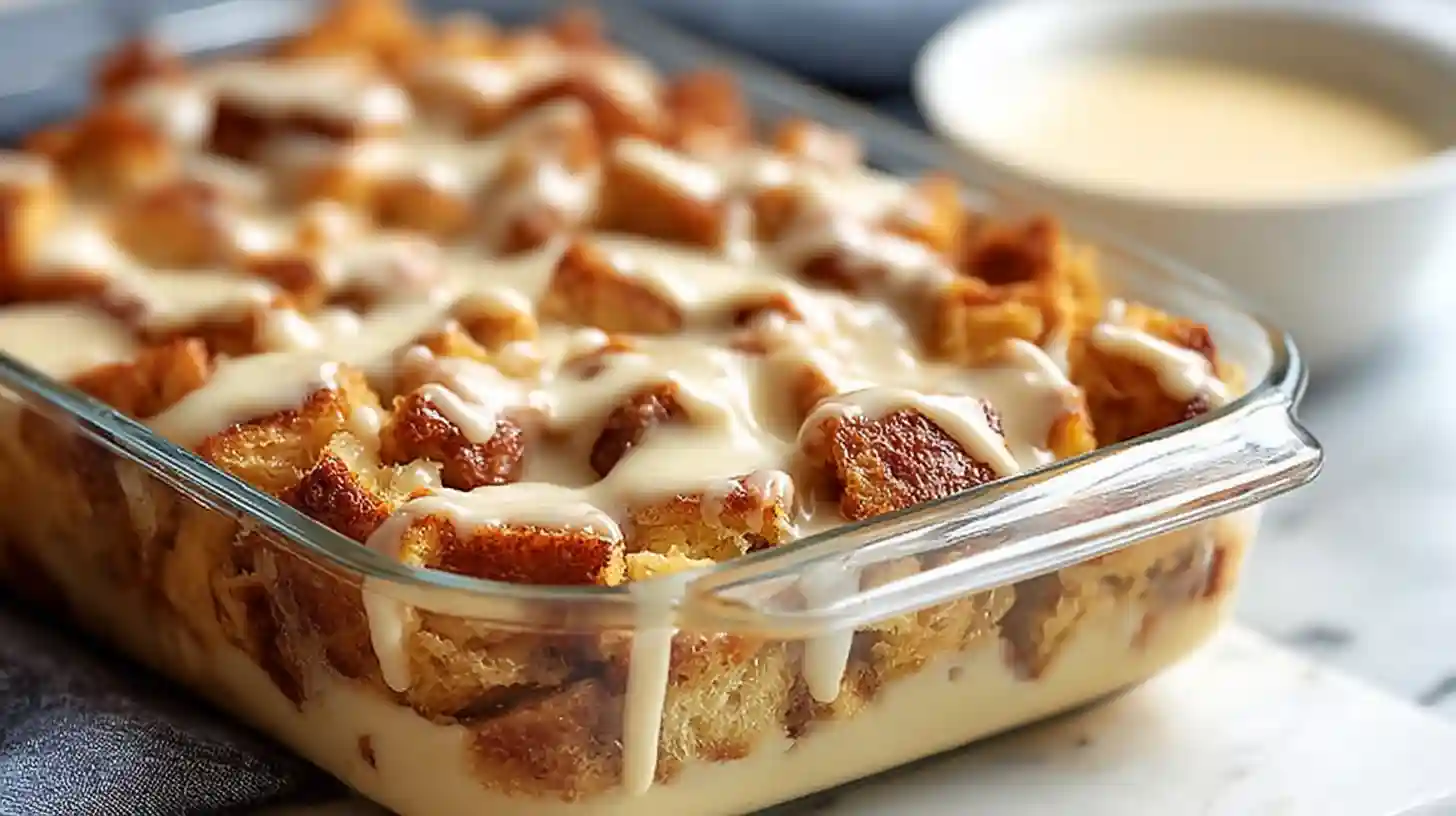

Grandma’s Classic Bread Pudding with Vanilla Sauce
Ingredients
Equipment
Method
- Preheat and Prep: Heat oven to 350°F (175°C). Grease a 1.5-quart casserole dish with butter or nonstick spray.
- Make Custard Base: In large bowl, whisk together milk, eggs, sugar, vanilla extract, and nutmeg until sugar dissolves and mixture is smooth with no streaks of egg white visible.
- Combine Bread and Raisins: Place bread cubes and raisins in another large bowl. Pour custard mixture over bread. Press bread down gently to saturate every piece. Let sit for 10 minutes, stirring once halfway through to redistribute custard.
- Bake Pudding: Transfer bread mixture to prepared casserole dish, spreading evenly. Bake for 40 to 50 minutes until center is set and top is golden brown. Knife inserted in center should come out clean.
- Make Vanilla Sauce: While pudding bakes, combine butter, sugar, heavy cream, and vanilla in small saucepan. Cook over medium heat, stirring constantly, until butter melts and sugar dissolves. Bring to gentle simmer and cook 2 to 3 minutes until slightly thickened and light caramel in color.
- Serve: Let pudding cool for 15 minutes. Cut into squares and serve warm with vanilla sauce drizzled generously over top.