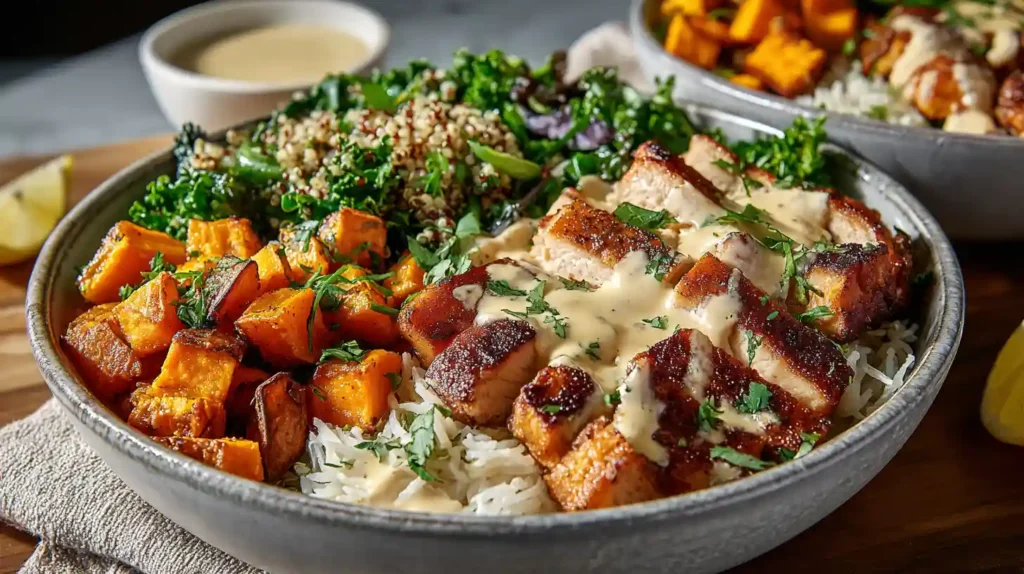
There’s something deeply satisfying about a bowl meal that checks every box – nutritious, delicious, visually appealing, and actually filling. Healthy chicken and sweet potato bowls deliver all of that and more, which is why they’ve become my go-to recipe when I need something wholesome but don’t want to sacrifice flavor or satisfaction. I started making these bowls a few years ago when I was trying to meal prep more consistently, and they quickly became a weekly staple because they’re endlessly adaptable and genuinely enjoyable to eat. The combination of roasted sweet potatoes with their caramelized edges, perfectly seasoned chicken that stays tender and juicy, fresh greens, and a flavorful sauce creates layers of taste and texture that keep you interested from first bite to last. These bowls are substantial enough to keep you full for hours thanks to the protein from chicken and complex carbs from sweet potatoes, yet they feel light and energizing rather than heavy. They’re excellent for meal prep – assemble the components once and have healthy lunches or dinners ready for days. They work equally well as a quick weeknight dinner when you roast everything on one pan. Whether you’re focused on eating healthier, trying to simplify your meal planning, or just looking for a delicious dinner that happens to be nutritious, these bowls deliver on every level. The best part is how customizable they are – change the vegetables, swap the protein, try different sauces, and you’ve got endless variations that never get boring.
Why Sweet Potato Bowls Work
Sweet potato bowls have become wildly popular for good reason – they combine nutrition, convenience, and flavor in a format that’s easy to prepare and enjoyable to eat. Sweet potatoes provide complex carbohydrates that fuel your body with sustained energy rather than the blood sugar spike and crash you get from refined carbs. They’re loaded with fiber, which aids digestion and keeps you feeling full. They’re also packed with vitamins, particularly vitamin A from beta-carotene, along with vitamin C, manganese, and potassium. Roasting sweet potatoes brings out their natural sweetness and creates those caramelized edges that add incredible flavor and textural contrast.
The chicken provides lean protein that’s essential for building and maintaining muscle, keeping you satisfied, and supporting overall health. Chicken breast is particularly lean with minimal fat, making these bowls relatively low in calories while still being filling and substantial. The bowl format allows you to include plenty of vegetables – whether leafy greens, roasted veggies, or raw crunchy vegetables – dramatically increasing the nutritional density. Adding healthy fats from avocado, nuts, or olive oil-based dressings helps your body absorb fat-soluble vitamins and contributes to satiety. The combination of protein, complex carbs, fiber, and healthy fats creates a balanced meal that stabilizes blood sugar and keeps energy levels steady throughout the day.
Preparing Perfect Sweet Potatoes
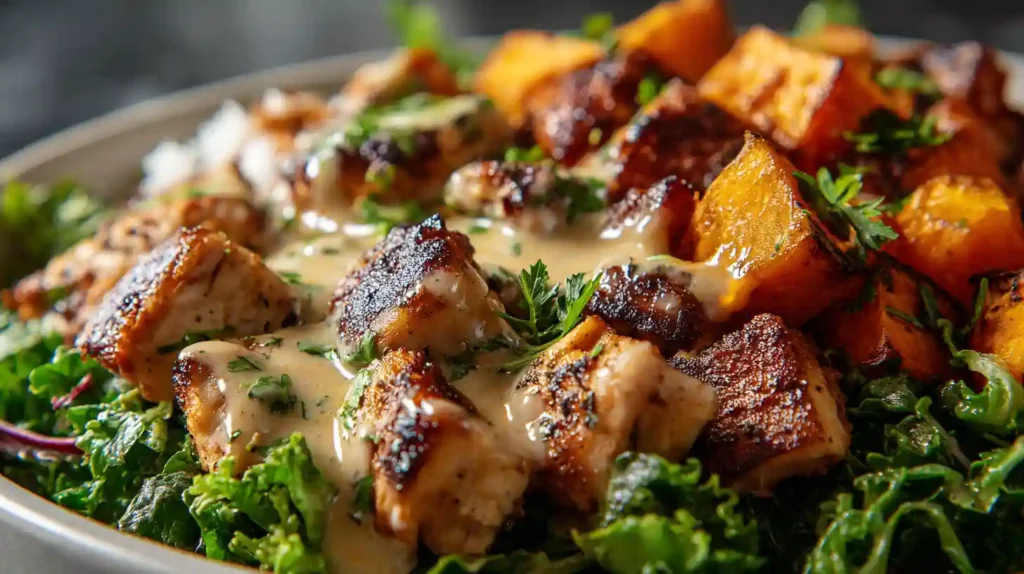
The sweet potatoes are the foundation of these bowls, so preparing them properly ensures the best flavor and texture. Choose firm sweet potatoes with smooth skin and no soft spots or sprouts. Medium-sized sweet potatoes work best – about eight to ten ounces each. You’ll need about two medium sweet potatoes for two substantial bowls or one large sweet potato per person. Wash them thoroughly under running water, scrubbing away any dirt. You can leave the skin on or peel it – keeping the skin adds fiber and nutrients, while peeling creates a smoother texture. I usually peel them because I prefer the texture, but either way works perfectly fine.
Cut the sweet potatoes into uniform cubes about half-inch to one-inch in size. Uniform sizing ensures even cooking – if some pieces are much larger than others, the small ones will overcook before the large ones are done. Place the cubed sweet potatoes in a large mixing bowl. Drizzle with olive oil or avocado oil – about one to two tablespoons per pound of sweet potatoes. The oil helps the sweet potatoes brown and caramelize while preventing them from drying out. Toss them well to coat every piece evenly with the oil. Season generously with salt, which enhances their natural sweetness and brings out all the flavors. Add additional seasonings based on your flavor profile and what sounds good to you.
For a simple preparation, garlic powder and paprika complement the sweet potatoes beautifully without overwhelming their natural taste. Cumin and chili powder create Southwestern flavors that pair wonderfully with lime and avocado. Cinnamon and a touch of cayenne provide sweet heat that’s unexpectedly delicious. Fresh herbs like rosemary or thyme add aromatic complexity. Spread the seasoned sweet potatoes on a rimmed baking sheet in a single layer with space between pieces. Crowding them causes steaming rather than roasting, preventing those desirable caramelized edges that make roasted sweet potatoes so delicious. Roast at 400-425°F for about twenty-five to thirty-five minutes, tossing halfway through for even browning. They’re done when fork-tender with crispy, caramelized edges and golden color. Slightly underdone is better than mushy if you’re meal prepping, as they’ll soften slightly when reheated.
Cooking Juicy Chicken
Properly cooked chicken breast is the key to these bowls being satisfying rather than dry and boring. Chicken breast can easily become dry if overcooked, so paying attention to timing and technique matters tremendously. For two servings, you’ll need about eight to twelve ounces of boneless, skinless chicken breast. Look for chicken breasts that are similar in thickness for even cooking, or pound thicker breasts to an even thickness using a meat mallet wrapped in plastic wrap. Pat the chicken dry with paper towels before seasoning – moisture on the surface prevents proper browning and keeps seasoning from adhering properly.
For the simplest preparation and easiest eating, cut the chicken into bite-sized pieces before cooking. This ensures faster, more even cooking and makes the bowls much easier to eat without needing to cut anything. Toss the chicken pieces with olive oil or avocado oil and your chosen seasonings. A basic seasoning blend might include salt, pepper, garlic powder, and paprika – simple but effective. For more pronounced flavor, try cumin, chili powder, and lemon pepper for a Southwestern profile. Smoked paprika adds wonderful depth without heat. You can also leave the breasts whole and season them generously on both sides if you prefer to slice them after cooking. Let the seasoned chicken sit for ten to fifteen minutes if you have time – this allows the salt to penetrate the meat and the flavors to develop.
The easiest method is roasting the chicken alongside the sweet potatoes on the same baking sheet, which saves time and reduces cleanup significantly. Add the chicken to the pan after the sweet potatoes have roasted for about ten minutes, as chicken cooks faster than sweet potatoes. This timing ensures both components finish at the same time perfectly. Roast until the chicken reaches an internal temperature of 165°F measured at the thickest part, usually fifteen to eighteen minutes depending on size. Let the chicken rest for five minutes before slicing or serving – this allows the juices to redistribute throughout the meat rather than running out when you cut into it, keeping it moist and tender. Alternatively, you can pan-sear chicken breasts in a skillet with a little oil over medium heat for five to seven minutes per side until cooked through. This creates a nice seared exterior with good color. Grilled chicken works beautifully too if you prefer that flavor and have a grill available. Rotisserie chicken from the grocery store is the ultimate shortcut – just shred or slice it and add it to your bowls, no cooking required.
Choosing Your Greens
The greens in these bowls add nutrients, color, texture, and freshness that balance the richness of the roasted components. You have many options depending on what you like and what’s available at your store. Baby spinach is mild, tender, and widely available everywhere. It’s packed with iron, folate, and other nutrients while having a gentle flavor that doesn’t overpower. It wilts quickly when placed under hot ingredients, which some people like for a warm salad effect and others don’t. Kale is heartier and more nutritious, with a slightly bitter, earthy flavor that adds character. Massage it with a little olive oil and lemon juice or salt before using to tenderize it and reduce the bitterness. Arugula provides peppery bite and stays crisp, adding personality to the bowls with its distinctive flavor.
Mixed spring greens offer variety and mild flavor without much preparation required. Romaine lettuce provides satisfying crunch and holds up well without wilting under warm ingredients. Baby kale is more tender than regular kale while maintaining good nutrition and flavor. For the best results, wash and dry your greens thoroughly before using – excess water dilutes dressings and makes everything soggy and unappetizing. A salad spinner makes this easy and quick. Store washed greens wrapped in paper towels inside a plastic bag or container to keep them crisp for several days. Add about one to two cups of greens per bowl, depending on how veggie-heavy you want your meal and how hungry you are. Place the greens at the bottom of the bowl as a bed for everything else, or add them on top of a grain base if you’re including one.
The heat from freshly roasted chicken and sweet potatoes will wilt delicate greens slightly, creating a nice contrast of warm and cool, tender and crisp that makes the bowls more interesting. If you’re meal prepping, consider packing greens separately in a container or bag and adding them when you’re ready to eat, especially if you’re reheating the other components. This keeps them fresh and crisp throughout the week. You can also use heartier raw vegetables like shredded cabbage, which holds up better over time without wilting or getting slimy. Sauerkraut or kimchi add probiotics along with tangy crunch and interesting flavor, though they’re definitely acquired tastes that not everyone enjoys. Roasted vegetables like broccoli, Brussels sprouts, or cauliflower can supplement or replace the greens entirely if you prefer more cooked vegetable content.
Adding Grains or Bases
While these bowls are delicious with just sweet potatoes, chicken, and vegetables, adding a grain base makes them even more substantial and filling for those with bigger appetites or higher calorie needs. Brown rice is a classic choice that provides complex carbs, fiber, and a nutty flavor that complements everything without competing. Cook it according to package directions and season it lightly with salt or cook it in broth for more flavor. Quinoa is higher in protein than most grains and cooks faster than rice, making it excellent for meal prep when you’re short on time. White, red, or black quinoa all work beautifully – mix varieties for visual interest and slightly different flavors. Cauliflower rice is a low-carb alternative that adds volume and substance without many calories, perfect for those watching carbs. You can buy it pre-riced for convenience or make your own by pulsing cauliflower florets in a food processor.
Farro provides wonderful chewy texture and nutty flavor along with good fiber and protein content. Wild rice has an earthy, complex flavor and impressive nutritional profile that makes it worth the longer cooking time. Couscous cooks in just five minutes and has a light, fluffy texture that many people love. For grain-free options, use extra greens as your base, pile on more roasted vegetables, or just keep the sweet potatoes as your carb source without adding grains. Calculate about half a cup to one cup of cooked grains per bowl, depending on your hunger level and carbohydrate needs. If meal prepping, store grains separately from wet ingredients, or at least wait until they’ve cooled completely before assembling bowls – hot grains create condensation that makes everything soggy and unappealing after a day or two in the fridge.
Perfect Toppings and Add-Ins
Toppings and add-ins transform these bowls from basic to exceptional by adding flavor, texture, healthy fats, and additional nutrients that make every bite interesting. Avocado is nearly essential in my opinion – its creamy richness balances the other flavors while providing heart-healthy monounsaturated fats that help keep you satisfied. Slice half an avocado per bowl for a pretty presentation or dice it for easier distribution throughout the bowl. Cherry tomatoes add juicy bursts of acidity and sweetness that brighten everything. Halve them so they’re easier to eat and their flavor comes through better. Black beans or chickpeas boost the protein and fiber content significantly, making the bowls even more filling and satisfying while adding plant-based nutrition. Rinse and drain canned beans well before adding to remove excess sodium and that tinny flavor.
Cheese adds savory richness that many people crave – crumbled feta provides tangy, salty flavor that pairs beautifully with the sweet potatoes, while shredded cheddar or pepper jack offer familiar comfort and creamy texture. Nutritional yeast is a vegan option that provides cheesy flavor plus B vitamins without any dairy. Nuts and seeds add satisfying crunch and healthy fats that round out the nutrition profile. Try chopped roasted peanuts for an Asian-inspired bowl, sliced almonds for subtle flavor, or pumpkin seeds and sunflower seeds for their nutritional benefits. A tablespoon or two is plenty to add texture without overwhelming. Fresh herbs dramatically increase flavor impact – cilantro is classic and brightens everything, while parsley adds freshness and basil brings aromatic sweetness. Green onions or chives provide mild onion flavor and visual appeal with their bright green color.
Pickled vegetables add tangy crunch that cuts through richness and makes the bowls more exciting – try pickled red onions, jalapeños, or carrots. A squeeze of fresh lime or lemon juice over everything brightens all the flavors and adds acidity that balances the meal. Hot sauce or sriracha adds heat for those who want it without forcing spice on everyone. Everything bagel seasoning or sesame seeds provide nutty flavor and visual interest that makes the bowls look more finished. The key is balancing flavors and textures – you want creamy, crunchy, tangy, rich, and fresh elements all represented in each bowl. Don’t go overboard with too many toppings or the bowl becomes cluttered and confusing, with individual flavors getting lost. Choose three to five toppings that complement each other and the main ingredients for the best results.
Sauce Makes the Bowl
A flavorful sauce ties all the components together and adds moisture that makes the bowls more enjoyable to eat and prevents them from being dry. Without sauce, even healthy bowls can feel boring and hard to finish. The right sauce transforms them into something genuinely crave-worthy that you look forward to eating. For a simple option, mix Greek yogurt with lime juice and a pinch of salt for a tangy, creamy dressing that’s high in protein and relatively low in calories. Add fresh cilantro, minced garlic, or cumin for more complexity and depth. Tahini sauce is another excellent choice – whisk together tahini, lemon juice, minced garlic, and water until it reaches drizzling consistency. Season with salt and cumin. This provides rich, nutty flavor and works beautifully with the sweet potatoes.
Peanut sauce is incredibly popular with these bowls for good reason – it’s delicious and satisfying. Mix peanut butter with rice vinegar, soy sauce or coconut aminos, a touch of honey or maple syrup for sweetness, garlic, and ginger for kick. Thin with water until it’s the consistency you want for drizzling. This creates sweet, savory, tangy flavor that complements everything and brings an Asian-inspired profile. Almond butter sauce works similarly with a slightly different, more subtle flavor profile. Chipotle lime sauce brings smoky heat that’s addictive – blend Greek yogurt or mayo with chipotle peppers in adobo, lime juice, garlic, and cumin until smooth. BBQ sauce is simple and crowd-pleasing, especially if you’re using BBQ-seasoned chicken for a cohesive flavor profile.
Avocado lime dressing is creamy and fresh tasting – blend avocado, lime juice, cilantro, Greek yogurt, garlic, and jalapeño if you like heat until completely smooth. Balsamic vinaigrette keeps things light and tangy – whisk olive oil with balsamic vinegar, Dijon mustard, honey, and minced garlic for a classic dressing. Whatever sauce you choose, make extra and store it separately if meal prepping throughout the week. Add the sauce right before eating for best results, especially with greens that can wilt or get soggy when dressed too early. Start with a couple tablespoons per bowl and add more if needed – you can always add more but you can’t take it away. The sauce should complement and enhance the other ingredients, not overwhelm them with too much flavor or moisture. Having multiple sauce options lets everyone customize their bowl to their taste preferences, which is helpful when feeding a family or making meals for the week.
Meal Prep Strategy
These bowls are absolutely ideal for meal prep, providing healthy, ready-to-eat meals throughout the week with just one cooking session on the weekend. The key is preparing and storing components properly so they maintain quality for several days without getting soggy or losing flavor. Start by choosing meal prep containers that work well – glass containers with dividers work best, keeping components separate until you’re ready to eat so nothing gets soggy. You can also use regular containers without dividers and store wet ingredients like sauce separately in small jars. Plan to make enough for three to four days at a time – chicken and sweet potatoes store well for about four days refrigerated, while greens stay fresh for about three days before starting to wilt.
Prep day workflow for efficiency: Start by roasting your sweet potatoes and chicken since these take the longest and can cook together. While they’re cooking, prepare your grains according to package directions and wash your greens thoroughly, drying them well. Make your sauce and store it in a small jar or container with a tight lid. Once the chicken and sweet potatoes have cooled completely – this is absolutely crucial to prevent condensation that makes everything soggy – assemble your bowls in your chosen containers. Layer grains on the bottom if using them, then add sweet potatoes, chicken, and any cooked vegetables you’re including. Store greens separately in a bag with paper towels to absorb moisture and keep them crisp, or place them in the container if you don’t mind them wilting slightly over time. Keep toppings like avocado, nuts, and cheese separate to add fresh when eating so they maintain their texture and don’t get soggy.
When you’re ready to eat, you have several options depending on your preference and the weather. You can eat the bowl completely cold, which works surprisingly well, especially in warm weather when a cold meal is actually refreshing. You can reheat just the chicken, sweet potatoes, and grains while keeping the greens and toppings cold, which creates a nice temperature contrast. Or reheat everything briefly if you prefer a warm, comforting meal. To reheat properly, remove the lid to prevent steam buildup and microwave for one to two minutes, stirring halfway through for even heating. Add sauce, fresh toppings, and greens after reheating for best texture and flavor. The beauty of this meal prep approach is having healthy, balanced meals ready to grab when you’re busy, tired, or tempted by less nutritious options like takeout. Knowing you have delicious food waiting in the fridge makes it much easier to stick to your health goals throughout the week.
Flavor Variations
The basic chicken and sweet potato bowl template works with countless flavor profiles, so you never have to get bored eating the same thing. For Mediterranean bowls that taste like vacation, season the chicken with oregano, lemon zest, and garlic. Use spinach or arugula for greens. Add chickpeas, diced cucumber, cherry tomatoes, crumbled feta cheese, and sliced olives. Drizzle with tzatziki sauce made from Greek yogurt, grated cucumber, fresh dill, and lemon juice. For Asian-inspired bowls with exciting flavors, use ginger and soy sauce or coconut aminos on the chicken. Include edamame for protein, shredded cabbage and carrots for crunch, and scallions for sharpness. Top with sesame seeds and drizzle with peanut or almond butter sauce mixed with rice vinegar and a touch of honey.
Mexican bowls are always crowd-pleasers and easy to customize – season the chicken and sweet potatoes with cumin, chili powder, and garlic. Add black beans, corn, diced tomatoes, sliced avocado, fresh cilantro, and shredded cheese. Use a lime crema made from sour cream or Greek yogurt with lime juice and salt, or drizzle with salsa verde for brightness. BBQ bowls use BBQ sauce generously on the chicken, with additions like corn, thinly sliced red onion, and coleslaw as toppings for that classic barbecue plate experience. Ranch dressing or a creamy BBQ sauce works well for drizzling. Curry bowls season the chicken with curry powder, turmeric, and ginger, adding chickpeas, roasted cauliflower, and spinach. Drizzle with a yogurt-based curry sauce made with curry powder and lime juice. Buffalo chicken bowls toss the chicken in buffalo sauce after cooking and use blue cheese dressing, diced celery, and shredded carrots as accompaniments.
For breakfast bowls that start your day right, season the sweet potatoes simply with cinnamon and a touch of maple syrup, add a fried or poached egg on top for protein, and include turkey or chicken sausage instead of plain chicken breast. You can even make dessert-inspired bowls by roasting sweet potatoes with cinnamon and a touch of maple syrup, topping with Greek yogurt, chopped nuts, and a drizzle of honey for a healthy dessert or indulgent breakfast. The possibilities are truly endless once you understand the basic framework of protein, complex carbs, vegetables, and a flavorful sauce. Let your imagination and taste preferences guide you, using whatever vegetables and seasonings you have on hand or find on sale at the store. This flexibility makes the bowls practical and economical as well as delicious.
Making It Work for Different Diets
Chicken and sweet potato bowls adapt easily to various dietary needs and preferences without sacrificing flavor or satisfaction. For paleo eaters, the basic bowl already works beautifully – just skip grains entirely and focus on extra vegetables to fill the bowl. Use compliant sauces without added sugar, dairy, or legumes to keep it strictly paleo. Whole30 followers can enjoy these bowls with minor adjustments – ensure sauces contain no added sugar, dairy, or legumes, which means checking labels carefully. Use coconut aminos instead of soy sauce in Asian-inspired bowls. Skip beans and cheese, focusing on compliant toppings like avocado, nuts, and vegetables. For keto or low-carb diets, reduce or eliminate the sweet potatoes and grains, replacing them with cauliflower rice and extra non-starchy vegetables like broccoli, zucchini, and peppers. Increase the fat content significantly with extra avocado, nuts, olive oil-based dressings, and cheese to meet your macro needs.
Vegetarians can easily replace chicken with extra beans, chickpeas, or tofu without losing protein or satisfaction. Baked or pan-fried tofu seasoned well provides protein and substance with a satisfying texture. Tempeh is another excellent option with a firmer texture and nutty flavor that many people prefer. For vegans, use plant-based proteins like tofu, tempeh, or extra beans and ensure dairy-free sauces like tahini, peanut sauce, or oil and vinegar-based dressings instead of yogurt-based options. Gluten-free eaters can enjoy these bowls without any modification if using naturally gluten-free grains like rice or quinoa and checking that sauces don’t contain gluten from soy sauce or other sources. For those watching calories closely, control portions of higher-calorie ingredients like avocado, nuts, cheese, and oil-based dressings while loading up on vegetables, greens, and lean protein.
For higher protein needs from athletes or those trying to build muscle, add extra chicken to your bowl, include Greek yogurt in your sauce for bonus protein, add hard-boiled eggs as a topping, or include multiple protein sources like both chicken and beans in the same bowl. These bowls are naturally balanced and nutritious for most people, but you can adjust proportions to match your specific macronutrient goals and dietary requirements. Athletes might want larger portions of sweet potatoes for more carbohydrates to fuel their training, while those trying to lose weight might prefer smaller sweet potato portions with extra vegetables for volume. The flexibility is what makes these bowls work for so many people with different needs, goals, and preferences.
Troubleshooting Common Issues
If your sweet potatoes aren’t getting crispy edges and staying soft and pale, you’re likely crowding them on the baking sheet or not using enough oil to promote browning. Spread them out with visible space between pieces and make sure each cube is properly coated with oil before roasting. Roasting at a higher temperature, around 425°F, also helps achieve better caramelization. If they’re cooking unevenly with some pieces burnt and others raw, cut them more uniformly so all pieces are a similar size, and toss them halfway through roasting to ensure all sides get exposure to the hot pan. Sweet potatoes that are mushy rather than tender were probably overcooked or cut too small. Check them a few minutes earlier next time and remove them when just fork-tender with a bit of texture remaining. If your chicken is dry and tough, you overcooked it past 165°F. Use a meat thermometer and remove it at exactly 165°F internal temperature. Letting it rest before cutting also helps retain moisture inside the meat.
Bowls that seem bland need more seasoning at multiple stages. Don’t be shy with salt and spices on your protein and vegetables during cooking. The sauce should be flavorful and generously applied, not just a light drizzle. Taste and adjust seasonings at every step of the process rather than waiting until the end. If meal prep bowls are getting soggy and unappealing after a day or two, you’re either adding sauce too early or not letting components cool completely before assembling. Store wet and dry ingredients separately when possible, and always cool everything before putting it in containers. If the bowls feel too heavy, rich, or sitting uncomfortably in your stomach, add more fresh vegetables and greens for lightness, use less cheese and avocado, and choose lighter sauces based on yogurt rather than oil or nut butter. If they’re not filling enough and you’re hungry again quickly, increase your protein portion, add beans or quinoa for extra protein and fiber, and ensure you’re including enough healthy fats from avocado or nuts to promote satiety.
If you find yourself getting bored with the same bowls week after week, you’re probably not varying the flavors enough between batches. Try a completely different seasoning profile each week, rotate through different vegetables seasonally, and experiment with new sauces regularly. The formula stays the same but the flavors can be dramatically different from week to week. If meal prep feels overwhelming and you avoid doing it, start small – make just two or three bowls at first rather than trying to prep a week’s worth immediately. You can also prep components on different days rather than all at once in one exhausting session. Maybe roast sweet potatoes and chicken on Sunday evening, then quickly assemble bowls on Wednesday with fresh ingredients for the second half of the week. Find a rhythm that works for your schedule and energy levels.
Frequently Asked Questions
How long do chicken and sweet potato bowls last in the fridge?
Assembled bowls last three to four days refrigerated when stored properly in airtight containers. Cooked chicken and sweet potatoes stored separately last up to four days safely. Greens are best used within two to three days before they start wilting. Store components separately and assemble fresh if you want optimal texture and freshness throughout the week.
Can I freeze these bowls?
Cooked chicken and sweet potatoes freeze well separately for up to three months. Thaw in the refrigerator overnight before reheating for best results. Don’t freeze assembled bowls with greens, avocado, or grains, as the texture suffers significantly. Freeze just the protein and sweet potatoes, then add fresh components when ready to eat.
What can I use instead of chicken?
Turkey breast, pork tenderloin, salmon, shrimp, or tofu all work beautifully in these bowls. Ground turkey or beef seasoned like taco meat is delicious and budget-friendly. For vegetarian options, use extra beans, chickpeas, hard-boiled eggs, or tempeh. Rotisserie chicken from the store is the ultimate shortcut when you’re short on time.
Are sweet potato bowls good for weight loss?
Yes, when portioned appropriately for your calorie needs. They’re high in protein and fiber which promote satiety and reduce cravings, include nutrient-dense ingredients that nourish your body, and can be calorie-controlled by adjusting portions of sweet potatoes, grains, and high-fat toppings. The balanced macronutrients help stabilize blood sugar and reduce cravings throughout the day.
Can I meal prep these for the whole week?
It’s better to prep for three to four days at a time for optimal freshness and food safety. If you want to prep for a full week, consider making two smaller batches mid-week, or freeze half the components to use later in the week. Quality starts to decline after four days in the refrigerator.
Do I have to include grains?
No, grains are completely optional. Sweet potatoes provide carbohydrates, so you can skip grains for a lower-carb option without the bowls feeling incomplete. Add extra vegetables if you want more volume without grains. The bowls are just as satisfying and nutritious without them, especially if you’re watching carbs or prefer lighter meals.
What’s the best way to reheat these bowls?
Remove the lid to prevent steam buildup and microwave for one to two minutes, stirring halfway through for even heating. For oven reheating, transfer to an oven-safe dish and heat at 350°F for about ten minutes. Add greens, avocado, and sauce after reheating for best texture. Many people enjoy these bowls cold, especially in summer.
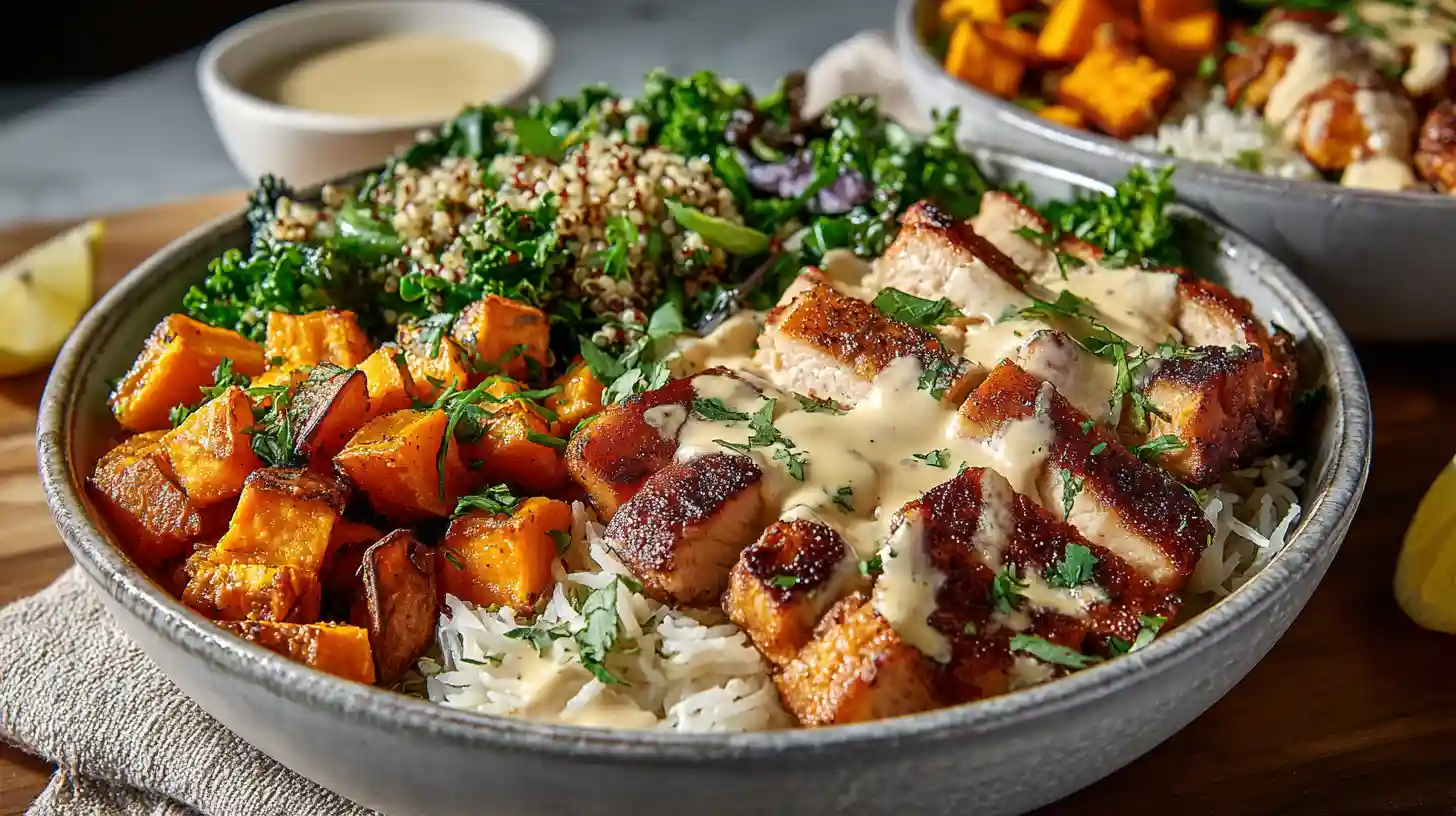

Healthy Chicken & Sweet Potato Bowls
Ingredients
Equipment
Method
- Preheat oven to 400°F. Line a large rimmed baking sheet with parchment paper.
- In a large bowl, toss cubed sweet potatoes with 1 1/2 tablespoons olive oil, smoked paprika, 1/4 teaspoon garlic powder, 1/2 teaspoon salt, and 1/4 teaspoon pepper. Spread in a single layer on prepared baking sheet, leaving space between pieces.
- Roast sweet potatoes for 10 minutes.
- While sweet potatoes roast, toss chicken pieces with remaining 1 1/2 tablespoons olive oil, cumin, chili powder, remaining garlic powder, remaining salt, and remaining pepper.
- After sweet potatoes have roasted 10 minutes, remove baking sheet and toss sweet potatoes. Add seasoned chicken pieces to the baking sheet, spreading them out in a single layer.
- Return to oven and roast for 15-18 minutes until sweet potatoes are fork-tender with crispy edges and chicken reaches internal temperature of 165°F.
- While chicken and sweet potatoes roast, prepare sauce by whisking together Greek yogurt, lime juice, minced garlic, and a pinch of salt. Adjust seasoning to taste.
- If using grains, divide cooked quinoa or rice among 4 bowls.
- Add 1 cup of mixed greens to each bowl.
- Divide roasted sweet potatoes and chicken among the bowls.
- Top each bowl with sliced avocado, halved cherry tomatoes, feta cheese if using, and fresh cilantro.
- Drizzle with prepared sauce. Serve immediately, or let cool completely before storing in meal prep containers with sauce on the side.