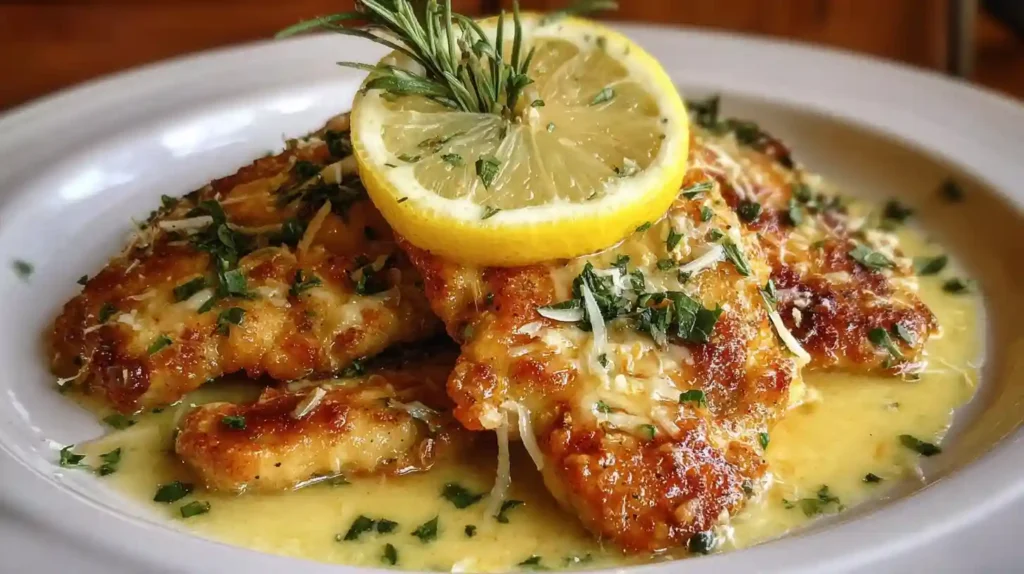
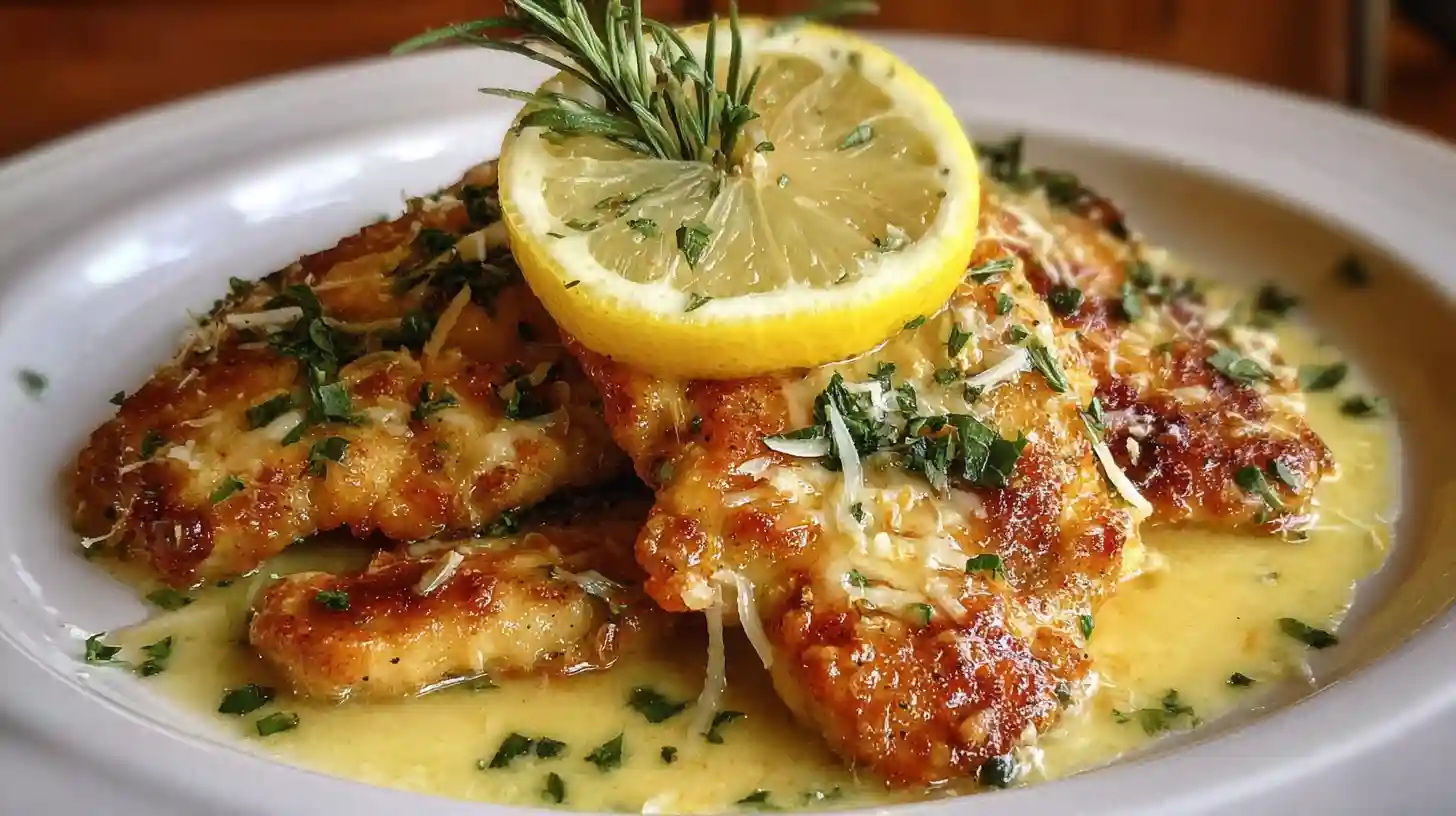
The first time I made lemon chicken Romano, I was amazed at how something so simple could taste so restaurant-worthy. The combination of crispy, cheese-coated chicken with a bright, tangy lemon sauce creates this perfect balance that makes every bite feel special. What I love most is how the Romano cheese forms this incredible golden crust that stays crispy even after you spoon that gorgeous lemon-wine sauce over the top. The fresh lemon zest mixed right into the breading adds little bursts of citrus that make the flavor so much more complex than your typical breaded chicken. It’s become my go-to recipe when I want to impress guests without spending hours in the kitchen, and honestly, it tastes like something you’d order at an upscale Italian trattoria.
Why This Recipe Works
The genius of this lemon chicken Romano lies in the triple-dredge technique that creates an incredibly crispy, flavorful crust. By coating the chicken first in flour, then egg, and finally in the Romano-lemon zest mixture, you build layers that protect the meat from drying out while creating maximum crunch. The Romano cheese adds not just texture but also a sharp, salty depth that perfectly complements the bright lemon notes.
Pounding the chicken breasts to an even thickness ensures they cook uniformly, preventing those dreaded dry edges while the center stays raw. The pan sauce technique uses the flavorful browned bits left in the skillet after cooking the chicken, deglazing with wine and lemon juice to create a sauce that ties everything together. The acidity from the lemon brightens the rich cheese coating, while the wine adds complexity. It’s a masterclass in building complementary flavors and textures in a single dish.
Ingredient Breakdown
Boneless, skinless chicken breasts form the foundation of this dish. You’ll need four pieces, each about six to eight ounces. Look for breasts that are relatively uniform in size to ensure even cooking. If your chicken breasts have that thick tapered shape, pounding them to half-inch thickness is crucial – it not only speeds up cooking but also prevents the thin end from drying out while the thick part cooks through.
Romano cheese is the star of the coating. You need one cup of freshly grated cheese – don’t use the pre-grated stuff from a canister, as it won’t stick properly and lacks that sharp, nutty flavor. Fresh lemon zest from one large lemon gets mixed into the cheese. Use a microplane or fine grater and only take the yellow part; the white pith underneath is bitter. Two eggs beaten together create the sticky middle layer that helps everything adhere. One cup of all-purpose flour seasoned with salt and pepper forms the base coat that helps the egg stick.
For the sauce, you’ll need fresh lemon juice from two lemons (about one-third cup), half a cup of dry white wine like Pinot Grigio or Sauvignon Blanc, and half a cup of chicken broth. Three tablespoons of olive oil are used for pan-frying the chicken. Fresh parsley and lemon slices for garnish add color and fresh flavor when serving.
Choosing Your Cheese
Romano cheese, specifically Pecorino Romano, delivers a sharp, salty punch that stands up beautifully to the acidic lemon. It’s made from sheep’s milk and has a drier, more crumbly texture than Parmesan, which actually helps it form a crispier crust. The salt content in Romano is higher, so you’ll need less additional seasoning. Its slightly tangy flavor profile complements the citrus better than milder cheeses would.
If you can’t find Romano, Parmigiano-Reggiano makes an excellent substitute with a slightly nuttier, less sharp flavor. Avoid using Grana Padano as it’s too mild for this application. For extra richness, try a fifty-fifty blend of Romano and Parmesan. Whatever cheese you choose, grate it yourself right before using – pre-grated cheese contains anti-caking agents that prevent proper browning and create a gummy texture instead of that crispy crust you’re after.
Preparing the Chicken
Place each chicken breast between two pieces of plastic wrap or inside a gallon-size zip-top bag. Using the flat side of a meat mallet or a heavy skillet, pound from the center outward to an even half-inch thickness. This technique ensures the chicken cooks evenly and quickly. Don’t pound too aggressively or you’ll tear the meat. Aim for gentle, firm pressure working your way across each breast.
Pat the pounded chicken completely dry with paper towels. This step is critical – any surface moisture will prevent the flour from adhering properly and create a gummy, soggy coating instead of a crisp one. Season both sides generously with salt and black pepper. The chicken itself needs seasoning; relying only on the coating and sauce won’t penetrate the meat enough. Let the seasoned chicken sit at room temperature for fifteen minutes before dredging. This takes the chill off and promotes even cooking.
Setting Up Your Dredging Station
Arrange three shallow dishes in an assembly line. In the first, place one cup of all-purpose flour. In the second, beat two eggs with a fork until the yolks and whites are completely combined. In the third, mix one cup of freshly grated Romano cheese with the zest of one lemon, using your fingers to distribute the zest evenly throughout the cheese.
Work with one piece of chicken at a time, keeping one hand for dry ingredients and one for wet to avoid creating clumpy, breaded fingers. Dredge the chicken in flour first, shaking off excess – you want a light coating, not a thick layer. Dip into the beaten egg, letting excess drip back into the bowl. Finally, press both sides into the cheese mixture, patting gently so it adheres. The coating should look thick and even. Place coated chicken on a clean plate or rack while you finish the remaining pieces. Let the coated chicken rest for five minutes before cooking; this helps the coating set and reduces the chance of it falling off in the pan.
Pan-Frying to Golden Perfection
Heat three tablespoons of olive oil in a large skillet over medium-high heat. The pan should be hot enough that a sprinkle of water sizzles on contact, but not smoking. If the oil smokes, it’s too hot and will burn the cheese coating before the chicken cooks through. Carefully place the coated chicken breasts in the skillet, leaving space between each piece. Overcrowding drops the pan temperature and leads to steaming rather than crispy frying.
Cook for four to five minutes on the first side without moving the chicken. Resist the urge to peek or adjust – you need that uninterrupted contact with the hot pan to develop the golden-brown crust. When the edges start looking golden and you can slide a spatula under easily, flip the chicken. Cook the second side for another four to five minutes until golden brown and the internal temperature reaches one hundred sixty-five degrees Fahrenheit on an instant-read thermometer.
Transfer the cooked chicken to a clean plate and tent loosely with foil to keep warm. Don’t stack the pieces or the steam will soften the crispy coating. Leave all those beautiful browned bits in the pan – they’re flavor gold for your sauce.
Making the Lemon Wine Sauce
Reduce the heat to medium and, without wiping out the skillet, pour in half a cup of dry white wine. Use a wooden spoon to scrape up all those browned bits stuck to the bottom of the pan – this process, called deglazing, incorporates tremendous flavor into your sauce. Let the wine simmer vigorously for about two minutes until it reduces by half. You’ll smell the alcohol cook off and the liquid will thicken slightly.
Add half a cup of chicken broth and one-third cup of fresh lemon juice. Whisk to combine and let the mixture simmer for two to three minutes until it reduces slightly and the flavors concentrate. Taste the sauce – it should be bright and tangy with a good balance of acidity and savory depth. If it’s too sharp, add a teaspoon of butter or a pinch of sugar. If it needs more punch, add another squeeze of lemon juice.
Return the chicken to the skillet, turning each piece to coat with sauce. Let it heat through for one to two minutes, spooning sauce over the top. The chicken will absorb some of the sauce while the coating stays remarkably crispy thanks to the cheese’s low moisture content. Transfer to serving plates and spoon the remaining sauce over each portion.
Serving Suggestions
Lemon chicken Romano pairs beautifully with light, simple sides that won’t compete with its bold flavors. Angel hair pasta or linguine tossed with a bit of olive oil, garlic, and fresh herbs makes a classic accompaniment. The pasta soaks up the extra sauce perfectly. Creamy risotto, particularly a lemon or asparagus version, creates an elegant, cohesive plate.
For vegetables, roasted asparagus with garlic brings a slight bitterness that balances the richness. Sautéed green beans with almonds add crunch and freshness. A simple arugula salad with shaved Parmesan, cherry tomatoes, and lemon vinaigrette provides peppery contrast and cuts through the richness of the chicken. Garlic bread or crusty Italian bread is essential for mopping up every drop of that gorgeous sauce. A crisp white wine like Sauvignon Blanc or Pinot Grigio echoes the wine in the sauce and complements the lemon beautifully.
Variations to Try
Transform this into chicken piccata Romano by adding two tablespoons of capers to the sauce along with the lemon juice. The briny pop of capers adds another dimension of flavor. For a creamy version, whisk in two tablespoons of heavy cream or butter at the end of making the sauce. This mellows the acidity and creates a richer, more indulgent dish.
Make it herb-crusted by adding two tablespoons of fresh chopped parsley, basil, or oregano to the cheese mixture. A garlic Romano version incorporates two teaspoons of garlic powder into the cheese coating and adds minced garlic to the sauce. For extra crunch, mix half a cup of panko breadcrumbs with the Romano cheese. The breadcrumbs add texture while the cheese provides flavor.
Try thin-sliced chicken cutlets for a faster-cooking version that doesn’t require pounding. They’ll cook in just two to three minutes per side. You can also use this coating technique with pork chops or veal cutlets, adjusting cooking time as needed. For a lighter preparation, bake the coated chicken at four hundred degrees for twenty to twenty-five minutes instead of pan-frying, though you’ll sacrifice some of that crispy texture.
Common Mistakes to Avoid
Don’t skip pounding the chicken to even thickness. Uneven breasts cook unevenly, leaving you with dry, overcooked thin parts and undercooked thick sections. Avoid using wet chicken – pat it completely dry before seasoning and dredging, or the coating will slide right off during cooking. Make sure your oil is hot enough before adding the chicken. If it’s not sizzling when the chicken hits the pan, the coating will absorb oil and become greasy instead of crispy.
Don’t move the chicken around in the pan once you’ve placed it. Constant flipping and adjusting prevents proper browning and can cause the coating to fall off. Resist the urge to press down on the chicken with your spatula – this squeezes out precious juices and makes the meat dry. When making the sauce, don’t skip the deglazing step or rush it. Those browned bits are packed with flavor, and you need time for the alcohol to cook off properly.
Avoid overcrowding the pan. If your skillet can’t hold all four breasts comfortably with space between them, cook in two batches. Crowding creates steam, which makes everything soggy. Don’t use pre-grated cheese from a container – the anti-caking agents prevent proper browning and the flavor is significantly inferior to freshly grated cheese.
Storage and Reheating
Store leftover lemon chicken Romano in an airtight container in the refrigerator for up to three days. Keep the chicken and sauce together so the meat stays moist. The coating will soften in storage, which is unavoidable, but the flavor remains excellent. For best results, store the chicken and sauce separately if you want to attempt re-crisping the coating.
To reheat, place chicken in a baking dish, spoon sauce over the top, and warm in a three hundred fifty degree oven for ten to twelve minutes until heated through. For a crispier result, reheat the chicken on a wire rack set on a baking sheet in a four hundred degree oven for eight to ten minutes, then heat the sauce separately and spoon over just before serving. Microwave reheating works in a pinch but will make the coating completely soft – heat in thirty-second intervals to avoid overcooking.
Freezing isn’t ideal for breaded, fried chicken as the coating becomes very soggy when thawed. If you must freeze it, wrap individual pieces tightly in plastic wrap, then foil, and freeze for up to one month. Thaw overnight in the refrigerator before reheating. The texture won’t be as good as fresh, but the flavor will still be delicious.
Making It Ahead
You can pound and season the chicken breasts up to twenty-four hours ahead. Store them covered in the refrigerator and bring to room temperature fifteen minutes before cooking. The dredging station can be set up an hour ahead; keep the egg covered so it doesn’t dry out. For meal prep, you can bread the chicken up to two hours ahead and refrigerate on a plate covered loosely with plastic wrap. The coating actually sets better with a little rest time in the fridge.
The sauce components can be prepped ahead – juice the lemons, measure the wine and broth, and keep everything ready to go. However, the actual cooking should be done close to serving time for the best texture and flavor. If you absolutely must cook ahead, prepare the chicken fully, let it cool, and refrigerate. Make the sauce fresh when reheating. While not quite as spectacular as fresh, this approach works for entertaining when you need to spread out your cooking tasks.
Wine Pairing
The bright, citrusy nature of this dish calls for a crisp white wine with good acidity to match the lemon. Sauvignon Blanc from New Zealand or France’s Loire Valley offers zesty citrus notes and herbaceous qualities that echo the dish’s flavors. Pinot Grigio from northern Italy provides clean, refreshing acidity without overwhelming the delicate chicken.
For something richer, try an unoaked Chardonnay that has the body to stand up to the Romano cheese while maintaining enough acidity to balance the lemon. Vermentino, an Italian white wine, brings Mediterranean herbs and citrus that feel perfectly at home with this dish. If you prefer sparkling wine, Prosecco’s light bubbles and fruity character make it a festive pairing. Whatever you choose, serve it well-chilled to provide refreshing contrast to the rich, crispy chicken.
Frequently Asked Questions
Can I use chicken thighs instead of breasts?
Yes, boneless, skinless chicken thighs work beautifully. They’re more forgiving than breasts because the higher fat content keeps them moist even if slightly overcooked. Pound them to even thickness just like breasts. Cooking time will be similar, around four to five minutes per side.
What if I don’t have white wine?
Substitute with additional chicken broth plus a tablespoon of white wine vinegar or extra lemon juice. You’ll lose some of the complexity that wine brings, but the sauce will still be delicious. Dry vermouth also works as a wine substitute and actually provides similar flavor.
Why is my coating falling off?
This usually happens when the chicken isn’t dry enough before dredging, the pan isn’t hot enough, or you’re moving the chicken too much during cooking. Make sure to pat the chicken completely dry, let the coating set for five minutes before cooking, and avoid flipping more than once.
Can I make this gluten-free?
Absolutely. Replace the all-purpose flour with a gluten-free flour blend or rice flour. The rest of the ingredients are naturally gluten-free. Rice flour actually creates a crispier coating than regular flour, so you might prefer the results.
How do I know when the chicken is done?
The most reliable method is an instant-read thermometer inserted into the thickest part, which should read one hundred sixty-five degrees Fahrenheit. Visually, the juices should run clear when pierced, and the meat should feel firm but not hard when pressed gently.
Can I double this recipe?
Yes, but you’ll need to work in batches unless you have a very large skillet. Doubling the dredging ingredients is straightforward. Keep the first batch warm in a low oven (two hundred degrees) while you cook the second batch. The sauce doubles easily as well.
What’s the best way to zest a lemon?
A microplane grater works best for fine, fluffy zest. Hold the lemon and grate in short strokes, rotating to get only the yellow part. Avoid pressing too hard or you’ll get the bitter white pith. Zest the lemon before juicing it – it’s much easier to handle a whole lemon.

Lemon Chicken Romano
Ingredients
Equipment
Method
- Place chicken breasts between plastic wrap or in a zip-top bag. Pound with a meat mallet to even 1/2-inch thickness. Pat completely dry with paper towels, then season both sides generously with salt and pepper. Let sit at room temperature for 15 minutes.
- Set up three shallow dishes: flour in the first, beaten eggs in the second, and Romano cheese mixed with lemon zest in the third.
- Dredge each chicken breast in flour, shaking off excess. Dip in beaten eggs, letting excess drip off. Press both sides into cheese mixture, patting to adhere. Place on a clean plate and let rest 5 minutes.
- Heat olive oil in a large skillet over medium-high heat until shimmering but not smoking. Add chicken breasts, leaving space between each piece.
- Cook for 4-5 minutes on the first side without moving, until golden brown. Flip and cook 4-5 minutes on the second side until golden and internal temperature reaches 165°F. Transfer to a plate and tent with foil.
- Reduce heat to medium. Add white wine to the skillet, scraping up browned bits with a wooden spoon. Simmer 2 minutes until reduced by half.
- Add chicken broth and lemon juice. Whisk to combine and simmer 2-3 minutes until slightly reduced. Taste and adjust seasoning if needed.
- Return chicken to skillet, turning to coat with sauce. Heat through for 1-2 minutes, spooning sauce over the top.
- Transfer chicken to serving plates, spoon sauce over each piece, and garnish with chopped parsley and lemon slices. Serve immediately.