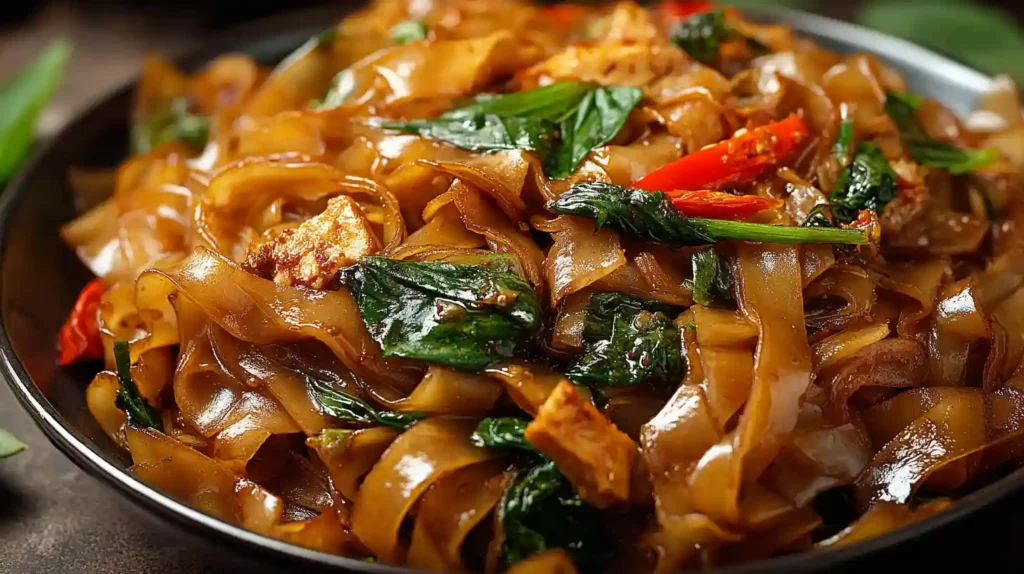
The first time I tried authentic drunken noodles was at a tiny street stall in Bangkok at 2 AM, and it completely changed how I thought about Thai food. The vendor worked with lightning speed, tossing noodles in a smoking wok with one hand while adding handfuls of Thai basil with the other. The finished dish arrived in under three minutes, steaming hot with noodles that had that perfect char and a sauce that hit every note from spicy to sweet to savory. When I got home, I became obsessed with recreating that experience, and after many attempts, I finally nailed it.
Street Style Thai Drunken Noodles, known as Pad Kee Mao in Thailand, delivers bold flavors through wide rice noodles stir-fried with Thai holy basil, garlic, chilies, and your choice of protein. The dish gets its name not from containing alcohol, but allegedly from being a favorite late-night meal after drinking, with spicy flavors perfect for curing hangovers. This recipe brings authentic street food taste to your home kitchen with simple techniques and accessible ingredients.
Why This Recipe Works
The key to authentic drunken noodles lies in high-heat stir-frying and proper timing. Cooking at maximum heat creates “wok hei,” that slightly smoky, charred flavor that defines great street food. Wide rice noodles absorb the sauce beautifully while maintaining a chewy texture that contrasts with crisp vegetables. Fresh Thai basil added at the very end wilts just enough to release its aromatic oils without turning bitter or losing its vibrant color.
Unlike many stir-fry recipes where everything cooks together, this technique calls for cooking in batches and adding ingredients at specific times. The sauce gets slightly caramelized from the high heat, coating each noodle strand with layers of flavor. This approach prevents overcrowding the pan, which would steam ingredients instead of searing them properly.
What You Need
For the Sauce
- 3 tablespoons low-sodium soy sauce
- 2 tablespoons oyster sauce
- 1 tablespoon fish sauce
- 1 tablespoon dark soy sauce, for color
- 1 tablespoon brown sugar
- 2 teaspoons rice vinegar
For the Stir Fry
- 8 ounces fresh wide rice noodles, or dried soaked until softened
- 2 tablespoons vegetable or peanut oil
- 4 cloves garlic, minced
- 2 to 3 Thai bird chilies, thinly sliced with seeds
- 8 ounces boneless chicken thighs or breast, thinly sliced
- 1/2 large onion, sliced
- 1 red bell pepper, seeded and sliced
- 1 cup broccoli florets, small
- 1 cup carrots, julienned
- 2 green onions, cut into 2-inch pieces
- 1 1/2 cups fresh Thai basil leaves, packed
- Lime wedges for serving
Making It Happen
Prepare the Noodles
If using fresh wide rice noodles, carefully separate them and rinse briefly under warm water to remove excess starch. Fresh noodles need no cooking, just warming through during stir-frying. For dried rice noodles, soak them in warm water for 25 to 30 minutes until they soften but still have some bite. Drain them well and toss with a teaspoon of oil to prevent sticking.
Do not fully cook dried noodles by boiling, as they will finish cooking in the wok and can become mushy if overcooked beforehand. The noodles should be pliable but still firm when you drain them. Spread them out on a plate or tray while you prepare other ingredients so they do not clump together.
Mix the Sauce
Combine all sauce ingredients in a small bowl and stir until the sugar dissolves completely. Having your sauce ready before you start cooking is crucial because stir-frying happens fast and you will not have time to mix it once the heat is on. Taste the sauce and adjust if needed, keeping in mind it will concentrate slightly during cooking.
Get Your Mise en Place Ready
Arrange all your prepped ingredients near the stove in the order you will use them: oil, garlic and chilies, chicken, onion, bell pepper, other vegetables, noodles, sauce, green onions, and basil. This French culinary concept of having everything in place matters enormously for successful stir-frying. Once you start cooking, there is no time to chop or measure anything.
Start the Stir Fry
Heat your wok or largest skillet over the highest heat your stove can produce for at least 2 minutes until it is smoking hot. Add the oil and swirl to coat the surface. Immediately add the minced garlic and sliced chilies, stirring constantly for about 10 seconds until fragrant but not burned. The aroma will be intense, so avoid leaning directly over the wok.
Toss in the sliced onion and stir-fry for 1 minute until it starts to soften and char at the edges. Add the chicken pieces and spread them in a single layer. Let them sear for 30 seconds without moving, then stir-fry for 2 to 3 minutes until the chicken is cooked through and developing some golden color.
Add Vegetables and Noodles
Add the bell pepper, broccoli, and carrots to the wok, tossing everything together for about 2 minutes. The vegetables should be tender-crisp, not fully soft. Push everything to the sides of the wok, creating a well in the center. Add the drained noodles to the center and pour the sauce directly over them.
Using a scooping and folding motion with your spatula, toss the noodles to coat them evenly with sauce while incorporating the chicken and vegetables from the sides. Keep everything moving constantly for 1 to 2 minutes until the noodles are uniformly colored and heated through. Use the spatula to scrape any bits stuck to the bottom of the wok.
Finish with Aromatics
Add the green onion pieces and toss for 30 seconds. Remove the wok from heat immediately and add the Thai basil leaves. The residual heat will wilt the basil perfectly without overcooking it. Toss just until the leaves turn bright green and fragrant, about 20 to 30 seconds. Transfer to serving plates right away and serve with lime wedges on the side.
Expert Tips
- Cook in single portions if your stove is not powerful enough to maintain high heat with a full batch
- Use Thai holy basil (bai grapao) if you can find it for the most authentic flavor
- Keep ingredients moving constantly to prevent burning while achieving proper char
- Do not skip the dark soy sauce as it adds essential color and depth
- Slice chicken against the grain into thin strips for tender, quick-cooking pieces
- Have good ventilation as high-heat cooking with chilies creates intense fumes
Delicious Variations
Swap chicken for shrimp, which needs only 2 minutes of cooking time, or use thinly sliced beef sirloin. Ground pork makes an excellent alternative that cooks quickly and absorbs flavors beautifully. For vegetarian versions, use extra-firm tofu pressed and cubed, or try mixed mushrooms for meaty texture without animal protein.
Adjust the heat level by using fewer chilies or removing the seeds for milder spice. Add baby corn, snap peas, or bamboo shoots for additional vegetables and texture. Some street vendors add a beaten egg scrambled at the beginning, which adds richness and protein. You can also include cherry tomatoes in the final minute of cooking for bursts of acidity.
Storage and Reheating
Store leftovers in an airtight container in the refrigerator for up to 3 days. The noodles will absorb more sauce as they sit and become softer. To reheat, use a hot wok or skillet with a splash of water or oil, stirring constantly until heated through. The microwave works in a pinch but will not restore the original texture[web:68].
This dish tastes best freshly made and does not freeze well because rice noodles become mushy when thawed. If you want to meal prep, prepare and store all the components separately, then stir-fry fresh portions as needed. The sauce keeps for a week in the refrigerator.
Serving Suggestions
Drunken noodles shine as a complete one-dish meal requiring no sides. However, Thai cucumber salad with its cool, sweet-tangy dressing provides a refreshing contrast to the spicy noodles. Spring rolls or Thai-style chicken satay make excellent appetizers if you are serving this for guests. Keep extra lime wedges, sliced chilies, and fish sauce at the table for diners to adjust flavors to their taste.
Serve immediately while piping hot for the best texture and flavor. The noodles lose their appeal as they cool and continue absorbing sauce. Cold Thai iced tea or coconut water makes the perfect beverage pairing to balance the heat. For an authentic experience, eat with chopsticks and a spoon, Thai street food style[web:70].
Common Questions
Why are they called drunken noodles?
Despite the name, drunken noodles contain no alcohol. The dish allegedly earned its name as a popular late-night meal eaten after drinking, with bold spicy flavors believed to help with hangovers. Another theory suggests the name comes from the intoxicating aroma of Thai basil that fills the air when cooking[web:68][web:70].
Can I use regular basil instead of Thai basil?
Thai basil has a distinct anise-like flavor that regular Italian basil cannot replicate. If you cannot find Thai basil, regular basil works as a substitute, but it will taste different. Some people use half regular basil and half fresh mint to approximate the unique flavor profile of Thai basil.
What if I do not have a wok?
Use the largest, heaviest skillet you own and heat it thoroughly before cooking. A 12-inch or larger pan gives you enough room to toss ingredients properly. Cast iron works exceptionally well because it retains heat. Cook in smaller batches if necessary to avoid overcrowding, which causes steaming instead of stir-frying[web:76].
How do I prevent noodles from sticking?
Rinse fresh noodles gently and toss dried noodles with a little oil after draining. Keep the wok very hot and ingredients moving constantly during cooking. Adding the sauce helps lubricate the noodles as well. If noodles stick to the bottom, use your metal spatula to scrape them up immediately.
Can I make this less spicy?
Reduce the number of chilies to one or omit them entirely for a mild version. You can also remove the seeds and membranes from chilies, which contain most of the heat. The dish will still have flavor from garlic, basil, and the sauce, even without chili heat. Add chili flakes at the table for those who want extra spice.
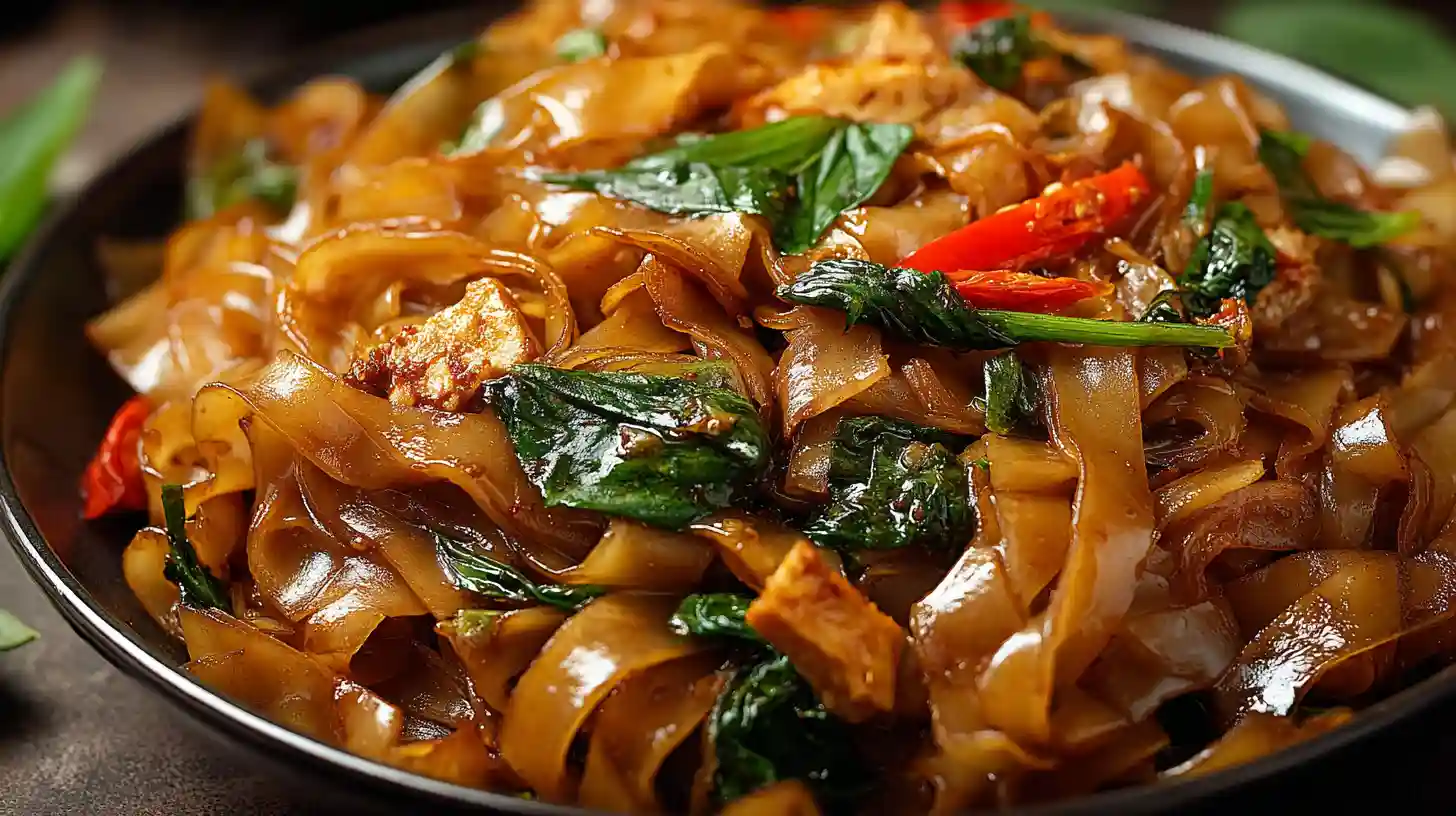

Street Style Thai Drunken Noodles Recipe
Ingredients
Equipment
Method
- If using fresh wide rice noodles, separate and rinse briefly under warm water. For dried noodles, soak in warm water for 25 to 30 minutes until softened but still firm. Drain well and toss with a teaspoon of oil.
- In a small bowl, combine soy sauce, oyster sauce, fish sauce, dark soy sauce, brown sugar, and rice vinegar. Stir until sugar dissolves. Set aside.
- Arrange all prepped ingredients near the stove in order of use: oil, garlic and chilies, chicken, onion, bell pepper, vegetables, noodles, sauce, green onions, and basil.
- Heat a wok or large skillet over highest heat for 2 minutes until smoking hot. Add oil and swirl to coat.
- Add minced garlic and sliced chilies, stirring constantly for 10 seconds until fragrant. Add sliced onion and stir-fry for 1 minute.
- Add chicken pieces in a single layer. Let sear for 30 seconds, then stir-fry for 2 to 3 minutes until cooked through and golden.
- Add bell pepper, broccoli, and carrots, tossing for 2 minutes until tender-crisp.
- Push everything to the sides of the wok. Add noodles to the center and pour sauce directly over them. Toss everything together for 1 to 2 minutes until noodles are evenly coated and heated through.
- Add green onions and toss for 30 seconds. Remove from heat and add Thai basil leaves. Toss for 20 to 30 seconds until just wilted.
- Serve immediately with lime wedges on the side.
Notes
- Cook in single portions if your stove lacks high heat power
- Use Thai holy basil (bai grapao) for most authentic flavor
- Keep ingredients moving constantly to prevent burning
- Dark soy sauce is essential for proper color
- Slice chicken against the grain for tender pieces
- Ensure good ventilation when cooking with chilies
- Best served immediately while hot
- Stores for 3 days refrigerated but texture changes