Last Valentine’s Day, I decided to elevate our dinner with something visually striking yet surprisingly simple. These heart-shaped roasted potatoes transformed an ordinary side dish into the star of the meal. The real secret lies not in the adorable shape but in a parboiling technique that creates impossibly crispy exteriors while maintaining fluffy centers.
Roasted Heart Potatoes combine restaurant-quality crispness with homemade charm. The parboiling method releases starch to the potato surface, creating a thin layer that caramelizes beautifully during roasting. This scientific approach produces consistently crispy results that standard roasting methods simply cannot achieve.
This recipe works perfectly for Valentine’s Day, anniversaries, or any special dinner where presentation matters. The heart shapes add whimsical romance without requiring advanced culinary skills. Even beginner cooks achieve impressive results using this straightforward technique that transforms humble potatoes into memorable side dishes.
Why This Recipe Works
Parboiling potatoes in salted water before roasting activates the surface starch. As potatoes simmer, their outer layers soften while interiors remain firm. Draining releases steam that carries starch and sugars to the surface, coating each piece with a thin layer that transforms into crispy golden crust during high-heat roasting.
Tossing parboiled potatoes roughens their surfaces, creating tiny peaks and crevices. These textured edges maximize contact with hot air and oil, producing extra-crispy bits throughout. The gentle agitation mimics the effect baking soda creates but avoids any risk of soapy flavor from excessive alkalinity.
Roasting at high temperature caramelizes the starch-sugar coating quickly. The Maillard reaction browns the exteriors while steam inside keeps centers fluffy. Heart shapes offer more edges than cubed potatoes, meaning extra crispy surface area that everyone fights over at the dinner table.
Choosing the Right Potatoes
Starchy potatoes work best for roasting because their high starch content creates superior crispness. Yukon Gold potatoes offer balanced starch and moisture with naturally buttery flavor. Their thin skins need minimal peeling and their golden flesh looks beautiful when roasted.
Russet or Idaho potatoes contain maximum starch for the crispiest possible results. Their fluffy interiors provide excellent textural contrast with crunchy exteriors. The larger size makes cutting heart shapes easier since you need substantial surface area for each cutout.
Maris Piper potatoes popular in the UK deliver similar results to Russets. Their floury texture breaks down slightly during parboiling, creating rough surfaces that crisp beautifully. Choose large potatoes regardless of variety—small potatoes yield too few heart shapes and create excessive waste.
Avoid waxy potatoes like red or fingerling varieties for this recipe. Their lower starch content prevents proper crisping and they maintain firm, almost rubbery textures when roasted. Save waxy potatoes for potato salads where their structure provides benefits rather than drawbacks.
Essential Ingredients
Simple ingredients let the potato flavor shine while adding aromatic complexity. Quality olive oil and fresh seasonings make noticeable differences in final taste.
- 6 large potatoes (about 2 pounds), Yukon Gold, Russet, or Maris Piper
- 1-2 quarts water for parboiling
- 1½ tablespoons salt for boiling water
- ¼ cup olive oil
- 1 teaspoon kosher salt
- ⅛ teaspoon freshly ground black pepper
- 1½ teaspoons caraway seeds
- ½ teaspoon paprika (optional)
- ½ teaspoon dried rosemary or 1 tablespoon fresh (optional)
- 2 cloves garlic, minced (optional, add last 5 minutes)
Large potatoes provide the surface area needed for cutting decent-sized hearts. Aim for potatoes weighing at least eight ounces each. Smaller potatoes create tiny hearts that cook too quickly and provide minimal yield after cutting waste.
Olive oil withstands high roasting temperatures while adding fruity flavor notes. Extra virgin olive oil tastes best but regular olive oil works fine. Avoid delicate oils like walnut or flaxseed that smoke at high heat and turn bitter.
Caraway seeds provide distinctive flavor that complements potatoes beautifully. Their slightly anise-like taste adds complexity without overwhelming. Skip them if you dislike the flavor—rosemary, thyme, or simple salt and pepper work wonderfully as alternatives.
Fresh garlic adds aromatic punch but burns easily during long roasting. Add minced garlic during the final five minutes of cooking for maximum flavor without bitterness. Toss roasted potatoes with raw garlic, return briefly to the oven, and serve immediately.
Cutting Heart Shapes
Peel potatoes completely using a vegetable peeler or paring knife. Remove any eyes or dark spots for clean, uniform appearance. Rinse peeled potatoes under cold water to remove surface starch that makes them slippery during slicing.
Slice potatoes lengthwise into planks measuring quarter-inch thick. Use a ruler initially to gauge proper thickness—too thin and hearts break during cooking, too thick and they won’t cook through properly. Consistent thickness ensures even cooking across all pieces.
Press metal heart-shaped cookie cutters firmly through each potato slice. Metal cutters work significantly better than plastic versions which may crack under pressure. Apply even downward force without rocking the cutter to maintain clean heart shapes.
Place cut hearts immediately into a bowl of cold water. This prevents oxidation that turns cut potato surfaces gray or brown. The water bath also removes excess surface starch that could cause hearts to stick together during parboiling.
Save potato scraps for another use rather than discarding them. Boil scraps until tender, then mash with butter and milk for quick mashed potatoes. Alternatively, dice scraps finely and add to soups or hash browns to minimize waste.
The Parboiling Process
Fill a large pot with water and add salt generously—the water should taste like seawater. Bring to a rolling boil over high heat. Never add potatoes to cold water and heat together, as this cooks potatoes unevenly and prevents proper surface starch development.
Drain hearts from their soaking water and add to boiling salted water. Return water to a boil, then reduce heat to maintain a gentle simmer. Aggressive boiling breaks delicate heart shapes while gentle simmering cooks them through evenly.
Parboil hearts for five to seven minutes until a knife inserted meets slight resistance. Potatoes should not be fully cooked—they finish cooking during roasting. Undercooked potatoes stay firm during tossing and maintain their heart shapes better than overcooked ones.
Drain parboiled hearts in a large colander and let them steam-dry for five to six minutes. This critical step allows moisture to evaporate, concentrating starch on the surface. Skipping the steam-dry results in potatoes that steam rather than roast, creating soft textures instead of crispy ones.
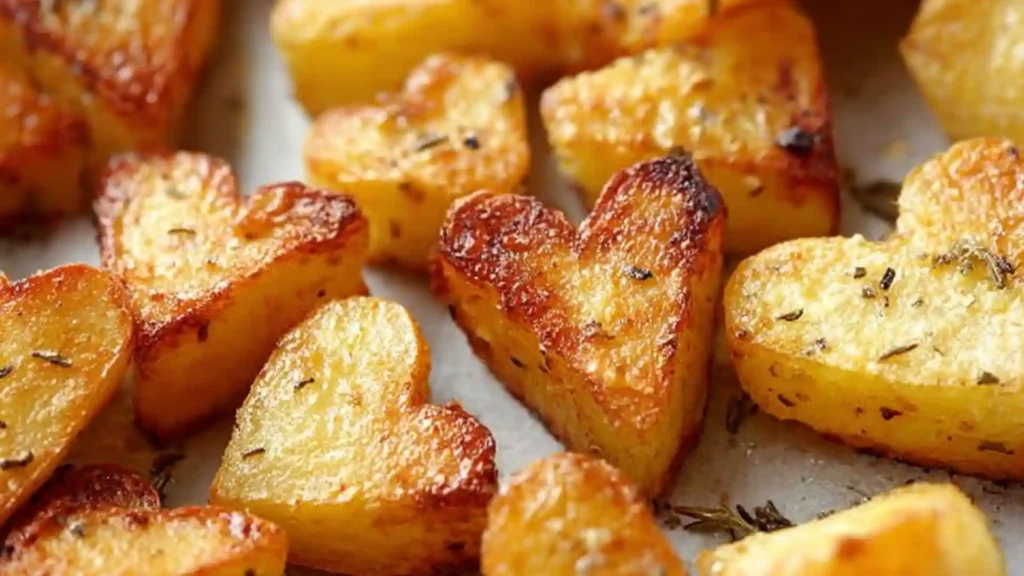
Creating the Crispy Coating
Transfer steam-dried hearts to a large mixing bowl. Drizzle with olive oil and add seasonings. The potatoes should feel dry and slightly rough to the touch—this texture indicates proper steam-drying and readiness for seasoning.
Toss hearts gently but thoroughly to coat every surface with seasoned oil. Use your hands or a large spoon to move potatoes around the bowl. The goal involves coating hearts completely while roughening surfaces slightly to create maximum crispness during roasting.
Watch for the surfaces to develop a slightly furry appearance as the starch coating mixes with oil. This starchy layer provides the foundation for crispy exteriors. Avoid excessive rough handling that breaks heart shapes—gentle is better than aggressive when working with delicate cutouts.
Let seasoned hearts sit in the bowl for five minutes before roasting. This brief rest allows oil and seasonings to penetrate slightly while the coating sets. The small delay improves final texture noticeably compared to immediate roasting.
Roasting for Maximum Crispness
Preheat your oven to 400°F (200°C) while potatoes parboil. Position the rack in the upper third of the oven where heat concentrates for better browning. Line a large baking sheet with parchment paper to prevent sticking and simplify cleanup.
Arrange seasoned hearts in a single layer with space between each piece. Crowding causes steaming rather than roasting as trapped moisture prevents browning. Use two baking sheets if necessary to provide adequate spacing for proper air circulation.
Roast for fifteen minutes without opening the oven door. Heat loss from frequent checking extends cooking time and reduces crispness. After fifteen minutes, remove the sheet and flip each heart with a spatula to expose the second side to direct heat.
Return to the oven and roast for ten to fifteen additional minutes until hearts turn deep golden brown. Check after ten minutes—smaller hearts crisp faster than larger ones. Potatoes should sound slightly hollow when tapped and edges should look deeply caramelized.
Flavor Variations
Replace caraway seeds with fresh rosemary for classic herb-roasted potato flavor. Strip leaves from two sprigs and chop finely before tossing with parboiled hearts. Fresh rosemary provides pine-like aroma that pairs beautifully with crispy potato exteriors.
Create garlic-Parmesan hearts by tossing roasted potatoes with minced garlic and grated Parmesan during the final five minutes. Add one tablespoon butter along with garlic and cheese. The butter melts into a glossy coating while cheese crisps into savory bits.
Try spicy hearts using smoked paprika, cayenne pepper, and cumin for Southwestern flair. The smokiness complements caramelized potato sugars while heat provides contrast. Serve with sour cream or Greek yogurt dipping sauce to balance the spice.
Make truffle hearts for luxurious occasions by drizzling finished potatoes with truffle oil and sprinkling with flaky sea salt. Use truffle oil sparingly—a teaspoon provides ample aroma without overwhelming. Finish with fresh chives or parsley for color contrast.
Make-Ahead Strategy
Parboil hearts up to five days ahead and refrigerate in an airtight container. Store unseasoned so you can add fresh oil and herbs before roasting. Bring parboiled hearts to room temperature before seasoning—cold potatoes don’t absorb oil properly and take longer to crisp.
Cut heart shapes from raw potatoes the morning of serving and keep submerged in water in the refrigerator. Change water once if holding longer than four hours. Drain thoroughly and pat dry before parboiling to prevent excess water from diluting boiling liquid.
Avoid roasting potatoes more than one hour before serving. Roasted potatoes lose crispness as they sit, becoming soft and chewy. If timing requires advance cooking, reheat in a hot oven for five minutes to restore some crispness before serving.
Freeze parboiled unseasoned hearts for up to two months in freezer bags. Remove air completely before sealing to prevent freezer burn. Roast directly from frozen, adding five minutes to the cooking time. Quality suffers slightly compared to fresh but remains acceptable.
Troubleshooting Common Issues
Hearts that break during tossing were parboiled too long. Reduce parboiling time by one minute and test—potatoes should resist knife insertion slightly when done. The centers should feel firm rather than completely tender at the parboiling stage.
Soggy potatoes that won’t crisp didn’t steam-dry adequately after parboiling. Allow at least five full minutes in the colander for steam to dissipate completely. Pat hearts gently with clean kitchen towels if they still feel damp before seasoning.
Unevenly cooked hearts result from inconsistent slicing thickness. Use a ruler when learning proper quarter-inch thickness. Consider using a mandoline slicer set to six millimeters for perfectly uniform potato planks every time.
Hearts that stick to the baking sheet need better oiling or parchment paper. Drizzle additional oil directly onto the parchment before arranging hearts. Silicone baking mats work even better than parchment for preventing sticking while promoting browning.
Serving Suggestions
Serve Roasted Heart Potatoes alongside pan-seared steaks for classic Valentine’s Day dinner. The crispy potatoes provide textural contrast to tender meat while the heart shapes reinforce the romantic theme. Add sautéed green beans or asparagus for color balance.
Create a roasted vegetable medley by adding hearts to a pan of roasted carrots, parsnips, and beets. The mixed colors create beautiful presentations while all vegetables caramelize together. Toss everything with honey and thyme for cohesive flavoring.
Offer hearts as appetizers with various dipping sauces. Set out bowls of garlic aioli, herbed sour cream, and spicy ketchup. The finger-food format encourages guests to try multiple flavor combinations while the heart shapes spark conversation.
Arrange hearts around roasted chicken or fish as an elegant platter presentation. The golden hearts frame the protein beautifully while their crispness complements moist main dishes. Garnish the entire platter with fresh herb sprigs for restaurant-quality visual appeal.
Beyond Valentine’s Day
Use this same technique for any potato shape throughout the year. Cut stars for Fourth of July, pumpkins for Thanksgiving, or Christmas trees for holiday dinners. The parboiling method works equally well regardless of shape, consistently producing crispy results.
Skip shape-cutting entirely and roast parboiled potato chunks for everyday meals. The method transforms ordinary roasted potatoes into extraordinary ones. Cube potatoes instead of slicing, parboil, rough up surfaces, and roast for weeknight sides that taste special.
Adapt the recipe for sweet potatoes or mixed potato varieties. Sweet potatoes require slightly less parboiling time due to their softer texture. Mix regular and sweet potato hearts on the same sheet for beautiful orange and white color contrast.
Try the parboiling technique with other root vegetables like turnips, rutabaga, or celeriac. The science works identically—create rough, starchy surfaces that crisp beautifully during high-heat roasting. Experiment with mixed root vegetable hearts for sophisticated side dishes.
Why These Work for Special Occasions
The heart shape elevates humble potatoes into conversation pieces that guests photograph and remember. Simple ingredients and straightforward technique mean you achieve impressive results without culinary school training. The method proves reliable enough for special occasions when cooking stress runs high.
Crispy exteriors combined with fluffy interiors satisfy everyone from picky eaters to food enthusiasts. The familiar potato flavor provides comfort while the unique presentation adds excitement. This balance makes the dish universally appealing across different ages and taste preferences.
Make-ahead options reduce last-minute cooking chaos during dinner parties. Parboil hearts in the morning, season just before guests arrive, and roast during cocktail hour. The kitchen smells amazing while you socialize rather than slaving over the stove.
The recipe scales easily for large gatherings or intimate dinners for two. Double or triple quantities using multiple baking sheets rotated between oven racks. The consistent results mean every guest receives equally crispy, perfectly cooked potatoes regardless of batch size.
FAQ
Can I use plastic cookie cutters instead of metal?
Plastic cutters may work but risk cracking under the pressure needed to cut through raw potatoes. Metal cutters slice cleanly with less force. If using plastic, apply slow, steady pressure rather than quick force to prevent breaking the cutter.
Why do my potatoes turn gray after cutting?
Cut potatoes oxidize when exposed to air, causing gray discoloration. Submerge hearts in cold water immediately after cutting to prevent this chemical reaction. The water creates a barrier between potato flesh and oxygen, maintaining white color.
Can I roast hearts without parboiling first?
Yes, but results will be less crispy and require longer cooking time. Raw hearts take thirty-five to forty-five minutes to roast through. Parboiling creates the starchy coating essential for maximum crispness while reducing oven time significantly.
What’s the purpose of the steam-drying step?
Steam-drying removes surface moisture that would create steam in the oven. Wet potatoes steam rather than roast, producing soft textures instead of crispy ones. The evaporation also concentrates starch on surfaces for superior crisping.
Can I add garlic to the marinade before roasting?
Raw garlic burns during the full roasting time, becoming bitter and acrid. Add minced garlic during the final five minutes for best flavor. This timing cooks garlic just enough to mellow its sharpness without burning.
How do I know when potatoes are perfectly crispy?
Properly roasted hearts should be deep golden brown with slightly darker crispy edges. They sound hollow when tapped and feel rigid when lifted with a spatula. If they bend or feel soft, they need more time.
Can I roast other vegetables with the potato hearts?
Yes, add quick-cooking vegetables like bell peppers or zucchini during the final ten minutes. Carrots and parsnips can roast alongside hearts from the beginning. Ensure adequate spacing so all vegetables roast rather than steam together.
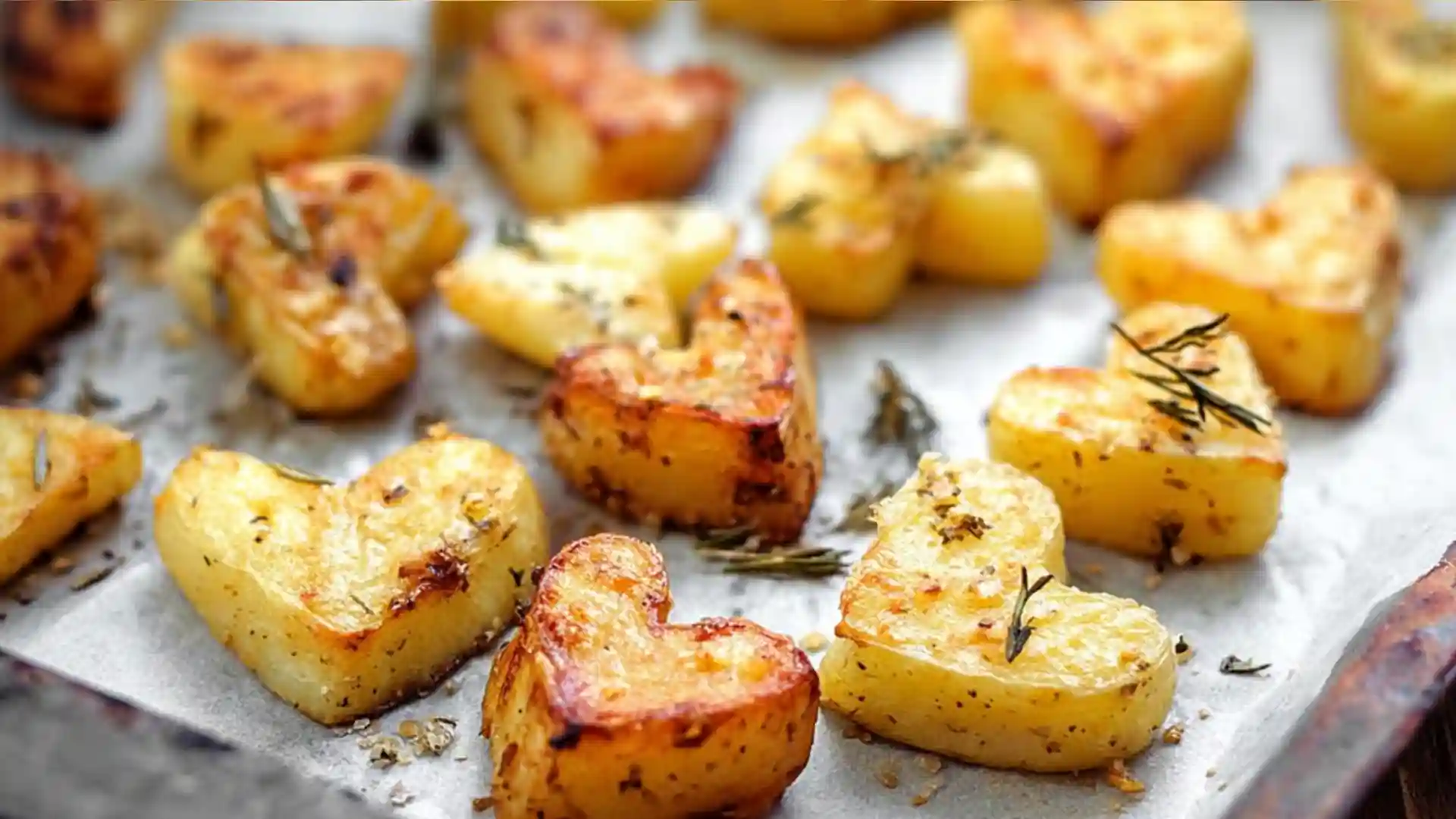

Roasted Heart Potatoes
Ingredients
Equipment
Method
- Prep potatoes: Peel potatoes completely. Slice lengthwise into ¼-inch (6mm) thick planks using sharp knife or mandoline for uniform thickness.
- Cut hearts: Using metal heart-shaped cookie cutter, press firmly through each potato slice to cut out heart shapes. Place cut hearts immediately into bowl of cold water to prevent browning. Save scraps for another use.
- Prepare boiling water: Fill large pot with 1-2 quarts water. Add 1½ tablespoons salt and bring to rolling boil over high heat.
- Parboil hearts: Drain hearts from soaking water and add to boiling salted water. Return to boil, then reduce heat to gentle simmer. Cook for 5-7 minutes until knife meets slight resistance when inserted. Hearts should not be fully cooked.
- Steam-dry: Drain parboiled hearts in large colander. Let sit undisturbed for 5-6 minutes to allow steam to dissipate and surfaces to dry. This step is critical for crispness.
- Preheat oven: While potatoes steam-dry, preheat oven to 400°F (200°C). Position rack in upper third of oven. Line large baking sheet with parchment paper.
- Season potatoes: Transfer steam-dried hearts to large mixing bowl. Add olive oil, kosher salt, black pepper, caraway seeds, paprika, and rosemary if using. Toss gently but thoroughly to coat all surfaces and slightly rough up edges. Let sit 5 minutes.
- Arrange for roasting: Spread seasoned hearts in single layer on prepared baking sheet with space between each piece. Don’t overcrowd—use two sheets if necessary.
- First roast: Roast for 15 minutes without opening oven door.
- Flip hearts: Remove from oven and flip each heart with spatula to expose second side.
- Continue roasting: Return to oven and roast 10-15 more minutes until deep golden brown and crispy. If adding garlic, toss with minced garlic during last 5 minutes of cooking.
- Serve: Remove from oven and serve immediately while hot and crispy. Garnish with additional fresh herbs if desired.
Notes
- Metal cutters: Use metal cookie cutters instead of plastic which may crack. Apply firm, even pressure when cutting through raw potatoes.
- Size matters: Use large potatoes (8+ ounces each) to get enough surface area for cutting hearts. Smaller potatoes create excessive waste.
- Don’t skip steam-drying: The 5-6 minute steam-dry after parboiling is essential for crispy results. Don’t rush this step.
- Gentle tossing: Toss delicate heart shapes carefully to avoid breaking them while still roughening surfaces for crispness.
- Single layer: Never crowd potatoes on baking sheet. They need space for air circulation to roast properly rather than steam.
- Make ahead: Parboil hearts up to 5 days ahead and refrigerate unseasoned. Bring to room temperature before seasoning and roasting.
- Variations: Replace caraway with rosemary, thyme, or your favorite herbs. For garlic-Parmesan version, add during final 5 minutes with butter and cheese.
- Save scraps: Boil potato scraps until tender and mash for quick mashed potatoes to minimize waste.