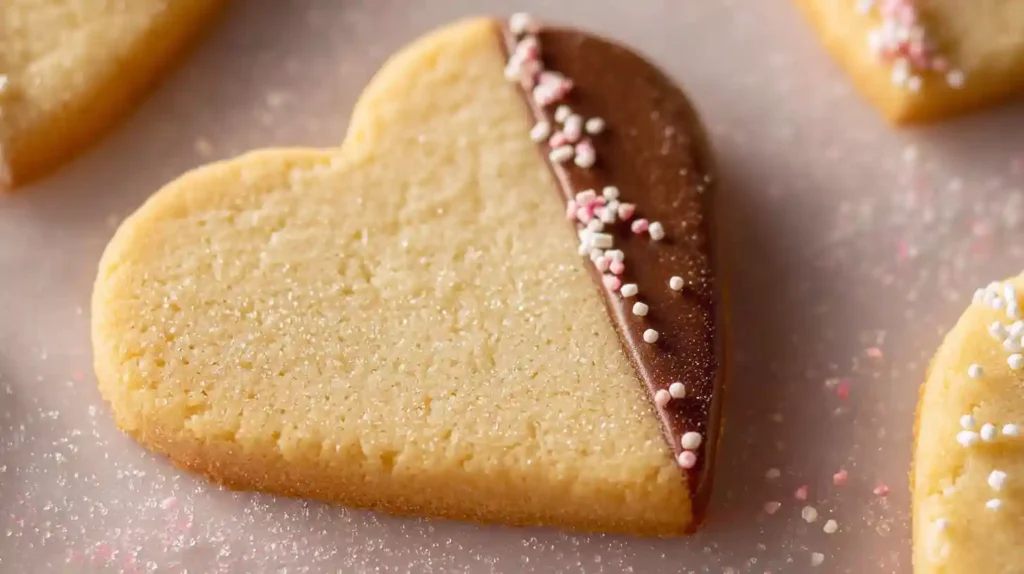
Last February, I wanted to make something special for Valentine’s Day that felt thoughtful but didn’t require hours in the kitchen. These shortbread hearts became my solution—buttery cookies with a tender crumb, half-dipped in chocolate and finished with festive sprinkles. They looked bakery-quality yet came together with just five simple ingredients.
Valentine’s Shortbread Hearts combine classic Scottish baking tradition with romantic presentation. The melt-in-your-mouth texture comes from proper butter-to-flour ratios and careful chilling before baking. Dipping them in chocolate creates visual contrast while adding rich flavor that complements the subtle sweetness of traditional shortbread.
This recipe works beautifully for Valentine’s Day gifts, Galentine’s celebrations, or anniversary treats. The straightforward method makes them accessible for beginners while delivering impressive results that feel homemade and heartfelt. Each cookie captures the perfect balance between crisp edges and tender centers.
Why This Recipe Works
Real butter creates the signature shortbread flavor and crumbly texture that defines quality cookies. The fat content in butter prevents gluten development, resulting in tender cookies that literally melt on your tongue. Margarine or spreads contain too much water and create cookies that spread excessively and lose their shape.
Chilling the dough twice ensures perfectly shaped hearts. The first chill after mixing lets the butter firm up and the flour hydrate evenly. The second chill after cutting shapes prevents spreading during baking, maintaining clean edges and defined heart outlines. This double-chill method makes the difference between professional and amateur results.
Low baking temperature produces pale golden cookies with the ideal texture. High heat causes excessive browning and dry, hard cookies. Gentle heat allows the butter to melt slowly, creating layers that yield that characteristic snap followed by a tender, crumbly mouthfeel.
Essential Ingredients
Five simple ingredients create bakery-worthy shortbread. Quality matters significantly since each component plays a starring role without fillers or distractions.
- 150g plain flour (all-purpose flour)
- 100g unsalted butter, softened to room temperature
- 50g caster sugar (superfine sugar)
- 50g milk chocolate
- 50g white chocolate
- Pink and red Valentine’s sprinkles
Unsalted butter gives you complete control over the sweetness level and salt balance. European-style butter with higher fat content creates even richer, more flavorful shortbread. The butter should feel soft when pressed but still hold its shape—not melted or greasy.
Plain flour without added leavening agents produces the dense, tender texture characteristic of authentic shortbread. Self-raising flour or cake flour alter the structure and create different results. Measure flour by spooning it into your measuring cup and leveling off rather than scooping directly from the bag.
Caster sugar dissolves more readily than granulated sugar, creating a finer crumb. If you only have granulated sugar, pulse it briefly in a food processor to create smaller crystals. The sugar level in this recipe balances sweetness without overpowering the buttery flavor.
Good quality chocolate makes the finishing touch special. Choose chocolate you enjoy eating plain since its flavor will shine through. Milk chocolate offers sweet, creamy notes while white chocolate provides vanilla richness. You can use all of one type or split the batch between both varieties.
Making the Shortbread Dough
Cream softened butter and caster sugar together in a large bowl using an electric mixer or wooden spoon. Beat for three to four minutes until the mixture turns pale yellow and fluffy. Proper creaming incorporates air that creates lighter texture while ensuring sugar dissolves completely.
Add flour to the creamed butter mixture all at once. Use your hands to bring the ingredients together into a cohesive dough. The mixture starts crumbly but comes together as you knead gently. Avoid overworking the dough, which develops gluten and creates tough cookies instead of tender ones.
Shape the dough into a flat disc and wrap tightly in plastic wrap or cling film. Refrigerate for twenty minutes minimum. The dough should feel firm and cold when you unwrap it. If your kitchen runs warm, chill for thirty minutes to ensure the butter solidifies properly.
Line a large flat baking tray with parchment paper or greaseproof paper while the dough chills. Choose a tray that fits comfortably in your refrigerator since you’ll need to chill the cut shapes before baking. Having everything prepared keeps the workflow smooth.
Rolling and Cutting Heart Shapes
Lightly flour your work surface and rolling pin before removing the chilled dough from the refrigerator. Work quickly to prevent the butter from warming up too much. Roll the dough to roughly half a centimeter (about quarter-inch) thickness, using even pressure to maintain consistent depth.
Press heart-shaped cookie cutters firmly into the rolled dough. Cut shapes close together to minimize scraps. Lift each heart carefully with a thin spatula or palette knife and transfer to the prepared baking tray, spacing them about one inch apart.
Gather the dough scraps, press them together gently, and re-roll once to cut additional hearts. Avoid re-rolling more than once as the dough becomes overworked and tough. You should get approximately ten hearts total depending on your cutter size.
Place the baking tray with cut hearts into the refrigerator for thirty minutes. This critical second chill ensures the cookies maintain their heart shape during baking. Warm dough spreads quickly in the oven, causing edges to blur and details to disappear.
Baking Perfect Shortbread
Preheat your oven to 160°C fan or 180°C conventional (325°F) while the cut hearts finish chilling. Position the oven rack in the center for even heat distribution. Oven temperature accuracy matters significantly for shortbread—consider using an oven thermometer if your oven runs hot or cold.
Bake the chilled shortbread hearts for ten to twelve minutes. The cookies should turn pale golden around the edges while the centers remain light. They won’t look fully done—slight paleness is correct. Overbaking creates hard, dry cookies instead of tender, crumbly ones.
Leave the baked shortbread on the baking tray for five minutes after removing from the oven. The cookies feel soft immediately after baking but firm up as they cool. Moving them too soon causes breakage. After five minutes, transfer carefully to a wire cooling rack.
Allow shortbread to cool completely before chocolate dipping—at least thirty minutes. Warm cookies cause chocolate to melt too quickly and create messy, uneven coatings. The cooling period also lets the texture set properly, developing that characteristic shortbread snap.
Chocolate Dipping Technique
Melt milk chocolate and white chocolate separately in small shallow bowls. Use the microwave at medium power in thirty-second bursts, stirring between each interval. Alternatively, melt chocolate in heatproof bowls set over barely simmering water. The chocolate should feel smooth and fluid, not thick or grainy.
Dip the bottom half of each cooled shortbread heart into melted chocolate at a slight angle. Hold the cookie over the bowl briefly, allowing excess chocolate to drip back down. This prevents thick, messy pools of chocolate and creates clean, professional-looking edges.
Place dipped cookies on a wire rack positioned over parchment paper or a baking sheet. The wire rack allows air to circulate underneath, helping chocolate set evenly without creating a flat edge. The paper underneath catches drips for easy cleanup.
Add sprinkles immediately after dipping while the chocolate remains wet. The sprinkles stick best during the first thirty seconds. Once chocolate begins setting, sprinkles won’t adhere properly. Work with two or three cookies at a time rather than trying to decorate an entire batch at once.
Decoration Ideas
Create half-and-half cookies by dipping five hearts in milk chocolate and five in white chocolate. The variety looks beautiful arranged on a plate and offers different flavor experiences. White chocolate provides vanilla sweetness while milk chocolate adds richer cocoa notes.
Use pink and red heart-shaped sprinkles for classic Valentine’s appeal. Mix in white and metallic pink sprinkles for extra sparkle. Alternatively, try crushed freeze-dried raspberries or strawberries for natural pink color and fruity flavor that complements both chocolate and shortbread.
Drizzle contrasting chocolate over dipped cookies for an elegant finish. After the first chocolate layer sets completely, melt a small amount of the opposite color and transfer to a piping bag or zip-top bag with a tiny corner snipped off. Pipe thin zigzag lines or delicate dots across each cookie.
Write messages with edible markers once the chocolate hardens. Short phrases like “XOXO,” “Love,” or initials personalize each cookie. Edible food markers designed for chocolate work best—test on parchment paper first to ensure the tip doesn’t drag or smear.
Flavor Variations
Add half a teaspoon of vanilla extract to the butter-sugar mixture for enhanced flavor depth. Pure vanilla extract tastes significantly better than imitation vanilla. The vanilla complements the butter without overwhelming the delicate shortbread character.
Mix in finely grated lemon or orange zest for citrus shortbread hearts. Use the zest from half a lemon or quarter of an orange, adding it when you incorporate the flour. Citrus brightens the rich butter flavor and creates sophisticated cookies perfect for spring celebrations.
Substitute ten grams of flour with cocoa powder for chocolate shortbread hearts. The subtle chocolate flavor pairs beautifully with white chocolate dipping. Sift the cocoa powder with the flour to prevent lumps and ensure even distribution throughout the dough.
Replace white chocolate with ruby chocolate for trendy pink cookies. Ruby chocolate has a naturally berry-like flavor and beautiful pink color without artificial dyes. It costs more than regular chocolate but creates stunning results perfect for Valentine’s presentations.
Storage and Make-Ahead Tips
Store finished shortbread hearts in an airtight container at room temperature for up to five days. Layer them between sheets of parchment paper to prevent chocolate from sticking or transferring. Keep the container away from direct sunlight and heat sources that could soften the chocolate coating.
Freeze undipped shortbread cookies for up to three months. Stack cooled cookies in freezer-safe containers with parchment between layers. Thaw at room temperature for one hour before chocolate dipping. This make-ahead approach spreads the work across multiple days.
Prepare the dough up to three days ahead and keep it wrapped in the refrigerator. Remove from the fridge twenty minutes before rolling to let it soften slightly. Very cold dough cracks when rolled, while room-temperature dough becomes too soft and sticky.
Freeze shaped but unbaked hearts on the baking tray until solid, then transfer to freezer bags for up to two months. Bake directly from frozen, adding two to three extra minutes to the baking time. No thawing required makes this perfect for having fresh cookies ready quickly.
Troubleshooting Common Issues
Cookies that spread and lose their heart shape weren’t chilled long enough before baking. Always allow the full thirty-minute second chill. If your kitchen is very warm, chill for forty-five minutes or even an hour to ensure the butter stays completely firm.
Hard, dry shortbread results from overbaking or too much flour. Check cookies at the ten-minute mark—they should look barely done. If you added extra flour while rolling, the dough becomes dry. Use minimal flour for dusting and scrape up any excess before cutting shapes.
Crumbly dough that won’t hold together needs more butter or gentler handling. Make sure your butter reaches true room temperature—too-cold butter won’t incorporate properly. Press and squeeze the dough patiently rather than kneading aggressively when bringing it together.
Chocolate that looks streaky or won’t set properly was overheated or exposed to water. Melt chocolate gently, never letting it exceed 115°F. Even a single drop of water causes chocolate to seize and become grainy. Keep utensils completely dry and avoid steam from double boilers.
Packaging as Gifts
Arrange shortbread hearts in small clear cellophane bags tied with red or pink ribbon. Include two to four cookies per bag depending on size. Clear packaging showcases the beautiful chocolate dipping and festive sprinkles, making the treats visually appealing before opening.
Stack cookies in small decorative tins lined with tissue paper. Choose heart-shaped tins for maximum Valentine’s impact. Layer cookies carefully with parchment sheets between each layer to prevent damage during transport. The reusable tin becomes part of the gift.
Create cookie boxes with window lids that display the shortbread beautifully. White bakery boxes with clear plastic windows look professional and protect cookies during delivery. Add a small card with the recipient’s name and a short Valentine’s message.
Wrap individual cookies in small squares of parchment tied with baker’s twine for rustic charm. This method works wonderfully for class parties or office treats where each person receives a single special cookie. Write names on small tags attached to the twine.
Serving Suggestions
Serve Valentine’s Shortbread Hearts alongside afternoon tea or coffee for elegant teatime. The buttery cookies pair perfectly with English Breakfast tea, Earl Grey, or cappuccino. Arrange them on a pretty plate with fresh strawberries and whipped cream for a complete Valentine’s spread.
Package these cookies as place settings for Valentine’s dinner. Set one or two heart cookies on each guest’s plate tied with ribbon. The thoughtful detail adds romantic atmosphere while doubling as dessert. Guests appreciate the personal touch and homemade quality.
Create a dessert board featuring shortbread hearts as the centerpiece. Surround them with fresh berries, chocolate truffles, dried rose petals, and small dishes of caramel or chocolate sauce for dipping. This shareable presentation works beautifully for couples or small gatherings.
Crumble shortbread hearts over ice cream or yogurt parfaits for textural contrast. The buttery crumbs add richness and the chocolate pieces create surprise flavor bursts. This works especially well with vanilla ice cream or strawberry yogurt that complement the Valentine’s theme.
Why These Work for Valentine’s Day
The heart shape makes these cookies inherently romantic without requiring advanced decorating skills. Anyone can cut out hearts, yet they look impressively thoughtful and deliberate. Homemade cookies convey care and effort that store-bought treats simply cannot match.
Shortbread’s buttery simplicity appeals to most palates, making these cookies universally appreciated. Unlike strongly flavored desserts that some people dislike, classic shortbread satisfies without polarizing. The chocolate dipping adds just enough sweetness without overwhelming those who prefer subtle desserts.
These cookies suit multiple Valentine’s celebrations beyond romantic partnerships. Give them to teachers, friends, coworkers, or family members. The recipe scales easily for making large batches, and the shelf life allows baking several days before the holiday.
The straightforward recipe builds confidence in novice bakers while remaining interesting enough for experienced cooks. Success feels achievable rather than intimidating. Creating beautiful, delicious cookies yourself provides genuine satisfaction that buying treats simply doesn’t offer.
FAQ
Can I use salted butter instead of unsalted?
Yes, but reduce any added salt in the recipe or omit it entirely. Salted butter varies in salt content between brands, making sweetness levels unpredictable. Unsalted butter gives you complete control over the final flavor balance.
What if my shortbread dough is too crumbly?
Add cold water one teaspoon at a time, mixing between additions until the dough holds together. Alternatively, press the dough firmly in your hands—the warmth and pressure often bring it together. Avoid adding more butter as this changes the recipe ratios.
Can I make these gluten-free?
Substitute plain flour with a gluten-free all-purpose flour blend that includes xanthan gum. The texture will differ slightly—slightly more crumbly—but results should still be delicious. Bob’s Red Mill 1-to-1 Baking Flour works well for shortbread.
How do I prevent chocolate from blooming?
Store finished cookies at consistent room temperature away from humidity. Temperature fluctuations cause chocolate bloom—the white streaks that appear on chocolate surfaces. The cookies remain safe to eat but look less attractive. Proper storage in airtight containers prevents this issue.
Can kids help make these cookies?
Absolutely! Children can help cream butter and sugar, bring dough together, cut out heart shapes, and add sprinkles. Supervise oven work and chocolate melting. The simple process and festive results make this an excellent Valentine’s baking project for families.
What size heart cutter should I use?
Cookie cutters between two and three inches work best for this recipe. Smaller hearts bake very quickly and risk burning, while larger hearts need extended baking time. Medium-sized hearts balance visual appeal with practical eating size.
Can I use dark chocolate instead of milk chocolate?
Yes, dark chocolate creates a more sophisticated flavor profile with less sweetness. Choose dark chocolate with 60-70% cocoa content for best results. Higher percentages taste too bitter for many people and can overwhelm the delicate shortbread flavor.


Valentine’s Shortbread Hearts
Ingredients
Equipment
Method
- Make the dough: Cream softened butter and caster sugar together in a large bowl using electric mixer or wooden spoon for 3-4 minutes until light and fluffy and pale yellow in color.
- Add flour: Add plain flour all at once. Use your hands to bring the mixture together into a cohesive dough. Knead gently—mixture starts crumbly but comes together with patience. Do not overwork.
- First chill: Wrap dough in plastic wrap or cling film and shape into flat disc. Refrigerate for 20-30 minutes until firm and cold to touch.
- Prepare baking tray: While dough chills, line large flat baking tray (that fits in your fridge) with parchment paper or greaseproof paper.
- Roll dough: Lightly flour work surface and rolling pin. Roll chilled dough to roughly 0.5cm (¼ inch) thick, using even pressure for consistent depth.
- Cut hearts: Press heart-shaped cookie cutters firmly into rolled dough. Cut shapes close together. Transfer each heart carefully to prepared baking tray, spacing 1 inch apart. Gather scraps, re-roll once, and cut more hearts for about 10 total.
- Second chill: Place baking tray with cut hearts in refrigerator for 30 minutes. This critical chill ensures cookies maintain heart shape during baking.
- Preheat oven: While hearts chill, preheat oven to 160°C fan / 180°C conventional (325°F). Position rack in center.
- Bake: Bake chilled shortbread hearts for 10-12 minutes until pale golden around edges while centers remain light. Don’t overbake—they should look barely done.
- Cool on tray: Leave baked shortbread on baking tray for 5 minutes, then transfer carefully to wire cooling rack. Cool completely (at least 30 minutes) before chocolate dipping.
- Melt chocolate: Melt milk chocolate and white chocolate separately in small shallow bowls. Use microwave at medium power in 30-second bursts, stirring between intervals, until smooth and fluid.
- Dip cookies: Dip bottom half of each cooled shortbread heart into melted chocolate at slight angle. Hold over bowl briefly to let excess drip back. Place on wire rack over parchment paper.
- Add sprinkles: Immediately add sprinkles while chocolate is still wet (within 30 seconds). Work with 2-3 cookies at a time for best results.
- Set chocolate: Let chocolate set completely at room temperature for about 30 minutes before serving or packaging. Store in airtight container.
Notes
- Butter temperature: Butter should be soft when pressed but still hold its shape—not melted or greasy.
- Flour measuring: Spoon flour into measuring cup and level off rather than scooping directly from bag for accuracy.
- Re-rolling: Only re-roll dough scraps once to prevent tough cookies from overworking.
- Chocolate temperature: Never let chocolate exceed 115°F (46°C) when melting to prevent seizing.
- Storage: Store in airtight container at room temperature up to 5 days, layering with parchment between cookies.
- Freezing: Freeze undipped baked cookies up to 3 months, or freeze unbaked shapes and bake from frozen (add 2-3 minutes).
- Make ahead: Prepare dough up to 3 days ahead and keep wrapped in refrigerator.